Blog

  • Three from the Class of ’93: Still Picking Up Where We Left Off

    Three from the Class of ’93: Still Picking Up Where We Left Off

    Sometime around my 25th high school reunion, I reconnected with a couple of guys that I hadn’t been in much communication with for a number of years. As with most of my Gen X brethren, the amount of time and distance between seeing each other doesn’t really seem to affect us much. We just pick up where we left off and move forward without any resentment or wondering, gee, why haven’t I talked to him, or why hasn’t he called me? Maybe that is just how a lot of us grew up. You had your friends, everybody went off and lived their lives, and when you crossed paths again, you just kept going. It’s one of the things I actually really appreciate about our generation.

    Prairie High School Class of 1993 alumni at their reunion
    Prairie High School Class of 1993 alumni reconnecting years after graduation.

    Back to the story. Chris Kasparek, Paul Quillan, and I are all Prairie High School Class of 1993 alumni. Paul and I go all the way back to kindergarten, although we really connected again in high school. Paul played bass, and I played guitar, so we had a lot of the same musical interests and were around a lot of the same people. We have always had plenty in common, but the truth is the three of us are also very different people. Looking at us from the outside, I’m not even sure somebody would immediately put the three of us together, which is probably one of the reasons it works.

    Shannon Gorman, Jeremy Glazier, Paul Quillan, Destery Hildenbrand and Jeremy Hynek together at Prairie View
    Shannon Gorman, Jeremy Glazier, Paul Quillan, Destery Hildenbrand and the late and beloved Jeremy Hynek together at Prairie View during their childhood years.

    Chris lives in Italy and works for the U.S. Navy as a civilian community recreation director. He also coaches multiple high school sports for kids living on the base. Once or twice a year, he comes back to the motherland, and when he does, he turns the trip into what can only be described as a tour. He somehow manages to see more people, make more stops, and pack more into a few days than most of us would attempt in a month. Sleep seems to be completely optional. Chris and Paul had stayed close over the years and always made a point to get together whenever Chris came home.

    Around the time of our reunion, I was also starting down the road that has somehow become my unofficial second job of writing, taking photographs, making films, documenting people, and generally finding stories that interest me. Chris definitely interested me. Who the hell lives in Italy, works for the Navy as a civilian, coaches basketball, and somehow ends up with this completely different life from the one most of us expected when we walked out of Prairie High School?

    I wanted to know how he got there.

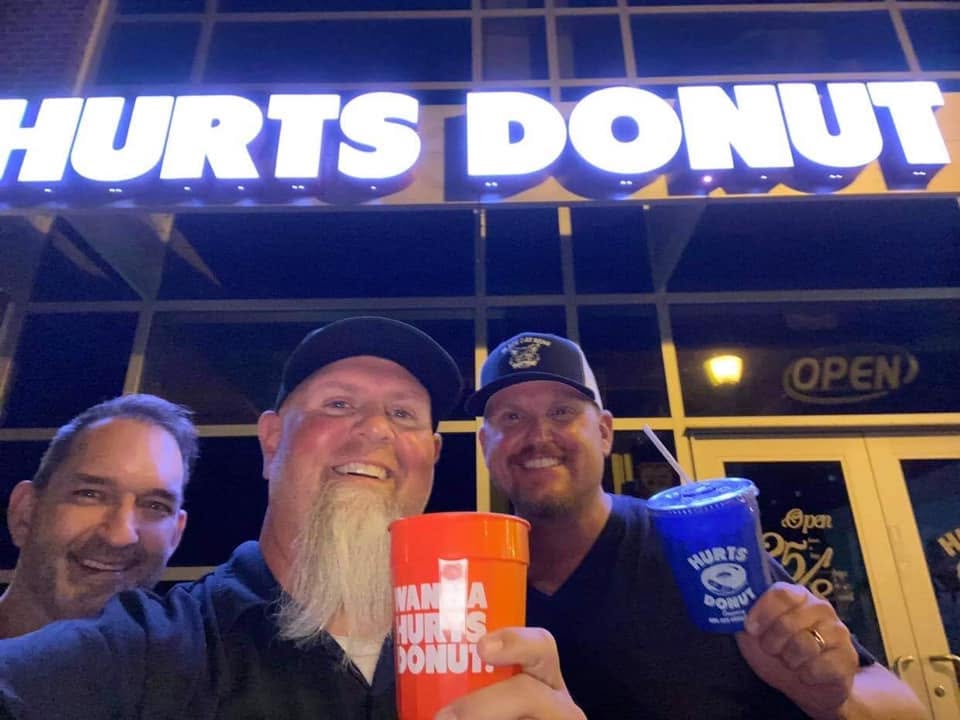
    So when I got invited to meet Chris and Paul one evening at Hurts Donut in Coralville, I went. We were going to catch up, talk about what Chris was doing, and probably tell some old stories.

    That one decision ended up turning into what is now shaping up to be a lifelong support system made up of an unholy trinity.

    Part of my interest in Chris probably had as much to do with me as it did with him. By that point in my life, I had started looking backward a little more. Sometimes I feel like my 20s, 30s, and even part of my 40s passed by while I followed what was basically the Boomer playbook a lot of us were handed. Finish school. Get a job. Keep your head down. Work. Pay your bills. Build a family. Take the yearly vacation if you can afford it. Keep going.

    There is nothing wrong with any of that. I don’t regret building a family or working hard or doing the things I was supposed to do. I haven’t lived a sheltered life either. But I absolutely spent a lot of years not seeing the forest for the trees.

    Somewhere in my mid-40s, that started changing. Photography became more important to me. Writing became more important. Filmmaking became something I actually pursued instead of something I thought about doing. I started seeking out interesting people instead of waiting for interesting things to happen around me. I started paying attention to stories and experiences that I probably would have walked right past 20 years earlier.

    There are definitely times when I kick myself in the ass and wonder why I didn’t start doing some of this when I was 25.

    But that is the other part of getting older. With age comes some wisdom, or at least the ability to finally recognize the things that were sitting right in front of you the whole time. I’m at the age now where those lessons have become pretty valuable.

    Anyway, back to Hurts Donut.

    The three of us sat there until the early hours of the morning talking about life, old friends, goals, careers, families, music and movies that Paul has somehow managed to go through life without seeing. Over the years we have also discovered that Paul is considerably less impressed with The Natural than either Chris or I can understand. There are certain things in a friendship you simply have to overlook, and apparently that is one of them.

    Jeremy Glazier, Paul Quillan and Chris Kasparek together inside Hurts Donut
    Jeremy Glazier, Paul Quillan and Chris Kasparek during one of their Hurts Donut meetups.

    What I remember most about that first night is how easy it was. There wasn’t any agenda. Nobody was trying to impress anybody. We were just three guys who had known each other in different ways for decades sitting around a table talking about where life had taken us.

    Chris Kasparek, Brooke Boetticher, Jeremy Glazier, Tony Bracey and Chad Schropp at the Prairie High School 25th reunion
    Chris Kasparek, Brooke Boetticher, Jeremy Glazier, Tony Bracey and Chad Schropp together at the Prairie High School 25th reunion.

    That 25th reunion also ended up reconnecting a lot of our Prairie Class of 1993 in another and much more serious way. Shortly after the reunion, one of our classmates, Joe Rudd, was traveling back home to Virginia when he stopped at a gas station in Ohio and was shot in the face during an attempted carjacking.

    Joe survived, and today he has a thriving martial arts studio here in Cedar Rapids, but for several months after the shooting, something happened among our class that I still think about. People rallied around him. People who hadn’t spoken in years started talking again. People checked in on each other. Old friendships and old connections came back to life.

    Jeremy Glazier on the far left and Joe Rudd second from the right with Prairie High School alumni during 30 Days of Fitness
    Jeremy Glazier, far left, and Joe Rudd, second from right, with fellow Prairie High School alumni during 30 Days of Fitness.

    A terrible situation reminded a lot of us that the people we grew up with still mattered.

    That might be another Gen X thing, or maybe it is simply what happens as you get older. When you’re 18, you assume everybody is going to be around forever. At 50 you know better. You have seen enough life to understand that there are no guarantees, and relationships you once took for granted start carrying a little more weight.

    The world we grew up in shaped more than our friendships. I wrote about another part of that Gen X experience in Growing Up in the Shadow of Vietnam: A Gen X Childhood After the War.

    Over the past few years I’ve missed a few of the Hurts meetups, but Chris, Paul and I stay in pretty regular contact. When Chris makes one of his returns from Italy, we usually try to find time to sit down again. This past year we did, and it occurred to me afterward that these meetings probably qualify as some of the healthiest “therapy” three Gen X guys would ever openly admit to attending.

    Of course, nobody would call it therapy while we were sitting there.

    It is disguised as insults about sports teams, questionable movie choices, bad decisions, old classmates, and stories that usually get better every time they are told. Sarcasm is involved. A lot of sarcasm. That seems to remain one of the primary emotional languages of our generation.

    But underneath all of that, there is some pretty serious conversation.

    Every year there is something new because every year all three of our lives move forward. Kids are learning to drive. Some are preparing for college. Some are trying to figure out who they are and where they fit in the world. We talk about what our kids are doing, what we worry about, and how we can hopefully give them a little bit of a head start over some of the things we had to figure out ourselves.

    We talk about careers. Families. Relationships. Parents. Money. Successes. Screwups. Things we wish we had done differently and things we are glad we did exactly the way we did them.

    We talk about getting older.

    I think that is probably the part that matters most.

    The three of us all deal with our own heavy situations. Like a lot of men from our generation, we probably carry more of those things alone than we should. Nobody was really teaching guys our age to sit around and discuss their emotional well-being. You dealt with it. You figured it out. You kept moving.

    And most of the time we still do.

    But there is something extremely valuable about knowing that there is a brother just a message away when things get a little too heavy.

    Paul Quillan and Chris Kasparek wearing Black Cat Bone Productions hats
    Paul Quillan and Chris Kasparek supporting Black Cat Bone Productions in their own similar but different ways.

    He doesn’t necessarily have to solve anything. Most of the time you aren’t even looking for somebody to solve it. Sometimes you just need somewhere solid to put your feet for a minute and catch your breath before you keep moving.

    That is worth its weight in gold.

    The funny part is how different our personalities are. I am probably the most reserved of the three in conversation. I tend to listen, take things in, and jump in when I have something to say. Chris is about as close to a Barnum & Bailey ringmaster with a megaphone as a human being can get. He can direct five conversations at the same time, talk to three strangers, and somehow get everybody involved before you even realize what happened.

    Paul is basically the human information superhighway.

    He knows everybody.

    Or if he doesn’t know them, he knows someone who does. There seems to be almost no section of life where Paul doesn’t have some connection, story, or piece of information stored away somewhere.

    Somehow those three personalities work really well together.

    Maybe that is also something I have come to appreciate more as I have gotten older. Your closest friendships don’t have to be with people exactly like you. Sometimes the people who see the world differently are the ones who help you understand your own life a little better.

    The Hurts Donut meetings were never supposed to become anything. Nobody sat down that first night and said we were starting an annual tradition. There was no plan to create some middle-aged support group for three guys from the Prairie High School Class of 1993.

    We just sat down and talked.

    Then we did it again.

    And somewhere along the way, without any of us really announcing it, those meetings became important.

    That is probably the real story here.

    Friendship changes as you get older.

    At 18, friendship meant seeing somebody every day. It was school, music, parties, football games, cruising around town or whatever else filled our time. At 50, friendship might mean not seeing somebody for a year and then sitting down across from them and continuing a conversation that feels like it stopped about five minutes ago.

    There doesn’t need to be constant reassurance that the friendship still exists.

    You just know it does.

    And when life gets heavy, you know where those people are.

    The three of us took very different roads from the same starting point. Different careers, different experiences, different personalities and completely different lives. We have succeeded at some things, completely screwed up other things, and learned a lot of lessons that we would probably love to go back and explain to our younger selves.

    But you can’t go backward.

    You can only take what you learned and keep moving.

    So once in a while, three weary travelers meet somewhere along the road, sit down around a table and compare maps.

    We give each other some shit. We talk about who we used to be. We talk about the people our kids are becoming. We talk about where we’ve been, where we are going, and whatever life has thrown at us since the last time we sat down.

    Then Chris heads back to Italy, Paul goes back to work, kids, and various artistic pursuits, and I go back to whatever story, photograph, or film I have convinced myself I need to chase next.

    And eventually, we do it all over again.

    We sit down.

    We start talking.

    And we pick up exactly where we left off.

    Jeremy Glazier, Paul Quillan and Chris Kasparek together at Hurts Donut during their 2026 meetup
  • Growing Up in the Shadow of Vietnam: A Gen X Childhood After the War

    Growing Up in the Shadow of Vietnam: A Gen X Childhood After the War

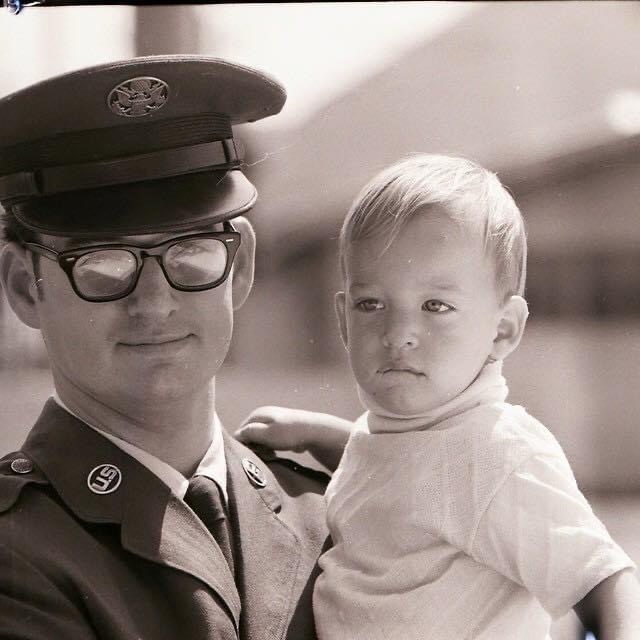
    One of my earliest memories of feeling proud of my father’s military service happened on a Sunday afternoon at the Five Seasons Center in Cedar Rapids, Iowa. The Home Builders Show was in town, Gary Lewis and the Playboys were performing, and sometime around four in the afternoon the announcer asked the military veterans in the audience to stand. I always loved when that happened because it meant my dad got to stand.

    My father, John Glazier, served eight years in the United States Air Force. We weren’t what I would describe as an overly military family, but we respected the men and women who wore the uniform, and I respected the hell out of what my dad had done. As a kid, I didn’t completely understand what military service during the Vietnam era meant, but I knew that my father had been part of something much bigger than me, and when someone asked the veterans in a room to stand, he was one of them.

    The Vietnam War My Generation Inherited

    I grew up in Cedar Rapids in the early 1980s, part of the generation that came immediately after Vietnam. The war had ended, but culturally it didn’t seem very far away. World War II had already become the subject of countless movies, television shows, and heroic stories, while Vietnam seemed different, more complicated, and somehow still unsettled.

    Maybe that was part of what fascinated me. The Vietnam veterans I saw represented in movies and television seemed different from the soldiers in the old World War II films. Their stories included bravery and sacrifice, but there was also anger, confusion, loss, and distrust.

    Then there was the music. The soundtrack of the Vietnam era became some of the same music that eventually inspired me to pick up a guitar: Jimi Hendrix, Eric Clapton, Creedence Clearwater Revival, The Doors, and so many others. That music became inseparable in my mind from the images of the era—helicopters, jungles, protesters, soldiers, hippies, tunnel rats, draft cards and young men carrying rifles thousands of miles from home.

    As a kid, of course, I was absorbing a mixture of history and Hollywood. I didn’t completely understand where one ended and the other began. I just knew there was something about that period of American history that fascinated me.

    From M*A*S*H to Tour of Duty

    Television was a big part of that education. I remember watching M*A*S*H with my parents, and while the show was set during the Korean War, it introduced my generation to a different kind of war story. It could be funny one minute and devastating the next, and underneath the uniforms were frightened, exhausted, and often very young people trying to make sense of what was happening around them.

    Then my generation moved into shows of our own. I watched Magnum, P.I., where Thomas Magnum’s service in Vietnam was part of who he was, and The A-Team, whose characters were Vietnam veterans. I remember Quantum Leap touching on Vietnam and its aftermath, and later there was China Beach and Tour of Duty, shows that dealt with Vietnam much more directly.

    I absolutely remember watching Tour of Duty. By then, television wasn’t simply referencing Vietnam anymore; the war itself was the setting, and the characters were dealing with the fear, friendships, loss, and confusion that went with it. In some ways, television was growing up alongside my generation as we moved from watching our parents’ war stories to programs dealing directly with the war that had shaped so much of the world we were born into.

    Looking back, I think a lot of Generation X absorbed a strange contradiction from the generation before us. We learned that you could respect the person who served while still questioning the institutions that sent them. There was a rebellious streak in the culture we inherited, but it wasn’t necessarily disrespect for the men and women in uniform; sometimes it was exactly the opposite.

    That same Gen X independence shows up in the way a lot of us carried friendships into adulthood. I wrote about that side of it in Three from the Class of ’93: Still Picking Up Where We Left Off.

    Vietnam on the Movie Screen

    Movies had an even greater impact on me. There were the classics that came before I was old enough to fully appreciate them, like The Deer Hunter and Apocalypse Now, and then as I got older a wave of Vietnam movies seemed to arrive almost on top of one another. Platoon, Full Metal Jacket, Hamburger Hill, and Good Morning, Vietnam were intense, violent, and unforgettable.

    One of the lessons my father gave me, though, was that movies were still movies. I remember him taking me to see Platoon, one of only a couple of movies I specifically remember going to with him, and on the ride before we arrived we talked about what moght be on the screen. My father wanted me to understand that movies like that were sensationalized versions of war and weren’t something to idolize; there were lessons in those stories, but war itself wasn’t entertainment.

    That conversation stayed with me, and in some ways I had already received a version of that lesson several years earlier from a movie most people remember for an entirely different reason.

    What I Remember About First Blood

    When people hear the name Rambo today, they often picture the later films—the machine guns, explosions, and an almost indestructible action hero. But that isn’t the Rambo movie that stayed with me. The first film, First Blood, ends very differently.

    John Rambo isn’t celebrating a victory at the end of that movie. He’s breaking down, trying to explain what happened to him and his friends, struggling with the fact that the skills that kept him alive during the war don’t seem to have a place in the life he returned to. He’s trying to understand why people he loved are gone and why the country he served doesn’t seem to understand what he sacrificed.

    As a kid, I certainly didn’t have the vocabulary to understand PTSD, trauma, or the difficulties veterans could experience when returning to civilian life. But I understood that scene. This guy was hurting, and the war wasn’t over for him simply because he had come home.

    That idea stayed with me far longer than the explosions did.

    Respecting Service Without Romanticizing War

    As I got older, the distinction between respecting service and romanticizing war became increasingly important to me. There is a difference between honoring the people who served and glorifying the circumstances that put them there. Those aren’t the same thing.

    Vietnam was politically and socially complicated, and the people who served came from different backgrounds and had very different experiences. Some volunteered, and some were drafted; some served in combat while others performed essential jobs thousands of miles from the fighting or at bases throughout the United States and around the world. My father was one of those Vietnam-era veterans, serving as an Air Force Avionics Instrument Specialist in Japan as part of a much larger military structure that extended far beyond the borders of Vietnam itself.

    That distinction became especially important to me later because when we talk about the Vietnam generation, the conversation often gets reduced to one image: the combat soldier moving through the jungle. Those stories absolutely need to be preserved, but they aren’t the only stories. There were pilots and mechanics, medics and communications personnel, intelligence specialists, support crews, nurses, sailors, airmen, and countless others whose lives were shaped by serving during that era.

    Their stories are part of the history too.

    Fifty Years Later

    More than fifty years have now passed since the end of the Vietnam War, and something bothers me. We regularly celebrate the remaining members of the World War II generation, and rightfully so. When another World War II veteran reaches a remarkable birthday or passes away, the story often receives attention, but I don’t think Vietnam-era veterans consistently receive that same level of recognition.

    Their generation is aging too. Every year there are fewer opportunities to sit down with them, ask questions, and let them tell their stories in their own words. Yet rarely do I see a Vietnam-era veteran highlighted, celebrated, or simply given the space to talk about what his or her service meant.

    For younger generations, the distance is becoming enormous. Most people who have grown up during the last 25 or 30 years have little frame of reference for what military service during the Vietnam era looked like, not only for those fighting in Vietnam but for the men and women stationed stateside and at bases around the world. For many, Vietnam now exists primarily in textbooks, old photographs, documentaries, and movies.

    That doesn’t mean younger generations don’t care. It means someone has to preserve these stories so there is something for them to discover.

    Why I Made From Iowa and Back

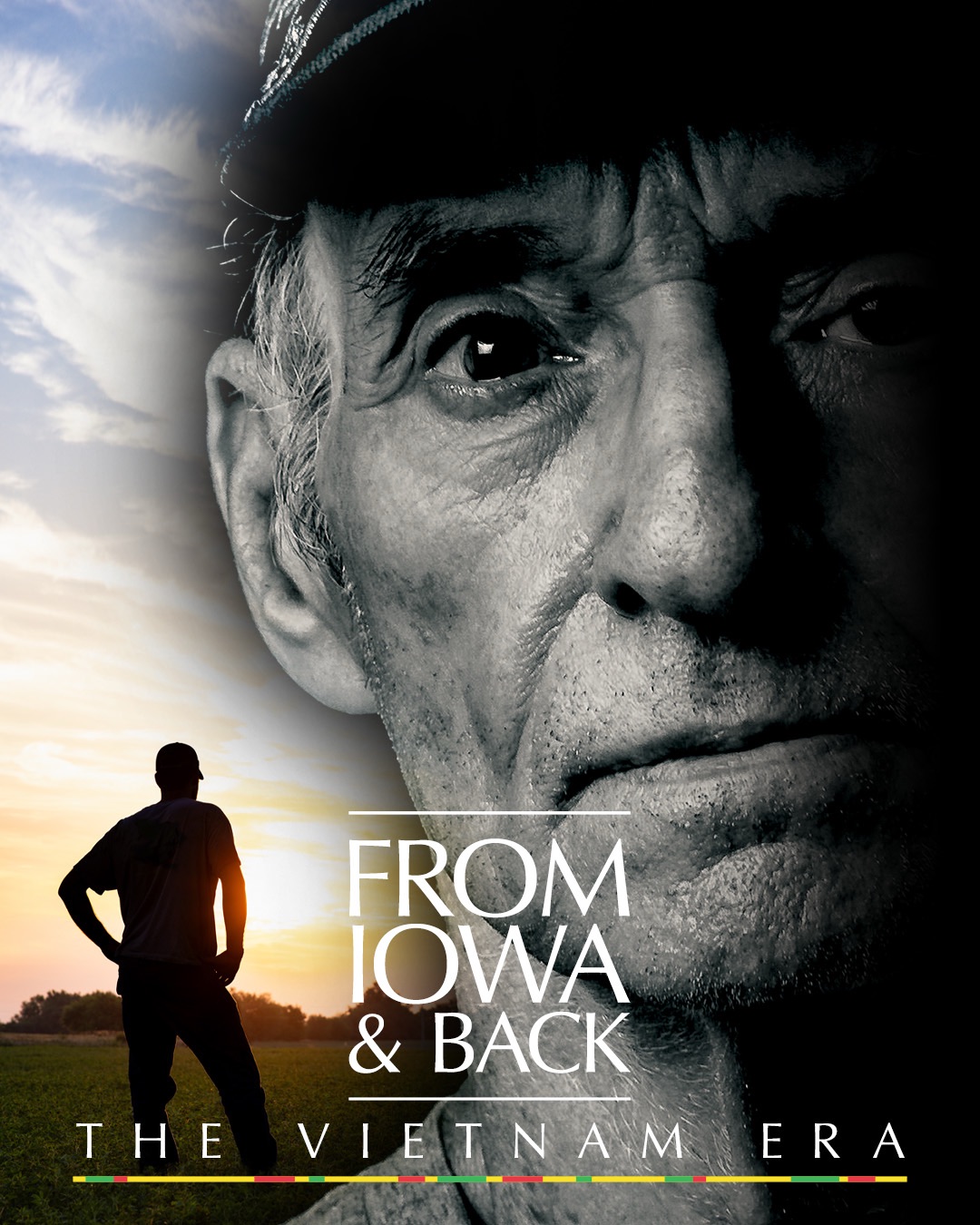
    That is ultimately why making From Iowa and Back: The Vietnam Era became so important to me. It began with my father, John Glazier, and his service during that period, but as the project grew, I realized it couldn’t simply be a story about my father’s generation viewed through my own childhood memories. I needed to listen to the men and women who actually lived through that period and let them explain it themselves.

    Not the Hollywood version, not the television version, and not the mythology my generation inherited. I wanted the people themselves. That meant talking with combat veterans, but it also meant talking with Vietnam-era veterans whose service took them somewhere else, because service during that period was not one experience and there wasn’t one Vietnam story.

    There were thousands upon thousands of stories. Some were dramatic, some were painful, and some were funny; some involved combat while others involved long hours doing jobs that would never make it into a movie. Some veterans came home carrying memories they rarely discussed, while others simply went back to work, raised families, and continued with their lives.

    All of those experiences matter.

    The Generation That Changed How America Treats Its Veterans

    There is another reason I think this generation deserves our attention. Today, Americans routinely thank veterans for their service, communities recognize veterans at sporting events, concerts and public gatherings, and people organize honor flights, veteran benefits, mental-health programs and homecoming celebrations. None of those systems is perfect, and veterans still face very real challenges, but the public conversation surrounding military service is profoundly different from the one many Vietnam veterans encountered when they came home.

    I think part of that change exists because America learned something from the Vietnam generation. Whatever someone thinks about a war, the person wearing the uniform is still a human being. They have parents, spouses, children, and friends waiting for them, and when they come home, they bring their experiences with them.

    My generation grew up watching America slowly learn that lesson. Maybe that’s why I still get something out of seeing veterans asked to stand in a crowded room. It takes me back to the Five Seasons Center, to that Sunday afternoon and to being a kid waiting for the announcer to say those words because I knew what would happen next.

    My dad would stand, and for a few seconds everyone in the room would see something in him that I already knew was there. He had served, and I was proud of him. More than four decades later, I’m still trying to make sure men and women from his generation get their opportunity to stand.

    Only now, instead of waiting for an announcer to recognize them, I have a camera—and I can ask them to tell us their story.

  • From Iowa and Back Expands Community Screenings Across the Midwest

    From Iowa and Back Expands Community Screenings Across the Midwest

    From Iowa and Back: The Vietnam Era is continuing to grow beyond its original Iowa screenings, with new community screening opportunities now available across the Midwest.

    The film centers on the firsthand stories of Iowa men and women whose lives were shaped by military service during the Vietnam era. While the stories begin in Iowa, the themes of service, sacrifice, family, coming home, and remembrance reach far beyond state lines.

    Expanding Across the Midwest

    Community screening information is now available for:

    These screenings are designed to be more than simply showing a film. Depending on the event, they can include a personal introduction to the project, recognition of veterans in attendance, a post-film discussion, and opportunities to continue preserving the stories of Vietnam-era veterans.

    Veterans organizations, libraries, theaters, museums, colleges, senior communities, businesses, and civic groups can all serve as hosts.

    Reaching More of Iowa

    Even as the project expands into neighboring states, Iowa remains at the center of the effort.

    One of my personal goals is to bring From Iowa and Back into as many of Iowa’s 99 counties as possible.

    That means continuing to work with smaller communities while also building stronger regional screening opportunities in places that can help reach surrounding counties.

    Some of the Iowa communities I am currently focusing on include:

    Ames and Story County
    A central Iowa location with strong regional reach and connections to Iowa State University.

    Davenport, Bettendorf and Scott County
    A strong eastern Iowa and Quad Cities market with the potential to reach audiences on both sides of the Mississippi River.

    Sioux City and Woodbury County
    An important northwest Iowa market with potential reach into Nebraska and South Dakota.

    Iowa City and Coralville
    A strong fit because of the University of Iowa, veterans organizations, libraries, and cultural institutions.

    Dubuque
    A meaningful location for the project, including a connection through Brian Johannesen’s song “Old Dubuque,” which became part of the film’s musical foundation.

    Council Bluffs and Western Iowa
    A future priority that can help the project reach western Iowa and the Omaha area.

    Bring the Film to Your Community

    I am continuing to look for communities and organizations interested in hosting From Iowa and Back: The Vietnam Era.

    If your city or county is not listed above, that does not mean it is outside the project. I want to continue expanding throughout Iowa and into communities across the Midwest.

    Learn more about hosting a screening:

    Every screening creates another opportunity to recognize veterans, bring generations together, and preserve stories while there is still time to hear them firsthand.

  • Hinterland :: Ink 19

    Hinterland :: Ink 19

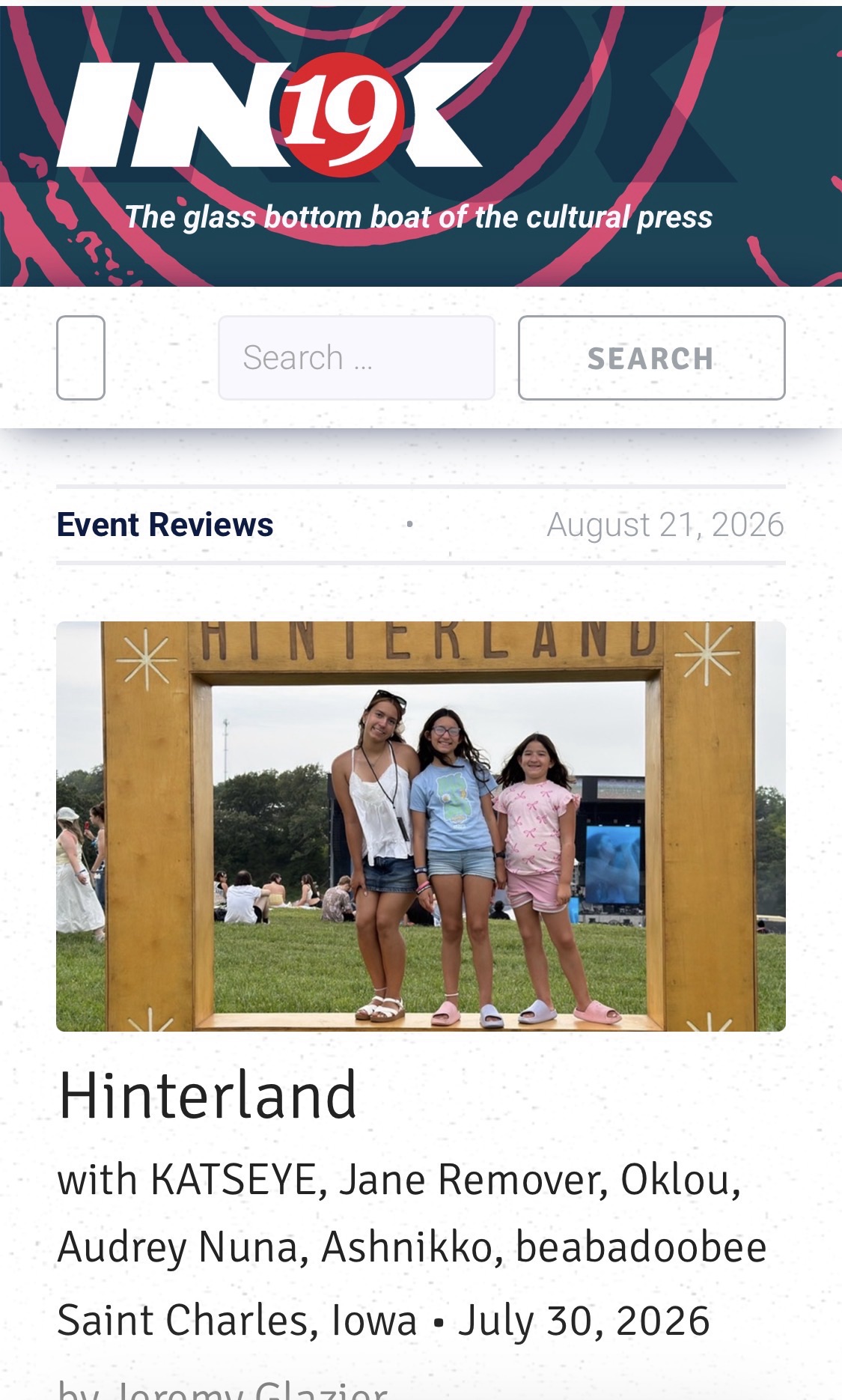
    Jeremy Glazier brings the family to Day One of Hinterland, where Katseye steals his children’s hearts.
    — Read on ink19.com/2026/08/magazine/event-reviews/hqpzg9-katseye

  • From Iowa and Back Film Screening in Lake City, September 12

    From Iowa and Back Film Screening in Lake City, September 12

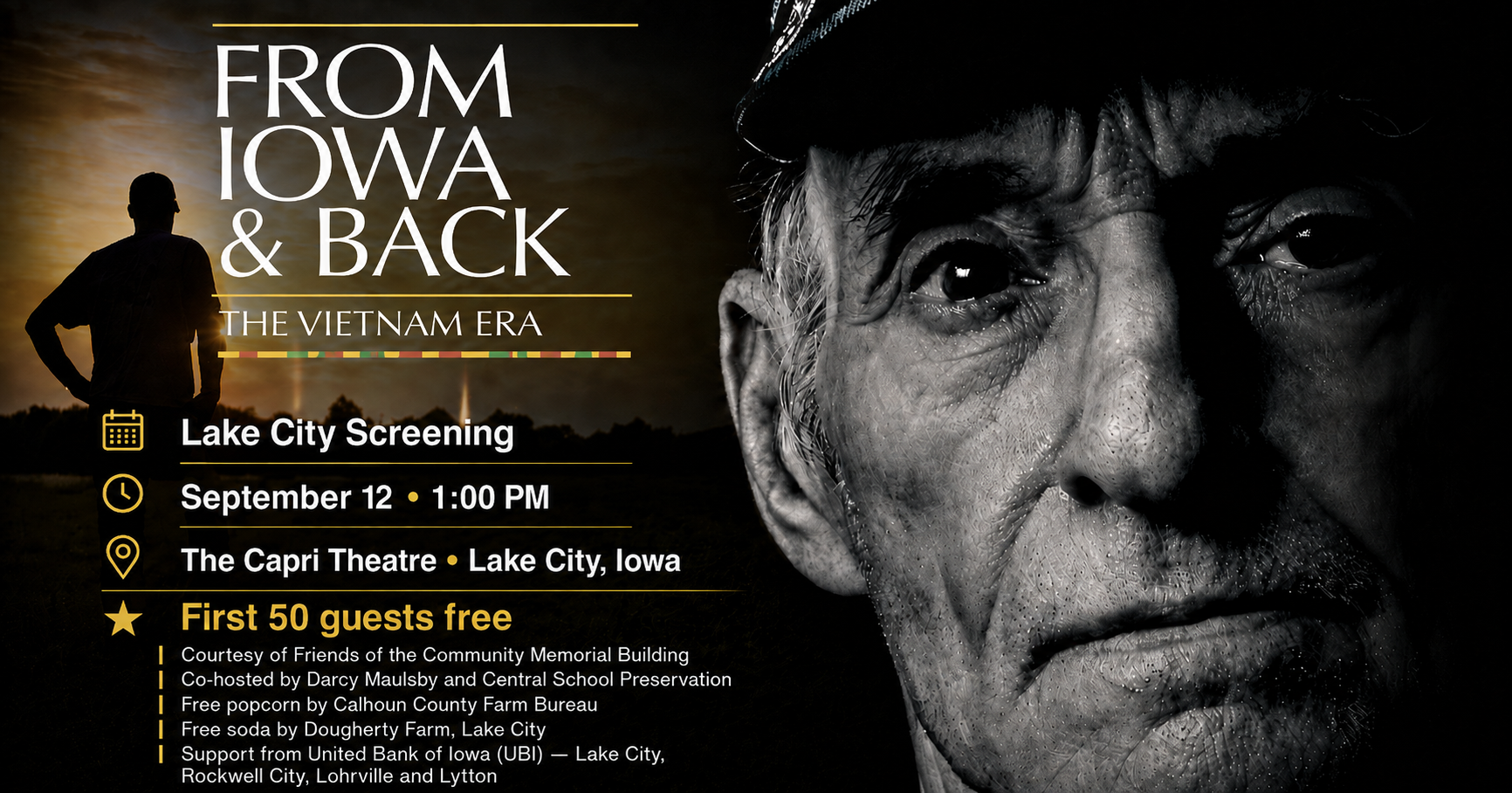
    From Iowa and Back: The Vietnam Era is coming to the Capri Theatre in Lake City, Iowa, on Saturday, September 12 at 1:00 PM.

    The documentary shares the stories of Iowa veterans who served during the Vietnam era, preserving their memories through interviews, portrait photography, and film. The film grew out of my own family story and has since become a journey across Iowa, bringing veterans, families, and communities together to remember a generation whose experiences deserve to be preserved.

    Thanks to the Friends of the Community Memorial Building, the first 50 guests will be admitted free.

    The Lake City screening is co-hosted by Darcy Maulsby and Central School Preservation, with free popcorn provided by Calhoun County Farm Bureau and free soda from Dougherty Farm of Lake City.

    Screening Details

    Saturday, September 12, 2026
    1:00 PM
    The Capri Theatre
    Lake City, Iowa

    Veterans, their families, and the entire community are invited to attend.

    I’m grateful to everyone in Lake City who has helped make this screening possible, and I’m looking forward to bringing From Iowa and Back to another Iowa community.

    Learn more about From Iowa and Back and upcoming screenings: From Iowa and Back: An Iowa Vietnam Era Veterans Documentary

    #FromIowaAndBack #IowaVeterans #VietnamVeterans #IowaFilm #LakeCityIowa

  • An Award-Winning Year for From Iowa and Back: The Vietnam Era

    An Award-Winning Year for From Iowa and Back: The Vietnam Era

    2026 has been an incredible year for From Iowa and Back: The Vietnam Era.

    The film has received recognition from festivals in Iowa and beyond, with awards and finalist honors for documentary filmmaking, original music, narration, and the film as a whole.

    While I’m incredibly grateful for the recognition, the project’s purpose remains the same: preserving the stories of Iowa’s Vietnam-era veterans and ensuring their experiences are not lost to history.

    Every festival selection, nomination, and award gives those stories another opportunity to reach an audience. Thank you to the veterans who trusted me with their stories, everyone who helped bring the film together, and the communities that continue to support it.

    The journey isn’t finished yet.

    2026 Festival Recognition

    October 2026 update: From Iowa and Back: The Vietnam Era received the Best Feature Documentary award at the Milan Indie Film Festival in Italy for its Autumn 2026 season.

    • From Iowa and Back – Best Documentary Film award, Cine Vista Oasis Film Awards 2026
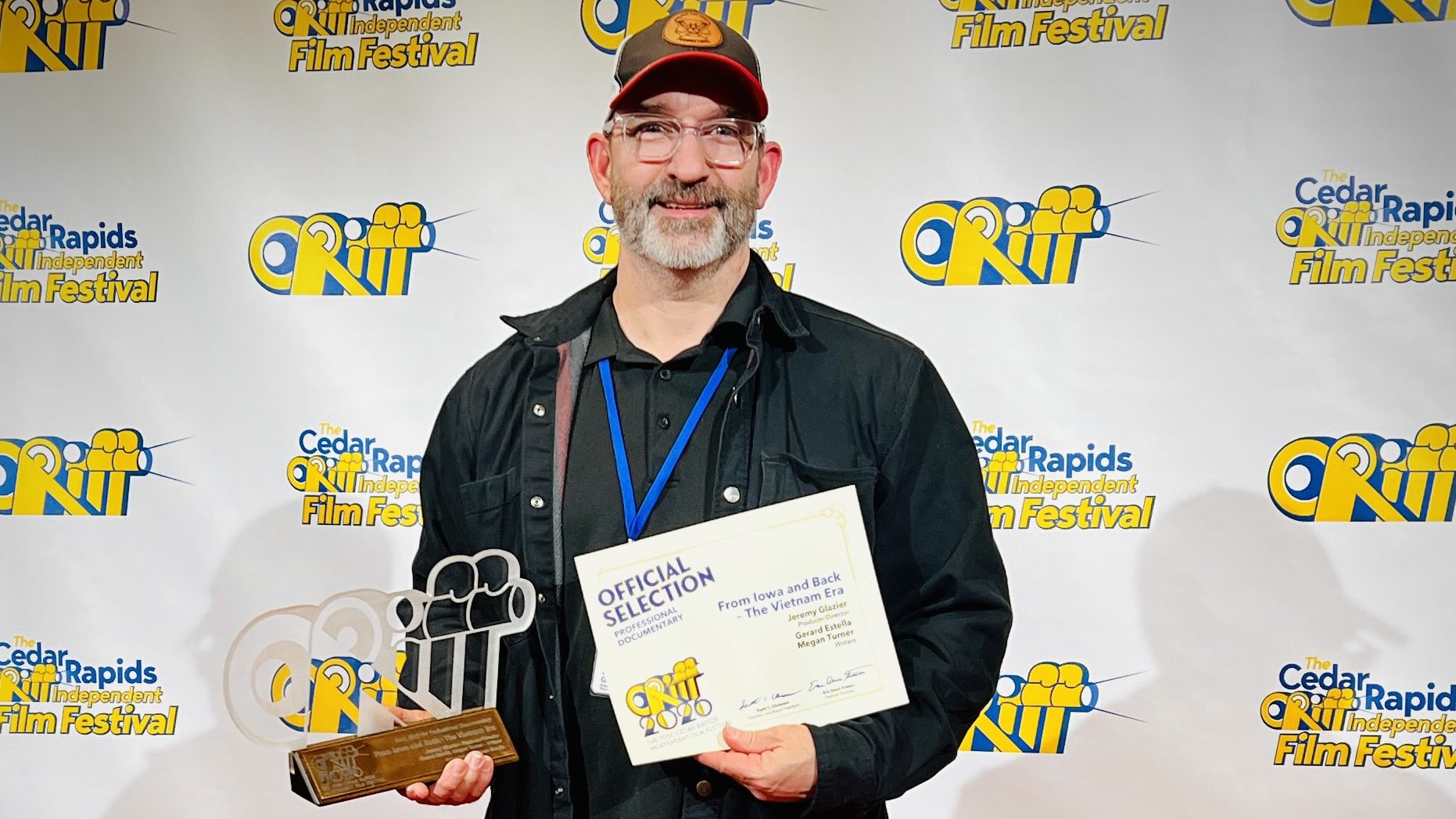
    • From Iowa and Back – Professional Documentary recognition, Cedar Rapids Independent Film Festival 2026
    • From Iowa and Back – Documentary Long Form recognition, Iowa Motion Picture Association Annual Film Festival 2026
    • From Iowa and Back – Original Music Score recognition, Iowa Motion Picture Association Annual Film Festival 2026
    • From Iowa and Back – Voice Over Narration recognition, Iowa Motion Picture Association Annual Film Festival 2026
    • From Iowa and Back – Feature Documentary recognition, Calgary Independent Film Festival 2026
    • From Iowa and Back – Honorable Mention Iowa Made, Farm to Film Fest 2026
    • From Iowa and Back – Best Documentary finalist, Elegant International Film Festival 2026
    • From Iowa and Back – Best Documentary finalist, Humro Cinema Film Fest 2026

    The recognition is meaningful, but the awards have never been the reason for making From Iowa and Back: The Vietnam Era. The goal remains preserving these veterans’ stories and bringing them to audiences throughout Iowa and beyond. Every screening, festival, and conversation gives those stories another opportunity to be heard.

  • Jeremy Glazier Discusses From Iowa and Back on Iowa Public Radio’s Talk of Iowa

    Jeremy Glazier Discusses From Iowa and Back on Iowa Public Radio’s Talk of Iowa

    Today, my episode of Talk of Iowa aired with Charity Nebbe about my film From Iowa and Back: The Vietnam Era the I completed with the support of Brucemore’s Artisan Studio.

    Here’s the link

    Film maker Jeremy Glazier and Charity Nebbe
  • KZIA Community Spotlight Interview.

    KZIA Community Spotlight Interview.

    This morning I had the pleasure to be interviewed by Eric Hanson of 102.9 KZIA about From Iowa and Back for their Community Spotlight segment airing on Sunday morning.

    Here is the interview.

  • From Iowa and Back updates.

    From Iowa and Back updates.

    Quick update to what’s been happening lately. The film is completed and we are taking it in the road. Until I can find a way to distribute it on a grand scale, I’m making the film available to any veterans organization or interested parties that would like to show the film. I want to use the film as a way to give back to the veteran community and let the, mostly, small communities hold an event to bring out the events and possibly raise some funds for their needs.

    I currently have showings scheduled in Audubon, Iowa on Nov 8th, Burlington, Iowa on Nov 11th, and right here in Cedar Rapids, Iowa on Nov 21st. I also just wrapped up an interview with KCRG that aired and is linked below. As always, if you or someone you know is an Iowa veteran that served in any location during the Vietnam era, please reach out to include them in this project.

    https://www.kcrg.com/2025/10/20/fathers-service-inspires-iowa-filmmakers-vietnam-era-documentary/

  • From Iowa & Back showings.

    From Iowa & Back showings.

    My documentary film, From Iowa & Back: The Vietnam Era has 3 more showings coming up in June and July around Iowa.

    June 17th Riverside Casino & Golf Resort® in Riverside, Iowa will host a free showing in their event center. We had 4 of their GIVE Gulf members in the film and their support has always been appreciated.

    The Grout Museum District in Waterloo, Iowa will host a free showing on June 30th at 7:00pm and I am very excited to finally visit the museum. We will also plan a Wednesday afternoon showing with their veterans group and details will follow soon.

    July 8th, I will be in Des Moines, Iowa at Prairie Meadows for a free showing at 6:00pm. President and CEO Gary Palmer is one of the #IowaVeterans who participated in the film and I’m beyond excited to show him the final film.

    So far the short film has been accepted into 3 film festivals and won at 2. Brucemore, Inc. Artisan Studio has been a tremendous partner in this journey and I can never thank them enough for all their help.