Author: Jeremy Glazier

  • Angelo Santelli

    Angelo Santelli

    I have been following Angelo Santelli’s career for a while and while he may not be on your radar yet, he should be.  In the simplest terms possible,  you can put his slide talent snugly between  Duane Allman and Derek Trucks.  It would be a gross understatement to box him into that category but, it gives you a hint of his ability.

    Photo by Ian Sarasfinksi
    Marc Dixon, Angelo Santelli, Adam Wakefield, (Caitlin Koch not pictured) (Click the photo to go to the Youtube video)   Photo by Ian Sarasfinksi

    He’s played with many of the second generation of Allman’s and when you step on stage with names like Oakley, Allman, and Betts, you had better be ready to play.

    He’s also had the distinct pleasure of once backing up CoCo Carmel and Bobby Whitlock.  Mr. Whitlock has been a member of and contributed to albums by  Delaney & Bonnie, Eric Clapton, George Harrison, and Derek and the Dominos, just to name a few.

    Angelo and I cover his bands, gear, and future plans.

    J: Hey Angelo, let’s get right to it.  I have a feeling that you picked up guitar for the the same reason I did, because your dad plays.  What made you want to pick it up and keep playing after you started?

    Photo by Marygrace Pue
    Photo by Marygrace Pue

    A: I definitely picked it up because of my dad. I always had music around me through him and had toy or jr sized guitars, spoons, but when I was 12 I started getting into classic rock like Pink Floyd, the Doors and from my dad, the Allman Brothers. I heard my dad do a rendition of Little Martha and it really captivated me. He tells people the story and says “it set my soul on fire”. I was really captivated by the melody of Little Martha and had him show me it, and eventually I learned how to finger pick when refining my own rendition. It’s quite an advanced piece to begin playing, but learning it so early definitely gave me a boost when I started playing!

    J: It’s a beautiful melody to start learning from.  What  music were you listening to when you first started really playing and what kind of sound were you trying to get to?

    A: When I decided to really dedicate myself to playing at 12 the main two bands were Pink Floyd and the Allman Brothers. My stepdad had a bunch of Pink Floyd CDs and my dad had a bunch of Allman Brothers Band. I played a lot of acoustic at first, trying to learn acoustic parts to songs like “Dogs” and “Pigs on the Wing” from Pink Floyds Animals.

    J: You’ve obviously excelled at the “Southern Rock/Slide” genre but what influences and what bands got you there?
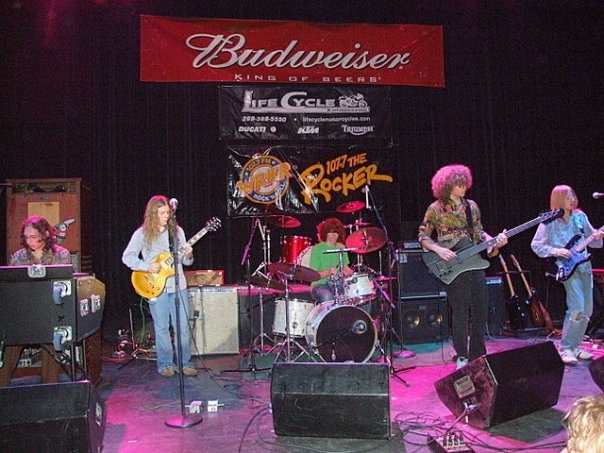
    Photo by Rob Williams
    Marble Garden opening for Lonnie Baker Brooks 2009  Photo by Rob Williams

    A: The only “southern rock” band I listen(ed) to heavily was the ABB, and for the first few years (until I was about 15) I only tried to mimic Duane Allman and Dickey Betts, for slide. I didn’t even attempt any Derek Trucks style stuff until about 15, but I had first heard him at about age 14. I like some Lynyrd Skynyrd stuff but they didn’t really influence me at all. I had a very narrow slide focus for a while and just listened to lots of other stuff for enjoyment, like Miles Davis (In a Silent Way, Bitches Brew, Live Evil and Jack Johnson) Mahavishnu Orchestra (especially Inner Mounting Flame and The Lost Trident Sessions) and early Weather Report (first album, Live in Tokyo/I Sing the Body Electric, Sweetnighter)

    J: Ok, let’s get nerdy for a minute. What gear are you using now and how does that vary depending on where you play?

    Photo by Dan
    Hoosier Bar 2017  Photo by Daniel Sanda

    A: My current electric gigging rig is a 2005 Gibson SG ’61 Reissue with WCR Fillmore pick up set (I don’t have an endorsement with him they were just the first Duane-style overwound pickups I found 10 years ago).  I use a real Coricidin bottle without the safety cap lip that my dad found for me recently and a certain short thick walled model of Silica Sound Slides (which I do endorse, along with Apex strings, a new brand made by the guy who held several patents with Dean Markley). I also have a Coricidin bottle copy with the safety cap from the guy who had bought the Coricidin bottle molds and marketed his reproductions as “The Duane Allman Slide” until Gibson made him stop. The gigging acoustics I use are either a German Martin copy or some cheapy “Brownsville New York” acoustic electric. I play round neck dobro and 12 string guitar but I don’t do any gigs right now with them.

    J: People always want to know about the guitars but what about amps. Do you have any favorites that bring out that tone you’re looking for?

    A: My current gigging amp is a Marshall Haze 40 with all the on board effects out of the circuit. In storage at my friends studio in Michigan is my 1976 Bassman 10 (The Santelli Special) that has a completely original circuit with added transformers and other stuff built by a guy I believe by the name of Vic Watkins in Kalamazoo, MI sometime in the 90s. It had been floating around W. Michigan for a while until I picked it up over 10 years ago. It has a mix of some Webber speakers in it and is supposed to sound like a hot rodded plexi, which isn’t too far off the Marshall Haze tone. One of best my friends and old bandmates, organ and guitar maestro Tom Eldred cloned it and dubbed it “The Santelli Special”. I also gig occasionally with 2006 Blues Jr that is currently not working. It has a speaker from a Hammond A100 organ.

    J: Any effects pedals at all and what’s your stance on them?

    A: Yes I love effects. My effects are a 1974 Echoplex EP-3, a Fulltone Mini Deja Vibe (cream colored one with no treadle) and a Crybaby with the adjustable resonance. I sometimes use other weird effects based on analog synthesizer circuits like a sample-and-hold filter like the effect Zappa used on “Ship Ahoy”. I also sometimes use a Hendrix Octavia clone. I definitely did not adopt the typical ABB guitarist stance of little-to-no effects. Hendrix’ biggest influence on me was his choice of effects (why I use the Univibe, wah-wah and occasionally an Octavia). Tommy Bolin and Sonny Sharrock are why I got an Echoplex.

    J: You have played and continue to keep company with some fantastic musicians. Can you explain how the Bobby Whitlock & Coco gig came up? That’s like a dream come true.
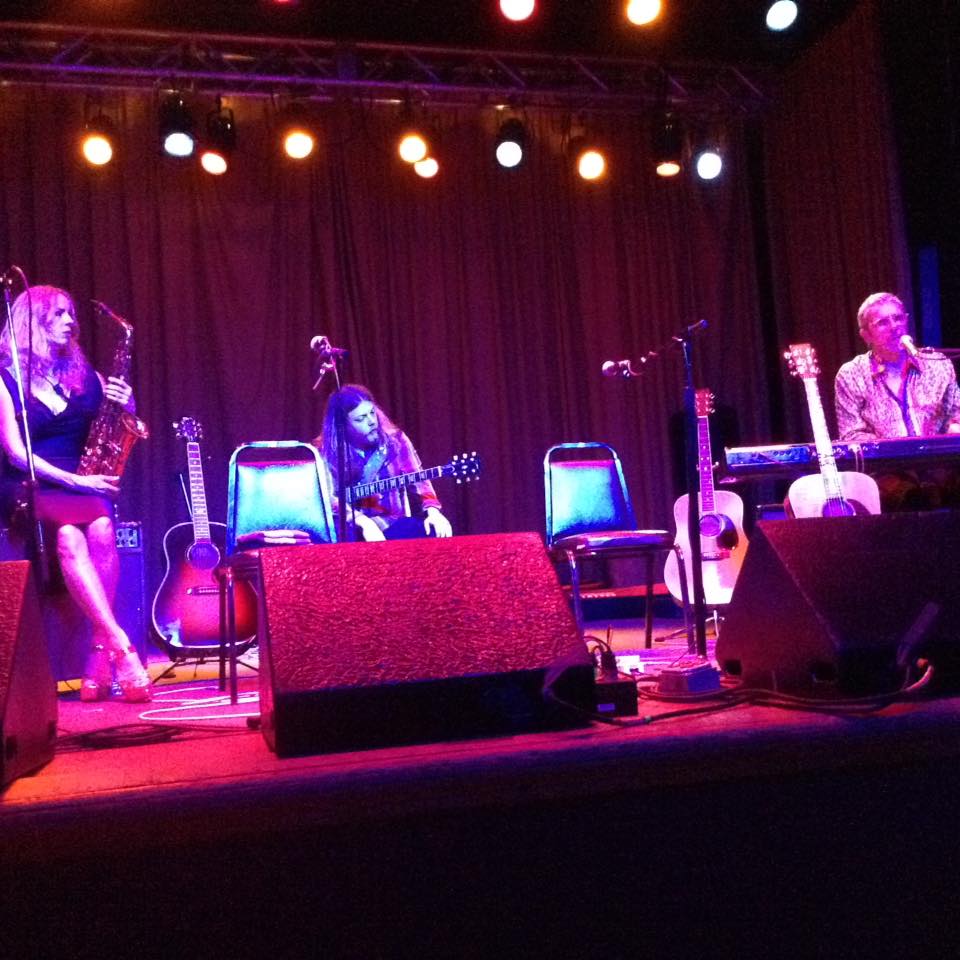
    Photo by Michael E Irelan
    Photo by Michael E Irelan

    A: In 2015 someone told me about how Bobby was doing a tour and was looking for a couple different guitarists. I got in touch with him, he saw some videos of me shredding on Dobro and asked me to do a couple gigs.  We played in Cleveland, OH and were booked in Ferndale, MI (Detroit ‘burb) but the MI gig was cancelled. Bobby and his wife CoCo are awesome. He has some wild stories that were really entertaining. It was definitely special be able to not just cover Duane and Clapton’s parts on the Layla material, but to be encouraged to add my own style. I definitely hope to be able to do it again if he tours again!
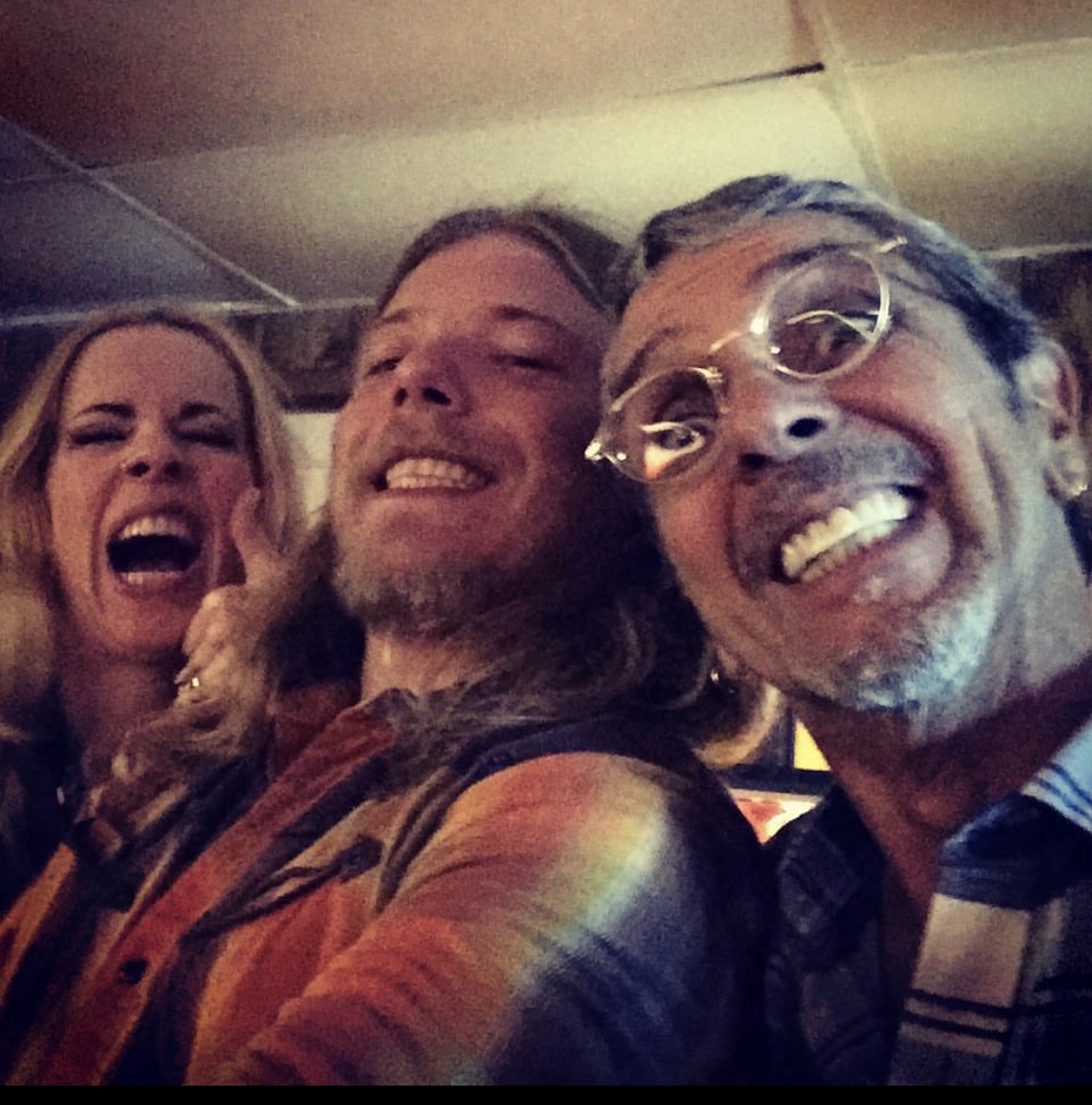
    Photo by Angelo Santelli
    CoCo Carmel, Angelo Santelli, and Bobby Whitlock in the greenroom at The Beachland Ballroom and Tavern. Photo by Angelo Santelli

    J: You’ve also shared a stage at various times with Michael Allman, Berry Duane Oakley, and Duane Betts. What is that experience like for you as a fan of the music, and as a player.

    august-2013-garrett-in-michael-allman-with-angelo-santelli-and-marble-garden.jpeg
    Photo by Hobbes Taylor

    A: I gigged around the south and Midwest with Michael from 2011-2012 and gigged with him on and off over the years since then. There were some memorable times but it was definitely much more of a party than serious touring. I first sat in with Berry at the Siesta Key Oyster Bar more than 10 years ago. The first real gig I did with him was at the 2009 premiere of the film “Please Call Home” in Sarasota, FL.  I play with him a few times a year and it’s always a lot of fun.

    I first heard Duane Betts in 2006 when Dickey’s band played the Common Ground festival in Lansing, MI and have gigged with him a few times in Sarasota, usually as gigs that Berry put together. It’s definitely fun being able to trade off with him since I took a lot of Duane Allman’s style (on lead and slide) and he learned firsthand from his dad his style, and us playing together with our own derivative styles. Pedro Arevalo is another one and someone I really enjoy listening to as a “fan” because he has such a unique slide guitar style. Hearing him when I was 15-16 really opened my mind up about some stuff you could do with bottleneck slide outside of the Duane/Dickey/Derek vocabulary, like using a wah pedal and creative uses of harmonics.
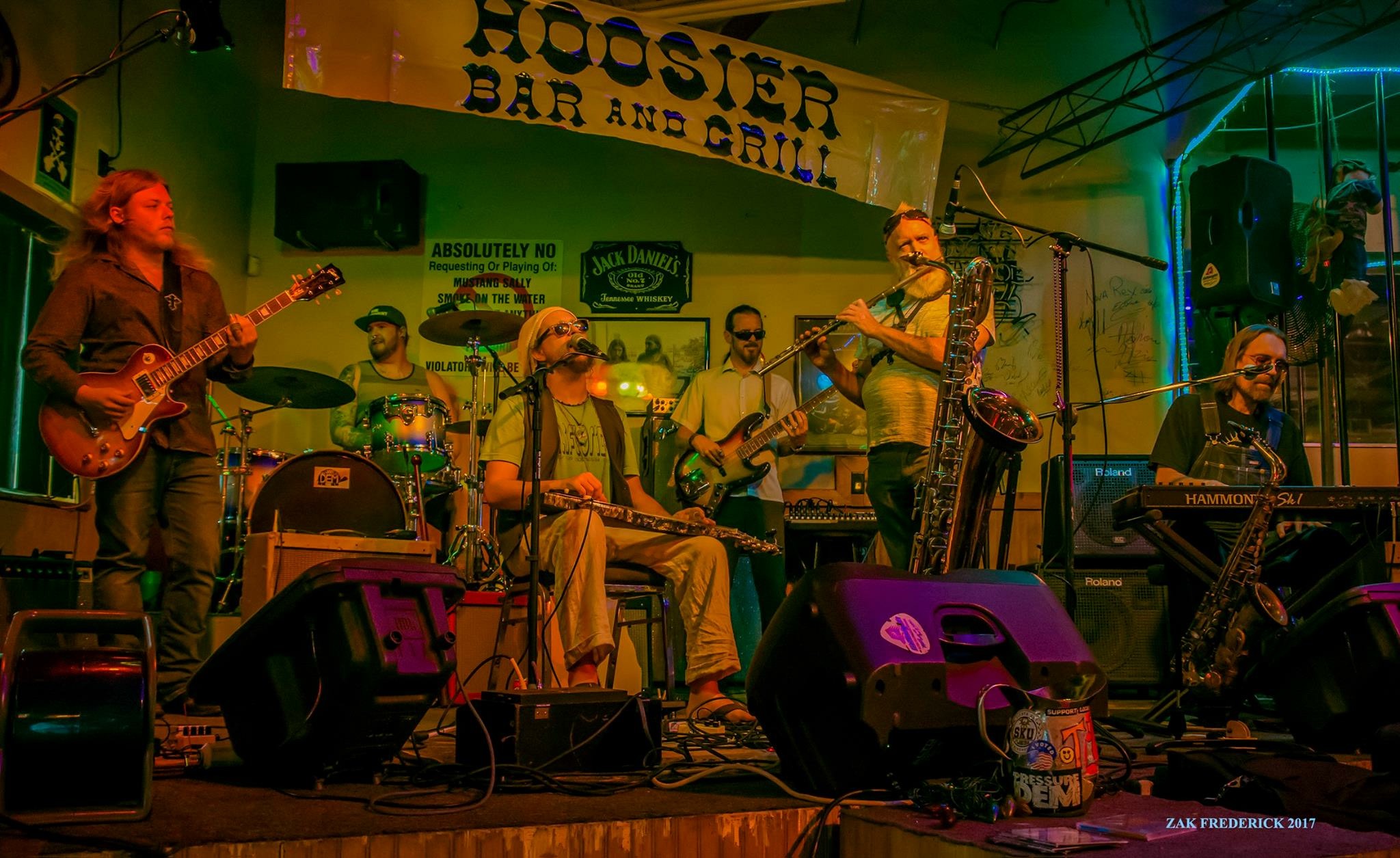
    Photo by Zak Frederick
    Angelo Santelli, Mike Fender (BO’s Indigenous Suspects) Pedro Arevalo, Berry Oakley, Richard “Doc” Burton, Mike Kach (Dickey Betts & GS)Photo by Zak Frederick


    J: I’m glad that you mentioned Pedro Arevalo. I just watched Myakka Alembic Band from 2017 Venice Blues Festival on YouTube and what a great jam. You, Berry Oakley, and Pedro Arevalo have a really cool 3 way slide jam about 8 minutes in that impressed the hell out of me. Everyone was listening and playing off of each other and I really loved that give and take. Do you have any thoughts about that show that you want to go into more detail?

    A: That Myakka Alembic was our original band name but people had trouble pronouncing it and just didn’t think it was as cool as I thought it was (lol) so we changed it to Santelli Oakley or Santelli McKenzie Oakley but that’s a bit too long…that was a really fun gig though. We do lots of jams like that at the Hoosier Bar in Osprey, FL (Sarasota, also the town Dickey lives in) where Berry holds his “Sunday Blues Service” which has been going on for the better part of nearly 4 years. That gig was one of the first times I sang in public which I really don’t like to do but you have to sing if you’re going to make any money unfortunately. Playing with Berry and Pedro is always fun because they’re such top tier talents that it’s easy to really “jam” with interaction. Everyone in this Sarasota music circle is familiar with the ABB style of jamming and everyone brings their own flair to it.

    Photo by John Fetters
    Photo by John Fetters

    J: We ran into each other in Nashville back in 2016 at Soulshine. How did you like that Music scene there and why did you take off for NY and then Florida?

    A: I was honestly pretty disappointed with the Nashville scene. People had been telling me for years to go there, and I moved there in 2015 (after the Bobby Whitlock gig) already having known guys like Jack Pearson and Kenny Olson from when Michael and I played the Dan Toler Benefit there in 2011. I met some more great people there but there just wasn’t a lot for me to do there. There’s lots of areas in Florida where you can make a decent living as a solo, duo or bands and despite being “music city” I thought the actual jobs for musicians were really lacking.

    NYC was a small attempt to see what I could do there after I started dating a girl from Manhattan that I met while doing a residency gig with Biscuit Miller in Key West last year. I found it pretty similar work-wise to Nashville, except Manhattan has so much more going on. I really think it’s the greatest place in the world. I was born in FL and have lived here at different times in my life so after Nashville and also an attempt in Detroit as well it made the most sense to come back to Sarasota where there is a small but thriving music scene with some of the best talent around.

    J: You have a couple CD’s out I believe, where can they be purchased if people want to catch up with your work.
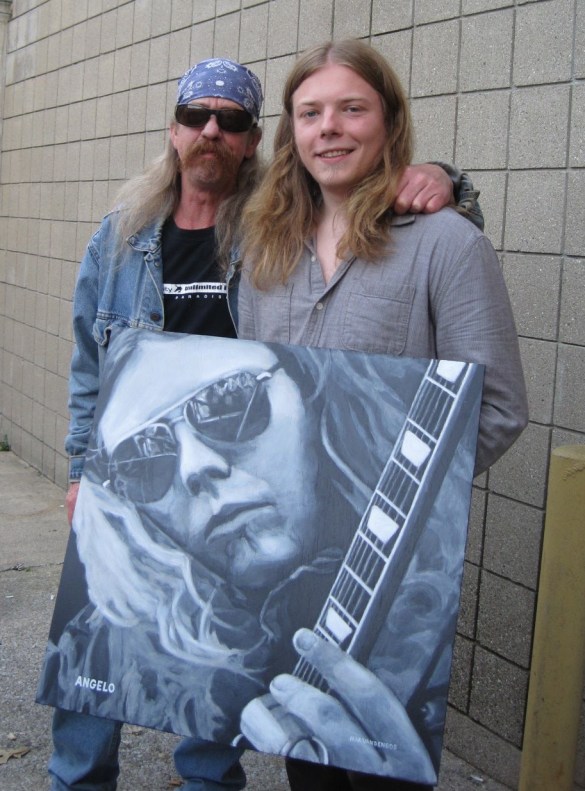
    image1-3.jpeg
    Photo by Karen VandenBos. Painting by Nate VandenBos that Angelo used for 2014 album titled Angelo Santelli.

    A: I have 2 full length CDs 2009’s “Marble Garden” and 2014’s “Angelo Santelli” as well as the Leo Kottke-style EP from 2016 called “The Slide Guitar That Destroyed the World”. All are on digital outlets like iTunes. Google play, Amazon MP3. The self-titled CD can be ordered from Bandcamp. (I just realized I didn’t have it and placed my order now!!!)

    J: You continue to also play with Shaun Oakley and Travis McKenzie in the Santelli Oakley Band. Do you guys have a regular schedule in Florida and are you doing much traveling?

    A: Last summer I put this band together with Shaun and Travis. It has been a slow start but with lots of great feedback. We are trying to find a good agent to help us get touring because it’s pretty difficult to book all the stuff grassroots as a new band. We missed out on the big blues and jam-band festival season for this spring and summer which is rather disappointing. We have rooms we want to play in Manhattan, Chicago, Nashville, Atlanta, Macon and all over Michigan and Florida but it’s just about getting the gigs booked and having the itinerary scheduled right.

    Photo by Tommy Santelli
    Angelo Santelli, Travis McKenzie, and Shaun Oakley Photo by Tommy Santelli

    J: What’s the next step for you and or your band?

    A: We’re trying to get an album together, we have an album worth of originals but just haven’t been able to record it. We’re thinking of trying to do a Snarky Puppy-style “live I the studio” album but we just haven’t been able to get it going. I also am wanting to do a new studio album of some other material I have (all relatively in the same genre, just different band formats). We’re trying to get our first national tour underway but as I had mentioned it’s really hard doing it grassroots. Definitely by the end of the year we should have completed at least one national tour with dates on the east coast, Midwest and around FL.

    I want to thank Angelo for taking the time to talk with me and share what he’s working on.

    There are many amazing musicians paying their way, gig by gig, day in and out because they love music.  Angelo keeps digging in his foothold and when that break comes, I’ll be in line to get my ticket and buy the album.

    Here’s where you can catch up with Angelo and his projects.

    Angelo Santelli Music FaceBook

    Santelli Oakley FaceBook Page

    Angelo Santelli Twitter

    Angelo Santelli Instagram

  • All things Aiden – The next generation of BMX racer.

    All things Aiden – The next generation of BMX racer.

    When I was growing up back in the 80’s, a BMX bike was what every boy in my neighborhood wanted . Every movie and TV show worth it’s salt had a cool BMX kid who could do the jumps and come to a sliding stop at just the right spot.

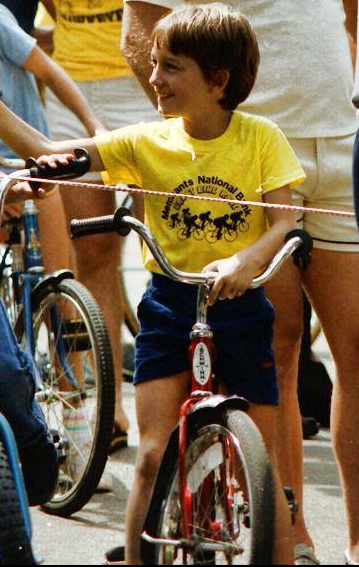
    Hard as I tried, actual racing wasn’t for me and, if you’ll look at the photo at the bottom of the page, you may see why.

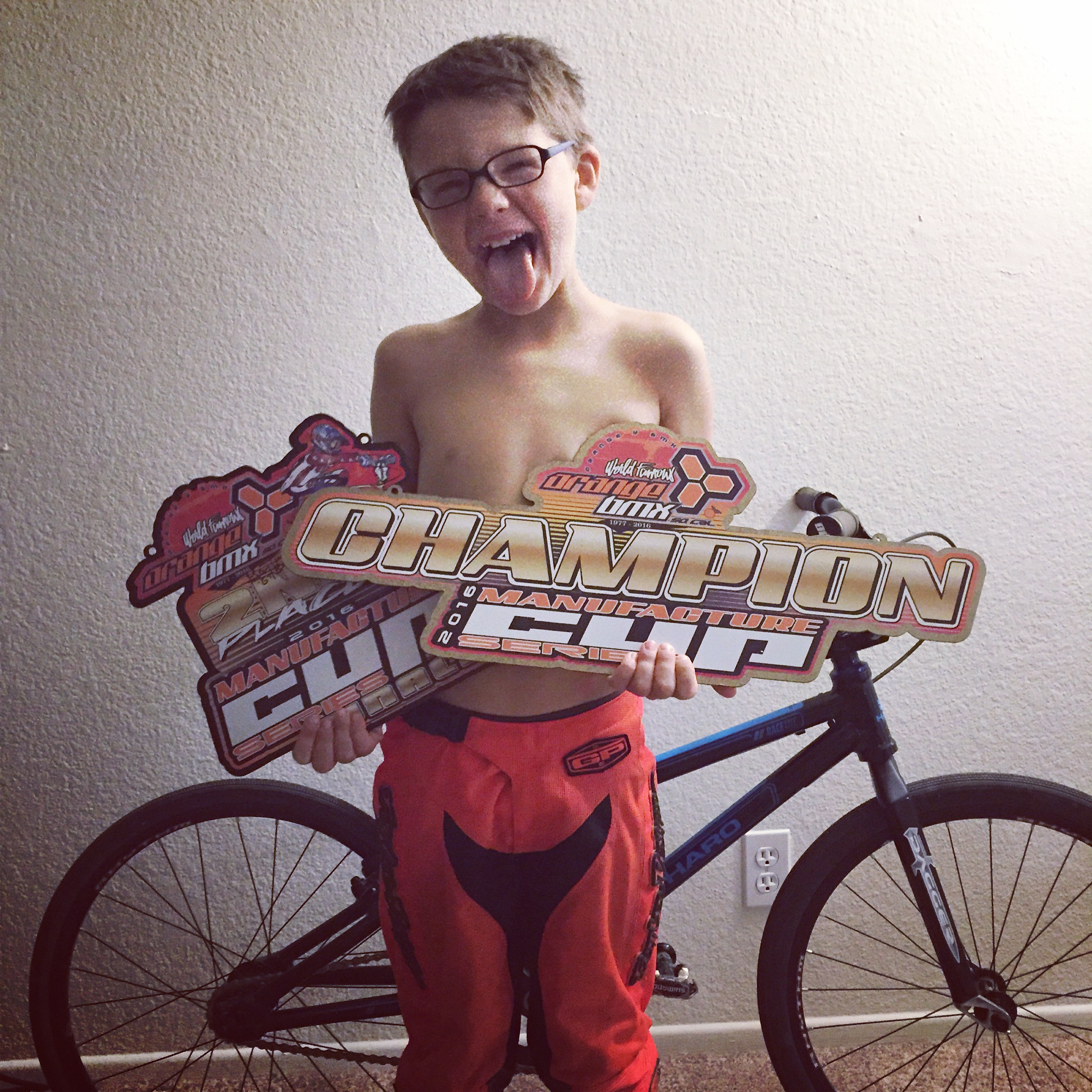
    10 year old Aiden Weaver, on the other hand, not only has the right gear, but the heart and drive to make it happen .  He’s a smart kid whose enjoying the ride but also has an eye on the future and a firm footing on a way to get himself to that next level.

    I’ve been friends with his parents, Joe and Rebecca, for a number of years and have been watching, online, as Aiden has taken up  and excelled at BMX racing.  I asked if they would like to be a part of an article and while I sent them the questions, Aiden himself read them and replied back.

    IMG_8587

    J: Hey Aiden, it’s awesome to finally talk to you about what you’re up.  How did you move from riding a bike around the neighborhood to competing?

    A: Thank you! Its nice to meet you. My parents have told me a lot of good things about you and I’m happy to answer your questions about BMX.


    BMX used to be a big part of my dads life. He raced as a kid in the MBL which is no longer around. Its now USA BMX. Southern California has always been an iconic place for BMX. It started right here. The Orange Y BMX track was a place my dad always wanted to ride and when we moved here he asked if I wanted to go check it out.

    April 12, 2016 I took my Hoffman bike that my parents bought at DICKS to the Orange Y to see if I could even get around the track, I was wearing a used helmet our friends got at a thrift store for $20 and a miss matched uniform. I was hooked. On April 22nd I raced in my first race. I did not make the main! From that point on I have never stopped racing.

    (Rebecca relayed that unfortunately, The Orange Y was leveled after a 40 year run but, Aiden won the very last Manufactures Cup Series ever held there. The Series took the best points over 10 races.)
    IMG_1582

    J: What’s different from your normal street bike to your race bike?

    A: The difference from my race bike and my street bike is that my race bike is only for the track. The parts are super light weight and designed specifically for BMX racing. My street bike I can ride at the skate parks and dirt jumps. It’s built with stronger parts. My race bike weights about 13lbs and my street bike weights about 20lbs

    J: You’re racing for G2 so, how did you get connected with that team and do they sponsor your gear/bike? Are you guys going after some other sponsorships that help with the cost of racing?

    A: The way I got sponsored by G2 was because I met the Turners at the Orange Y and they asked if I wanted to ride one of their bikes which were Gary Turner bikes at the time. After I started riding for them my dad started working for them and now builds all of the G2 bikes for the Turners. I have the first custom G2 junior frame ever made. I am sponsored by Box Components which supplies all the parts for the bike, Fly Racing for all of my gear. helmet, uniform, clip shoes and gloves and ODI grips for handles. And of course Mom and Dad!

    J: I saw that at the Great Northwest Nationals April 6-8 in Oregon your entire team got on the podium. How big is the team and are there team standings as well as the individual races?

    IMG_9306

    A: Our team has 30-35 riders and most of them are in California but there are some in other states as far as Pennsylvania. There are team standing but our team is not currently doing that series this year. Our points are individual points. District points, State points, National points, Gold cup points and NAG (National Age Group) point. You get points per race and proficiency level.

    J: You’ve been at this for 2 years and this last month was the first time that I read you had a fall on the track. What happened and did you get back on the track that day?

    A: I have actually crashed a few times but the most recent crash was during a timed practice lap. Something happened to my wheel and It sent me over my bars. I did get back up and actually raced that night and got 2nd.


    J: Joe just posted that you are now a 10 expert. I gotta admit that I have no idea what that means so how are the classes or levels laid out. Is it by number of races or finishes?

    A: When you start racing you start as a Novice. You have to get 10 wins to move to Intermediate. From there you have to get 20 wins to move to Expert. After that there is A Pro, AA Pro and Elite Pro. I do not know how you move up to AA Pro and Elite Pro but you have to be 18 yrs old to turn A Pro.

    J: With Joe and Rebecca both having been in competitive bodybuilding and having that competitive drive, has that helped you by always having them in your corner or do you kind of take the lead on it yourself?

    A: I think it has. When I have a bad attitude they push me to be better and make it fun.

    IMG_2845

    J: Your Instagram is an awesome look at your day to day and a peak at what you’re going through. Is it helping you get some exposure or is it more for you to have a cool place to post about your journey?

    A: I think that it is both. On the journey side it shows people what I do and I get to meet other people that do what I do. For exposure I get cool opportunities like this and to represent other companies.

    J: Maybe it’s too early to ask but, what are your long term goals in BMX racing or are you just having fun with it? Seems like you are focused and willing to put in the work so is this a future career in one way or another?

    A: My long term goal for BMX is to be in the Olympics in 2024 and 2028 and to go on and race Worlds in the following years to come. I will be hitting the Worlds goal this year for the first time as I qualified to race for Team USA at the World Championships which are in Baku, Azerbaijan in the Middle East. I hope to make the USA proud!

    IMG_8519

    I hope to be a kid others look up to, I do want to be a Mechanical Engineer and have already started building my business plan. (I have the note book with ideas to prove it) I hope to use BMX and my social media to gain connections with people that can help me along the way it’s a community full of family with a lot opportunity for the future.

    Thank you for taking the time to learn BMX and myself. I hope it gets others excited about the sport I love.

    Aiden

    I’m super impressed with Aiden’s drive and expect big things out of him over the next 10 years as he continues to work towards those goals.  You can find him on Instagram, @aidenweaverbmx, or just click any of the pictures to go to his page.

    If you’re looking to help Aiden out with his future goals, you will not find a harder working kid or a harder working family.  Donations can be sent to his PayPal account.

    Oh and before I forget, here’s that promised photo from me back in the early 80’s.  I believe this one with fenders and steel frame clocked in at about 47 lbs.

    30657170_10209563759005448_7780085561645072384_n

  • Album Reviews for Ink19.com

    Album Reviews for Ink19.com

    I have been doing a ton of writing but not a ton of posting…yet.  I have about 5 different articles in the works and will have them up here very soon.

    In between working on my own passions, Iv’e started writing album reviews for a site that does a number of reviews, Ink19.com  I just had my first one posted for the new Blackberry Smoke album, Find A Light.

    I’ll be writing an article about them soon and will highlight some of their work and why you should be listening to them.  Until then, check out the review and maybe pick up the album.

    https://ink19.com/2018/04/magazine/music-reviews/blackberry-smoke

    https://www.blackberrysmoke.com/


  • Through the lens of Carter Tomassi

    Through the lens of Carter Tomassi

    In my ever expanding hunt for all things Allman Brothers related, I purchased a Carter Tomassi print a year or so ago and mentioned that I would love to interview him about his photographs.  He was wonderfully accommodating throughout the purchase and said that he’d be more than happy to answer any questions I had.  After our phone conversation, I sent him a number of questions.  What you see below is a beautifully written piece about his experiences.

    I had considered adding my questions to this piece but it would only detract from what he has so eloquently expressed below.

    The Great Speckled Bird, the hippie community weekly paper, was getting a lot of attention when I left school, heading for Atlanta. It was a weekly was run by whoever showed up to put in long hours for zero pay, that meant far left types, people who considered “liberal” a grievous insult. I’d spend 4 years at Auburn Univ. knowing next to zero about politics beyond what the Today Show reported. Somehow these good folks found it in their hearts to accept me.

    LeicaM4
    Photo by Carter Tomassi

    At first I survived by selling the Bird on street corners, earning $25/wk. for rent and food. Outdated photo supplies somehow had to be paid for too. Eventually outside jobs with real paychecks came along. My SLR was traded in for a fancier Leica.

    I was a street photographer as young people were pouring into Atlanta, living on the street or in the old decrepit mansions nearby. There was plenty to shoot, especially nights when the slow parades of cars from the suburbs drove past kids who wanted to be seen as shocking. It was the South’s Summer of Love two years after Haight-Ashbury.

    Music was everywhere. Young bands plugged in from neighboring stores to play vacant lots. The 12th Gate coffeehouse broadened from folk to electric. I have vague memories of Little Feat in the early years playing there. Warm Sunday’s in Piedmont Park often had live music. In late ‘69 an undercover cop making a pot bust near the bandstand caused a pretty nasty riot, landing us on the national news. A roommate had his picture in Time magazine being pulled by his hair by a cop. No photos from me that day, I was sort of out of commission on psychedelics.

    Earlier that summer had been the 1st Atlanta Pop Festival, two days in a huge dirt parking lot outside the city. As we entered the arena that day Janis Joplin (missed seeing her, she had played the previous day) was introducing her friends in a different band, It’s A Beautiful Day. I remember a great Led Zeppelin set as well as a wonderful palate cleanser from Dave Brubeck.

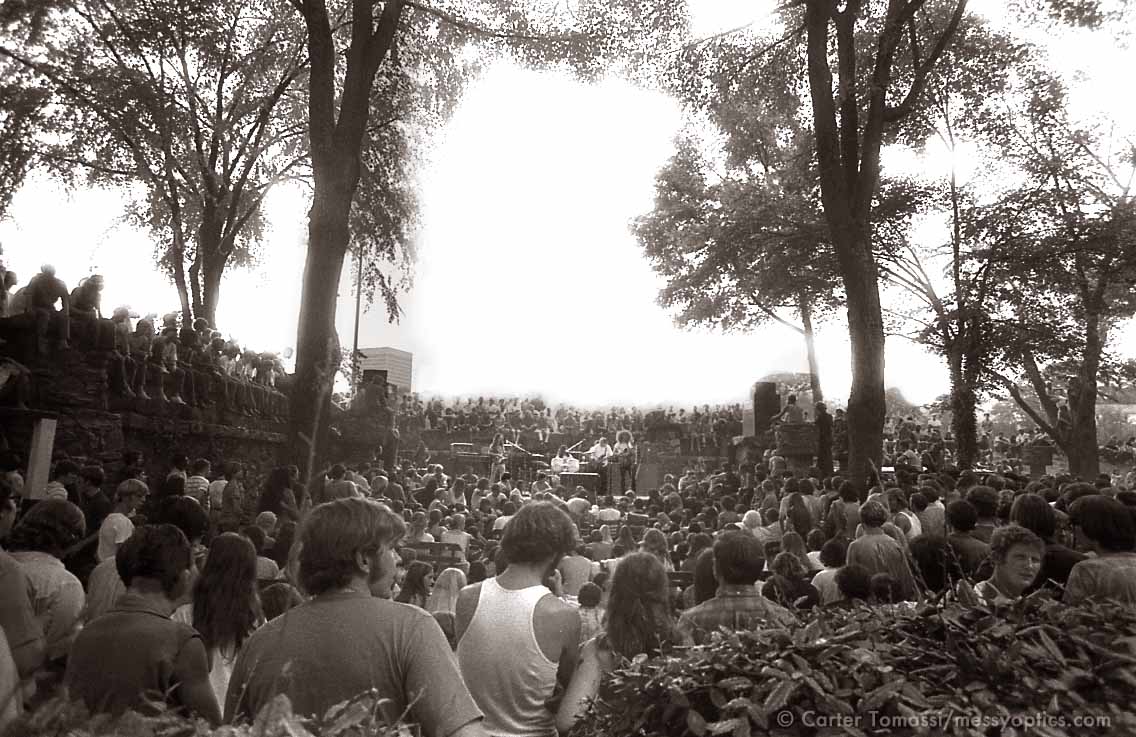
    Piedmont Park crowd, 1970
    Photo by Carter Tomassi

    The day after that the promoter, Alex Cooley (who incidentally lived directly across from the park), brought back Spirit and Sweet Water to play for free in the park. Delaney and Bonnie and ABB may also have played but somehow I missed them. Around 11PM the Dead set up. Very vague memories here of drugs handed back and forth from stage to audience. At that hour it was pretty dark, just a couple of home floodlights lit the band pavilion. I laid back on a stone railing for my first, and best, Dead experience.

    That same fall the Allmans played the park a few times, tightening their material before their first album release. They always drew a large crowd; people saw them as famous even before their fame hit. Another vague memory from that winter, waiting up for news on the band’s first Fillmore East show, cause who knew if N.Y. would like them as much as we did?

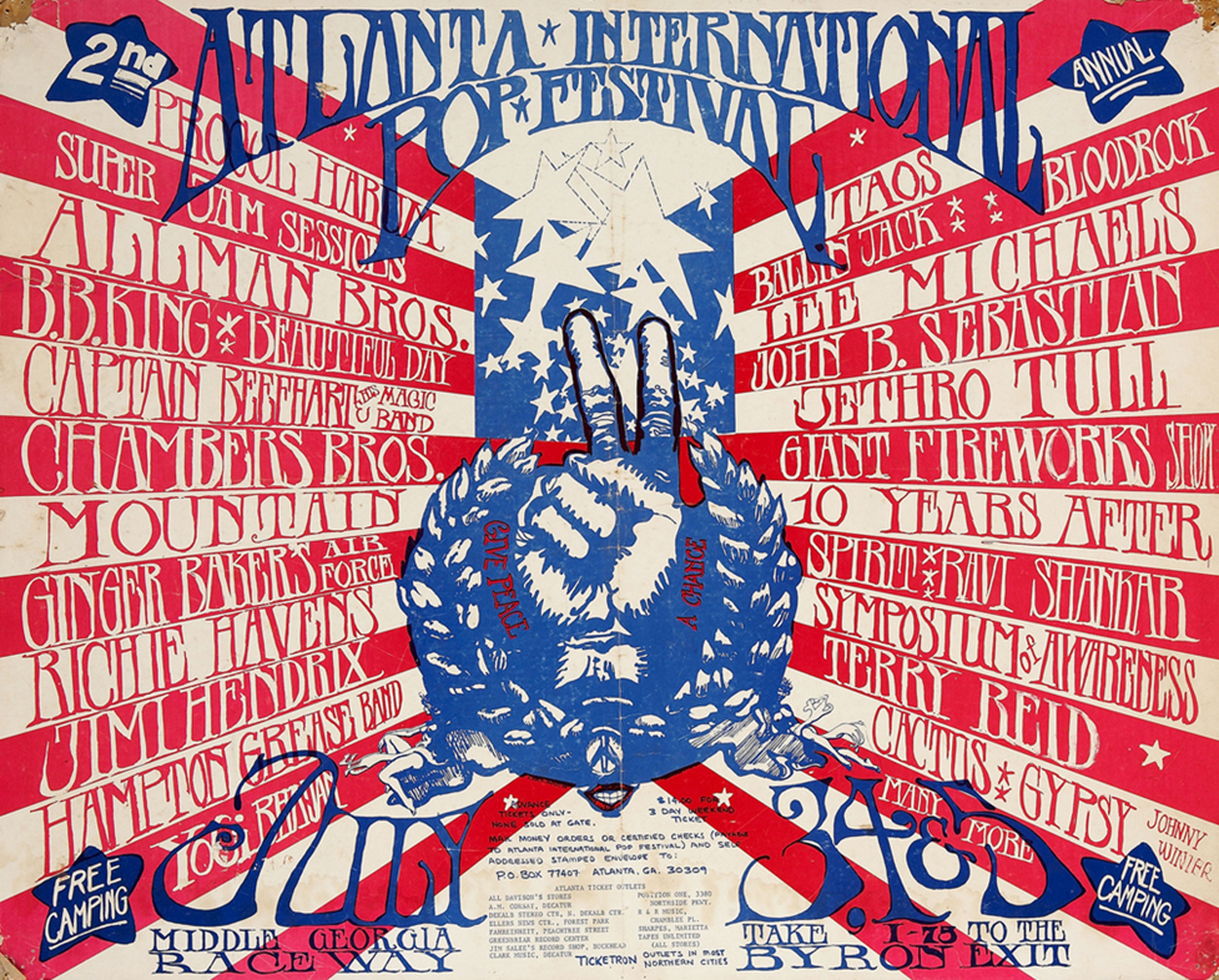
    atlanta popThe next July Atlanta Pop #2 happened. The week before I drove down to photograph the setup, the next week I arrived along with 250,000 others. I hadn’t thought to ask Alex Cooley for a stage pass so for me the best photos were of the fans.

    After those published images appeared the coveted back stage pass was mine. It should have been obvious to me published concert photos would be important to the promoters too. The next 2-3 years there were too many shows to count. It wasn’t about the music so much as capturing the musicians, finding moments between stage poses revealing their individual personalities.

    Some moments couldn’t be shot, like the time Keith Moon screamed out “T R I S H!!!” between songs and ran offstage to be with his Atlanta sweetie. The Who carried on without a drummer for a couple of songs.

    Skipping forward a year to the ‘71 Allman Brothers July 17th Atlanta Civil Auditorium show, a homecoming for the city and for the band. It had been a year since they were introduced to the huge Atlanta Pop Festival audience. Now the Allmans were officially rock stars. But they were also sort of “our band.” The feelings backstage were warm and friendly. My photo of Duane smiling towards the camera captures the spirit. Honestly I don’t recall taking the shot, was Duane smiling at my camera or had someone snuck in next to me, who knows?

    Gregg and Duane Allman, July 4, 1971
    Allman Bros. on stage in the Atlanta, GA concert of July 17th, 1971. Photo by Carter Tomassi

    After the first show I caught some of the band backstage mixing with the (Bruce) Hampton Grease Band. Duane seemed approachable so I asked him to grab someone else for a shot in the sunlight outside. I kinda hoped he would get Gregg (who I realized later was nowhere around). Duane grabbed Berry instead; out we went for two photos. Less than a minute maybe. They might have done more but I felt like what I got would be okay. The shots had no significant at that point and weren’t printed.

    duanecover3-186x300

    Only months later on Halloween day did the photos become important when Duane’s accident and death was reported on the radio. I chose the best one, cropping tightly on Duane.  Four days later when it appeared on the cover the Allman family called asking for other images.

    Skipping ahead another year, things got a little spooky. Berry had just died in an identical motorcycle accident and I had shots of Duane and Berry standing together apart from the band. That photo had never been seen. The Bird and possibly Creem, a national rock paper, published the brothers side by side. I’m sure Rolling Stone would have loved having that shot but it was never offered to them.

    img_1350
    Berry and Duane backstage Atlanta, GA concert of July 17th, 1971. Photo by Carter Tomassi

    The July 4th, 1972, Allman concert, the first without Duane, had a couple of shots of Gregg that need explaining. Early in the show there’s a photo of Gregg wearing a striped t-shirt, at some point he must have left the stage and come back wearing the now-famous Peacock silk shirt Eric Clapton had given Duane. Several years ago someone emailed me, bringing up the shirt’s significance. Gregg had left the shirt with his girlfriend Kathy Martin a singer in New Orleans. Kathy kindly filled me in on how a third person had tried machine washing the shirt, tearing it into sections. One other memory from that day; Gregg’s mom and a little girl appeared during the show at the side of the stage. Of course, it must have been Galadrielle. Unfortunately no pictures, it felt like family might be off-limits.

    Gregg Allman
    Gregg Allman at the Allman Brothers’ Band in 1972 Atlanta concert.  Photo by Carter Tomassi.
    Gregg Allman
    Gregg Allman at the Allman Brothers’ Band in 1972 Atlanta concert.  Photo by Carter Tomassi.

    I greatly appreciate the work and effort that Mr. Tomassi took in recreating the events that he lived through and documented with his lens.  His photographic contributions and recollections help put together pieces of a shared puzzle that we can all enjoy.  Click the pic below to get to his website and maybe drop him a line about the article.  I know that he’d love to hear from fellow music fans and if your inclined, his prints are absolutely beautiful.

    Carter

  • Who wants to start playing guitar 3

    Who wants to start playing guitar 3

    Hopefully, the previous 2 posts have given you some confidence and you are starting to strum a little and make some organized noise.  If you’ve hit those exercises, your fingers will go where you want and form some cool chords.  If you’ve practiced the CAGED system, hopefully you’re hitting chords in different places on the neck and starting to get some comfort moving around.

    This process can take the next 20 years of your life so, depending on your level of aptitude to advance, you have to decide where you go from here.  Some players want to be the acoustic guitar guy/gal that pulls out the guitar and serenades the party.  Some want to become Steve Vai, Stevie Ray Vaughn, or Samantha Fish. it’s all what you like and how your skill progresses.

    One thing that I have yet to really address is Music Theory.  I didn’t suggest getting lessons in post 1 or 2 because I never took lessons per say.  I had a couple guys show me the ropes and teach me their idea of guitar playing but I never sat down with someone that taught me the A B C’s of playing and the theory behind it.  I wish I’d put in the time earlier to have a better base but that’s where my playing is taking me now.

    I’m not against any music theory, it was just not my cup of tea.  I wasn’t a great student in geometry or science and to me, music theory felt about the same way.  I think that I’ve picked up a few things here and there but I couldn’t name them or telly you what they are, I just play it.

    You will need to decide how deep you want to get into Theory but I would suggest diving into it at some point.  I believe that Knowledge is power and the more you know, the more opportunities it can open up.  If you understand the language of music and how to fit the pieces together in a “academic” way, you may develop a style based off of one tiny piece that you pick up and can change everything.

    I grabbed a book you can find anywhere called The Chord Wheel  that is pretty handy for a beginner that knows their basic to intermediate chords.  This is about as deep into music theory as I’ve ever gone and even this has been a big help.  It may be the only Theory I ever learn but, for me, it’s a good snapshot of what I had questions about and what my next step is.

    If you struggle with being a self starter, google, or ask around at your local guitar shop for who teaches the style of music that you want to play.  And, even if they don’t teach the style you want, they will be able to help build that base that you need.  My bigest suggestions is find what you want to play and stick with it. Don’t get discouraged, keep pushing through whatever it is.

    Now, having gone through all that, here are a few videos on both sides of the issue.  Watch these and then decide for your self how you want to play.

    Why Guitar Players Shouldn’t Learn Theory
    Music Theory For Beginner Guitarists – What Do You NEED To Know?

    Let me know at my Instagram,  Twitter ,or FB if you liked the article and if it helped.

  • Who wants to start playing guitar, Part 2.

    Who wants to start playing guitar, Part 2.

    So now you have purchased a guitar.  Maybe you picked up a tuner and some guitar picks but, what do you do now?  Well, now comes the fun and probably most frustrating part of it.  It’s time to get to work and learn the craft.

    When I started learning to play, it was during the glorious hair band days and guitar players were getting more and more ridiculous. The speed of players from the mid 80’s through the 90’s seemed to just get faster and faster and although it sounded really cool, it was impossible to play just starting out.

    Equipped with an acoustic, 1973 Yamaha FG-201, I neither sounded like, nor did I have the skills to pull off those licks and runs.  The guitar was not properly set up and on top of the difficulty in making chords, it was just damn hard to play.  It was very frustrating and probably why I hate listening to hair bands to this day.

    So what do I wish I would have known then that I know now?  Patience is the first thing you need to get a mindset of.  It’s going to hurt to play, it’s going to take time to figure it out, it’s going to be daunting.  Stick with it and make small gains and build on them.

    I suggest starting by sitting down in a chair, tuning up the instrument, and running through a few exercise to warm up.  Guitar playing is a thing you are trying to get good at just like running, or weight lifting and you need all the muscles, (fingers/wrist/arm) warmed up and in shape in order to get your best out of it.  The more comfortable you are with the guitar, the easier it will be.

    I don’t care what kind you use but the simpler the better to start.  I’ll post a video below that will show some that I think are beneficial.

    You are not only warming up your muscles but also working to perfect your technique.  My opinion is every time you pick up an instrument, you are learning and perfecting your technique. Make it count each time and you will get control of it before you know it.

    Another thing I wish I would have done early on is find a group of songs that I liked and learn the chords.  In 2018 that’s easier than ever because of the many website that have the chord breakdowns to pretty much every song you could ever want to learn.  Back in my learning days you had to buy the books for the entire album and while that was great, you could end up broke trying to buy all the books for the songs you wanted.

    My opinion is that, getting a couple of songs under your belt will give you tons of confidence and you are more likely to continue learning and playing.  You will start to pick up the skills and technique to make those songs come alive.  You will start to see how songs are structured and how the chords play off each other to make the music that you hear and now, can play.

    One of the most beneficial thing I’ve picked up lately that I think would be a huge benefit is  learning the CAGED system of playing chords.  It’s playing the basic chords in a variety of positions and once you learn your basic chords, that acronym will make sense.  I will attach a link that shows a great overview of the caged system.

    Here are a couple that I found that are helpfull.  Remember there are millions that you can chose from but these are a great place to start.

    3 Finger Exercises Every Guitarist Should Know!

    The BEST Beginner Guitar Exercise for Pinky Strength

    The CAGED SYSTEM explained

  • Who wants to start playing guitar?

    Who wants to start playing guitar?

    I’ve had 2 different friends ask me lately about guitar playing and thought I’d put together some simple thoughts that I wish I’d known when I started.  I’ve been playing since I was in my early teens and am 43 now.  That doesn’t mean I’m any good but, I’ve been a constant student along the way and have a few pieces of advice that may help.

    I’m going to break this into a couple different blogs so you can soak it all in.  Let’s start with purchasing an instrument to get you going.  Here are a few things to consider when buying an instrument.

    Let me begin by saying that for me, I would only buy used stuff or very low priced equipment if I was just starting off.  Spending a ton of money and then losing interest is a great way for the next guy to get a good deal on what you burned out on.  Have a clear idea about what you want and start simple.

    The used market for instruments on either Facebook market place, Craig’s list, or the pawn shop, are a great place to start looking.  The local Guitar Center will also have a wide selection in every price range.  You will need to do your homework and probably not buy it your first trip but, some diligence on the front end will make sure you get a good starting instrument.

    Be aware, used instruments are going to be scratched, worn, maybe some dents, but as long as the main features are solid, you’re ok.  If you have a friend that plays, maybe ask them to go along and try it out if you don’t yet play or have the confidence to check it out yourself.  It can be daunting so just take your time, do a little research, and keep your budget in line with your goals.

    After purchasing the instrument, I would find a local luthier to set it up. Now, what the heck does that mean???

    A luthier, in the basic definition for our purposes, is a guitar mechanic that will make it work.  They can make a number of adjustments to make it play correctly, and make it easier for you to play.  Even a cheap guitar set up correctly will make a world of difference in your frustration level with learning to play.

    “A Set up” means that the parts of the guitar are adjusted to affect a number of functions.  It assures that the neck is straight, that the frets won’t buzz, that the nut doesn’t grab the strings, and that you will be happy playing it.  Keeping it in tune and easy to play will make a huge difference in sticking with it.

    If you’re set on a new guitar from a retailer, great.  You may pay a little more but you have an advantage of comparing a number of different instruments and you are relatively assured that the instrument is in near perfect shape.  I would also push for them to set it up and put on new strings for you.  If they won’t throw it in for free, have it done before you take it home.  It will give you a good couple of months of playing those strings and assure that you can focus on learning and not wrestling a high action neck.

    Now the really hard part, putting in the work to start playing.  Before we get there, here are a couple videos that I found very helpful for this subject.

    This video is a great breakdown of all the different kinds of guitars and showcases some of the things that I mentioned in this article.  Find what you want and start to research the brands that give you what you’re looking for.

    GCH Absolute Beginners guide to guitars

    I follow Tony Polecastro on a number of platforms and find his videos and lessons to be the easiest and most complete for what I’m trying to do with my guitar playing.  His knowledge on the instruments as well as music is why I listen closely to his videos.  I would suggest once you get a guitar that you hop over to his page.  I’ll link a few lessons that will help the beginner.

    Tony’s Top 5 Beginner Acoustic Guitars Under $500

    I hope this helps you get started and I’ll post a second blog on getting to playing soon.

    Jeremy


  • “You Gotta Sin…”

    “You Gotta Sin…”

    Along with the Podcast that I’m doing with my buddy Rod, I will also throw in some album reviews from some of my favorites over the years.

    This entire album is as ingrained in my musical vocabulary as “Free Bird” or “Don’t Stop Believing” is for the casual radio hits listener.  It’s backed by an amazing group of musicians and her songs range from 90’s era pop, twangy country, to a heavy dose of  1960’s love songs.

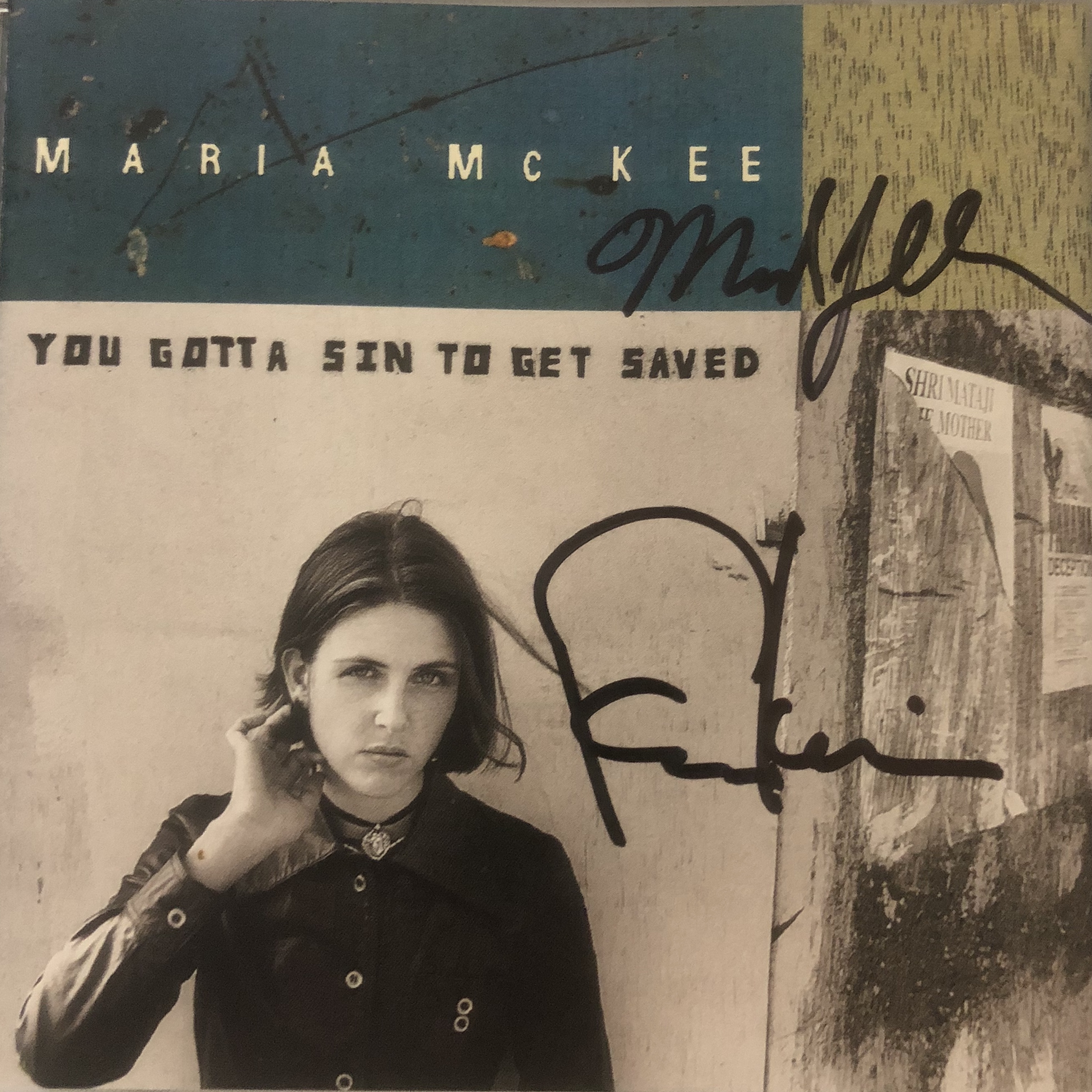
    IMG_E0809[1]Maria McKee’s 1993, You Gotta Sin To Get Saved, is a great album with a very well put together tracklist. It’s backed by two of my favorite musicians from The Jayhawks, Mark Olson and Gary Louris.  From the various, glorious, backing vocals to the albums producer, George Drakoulias, playing drums on tracks 4 & 6, it’s layered with amazing musicians.
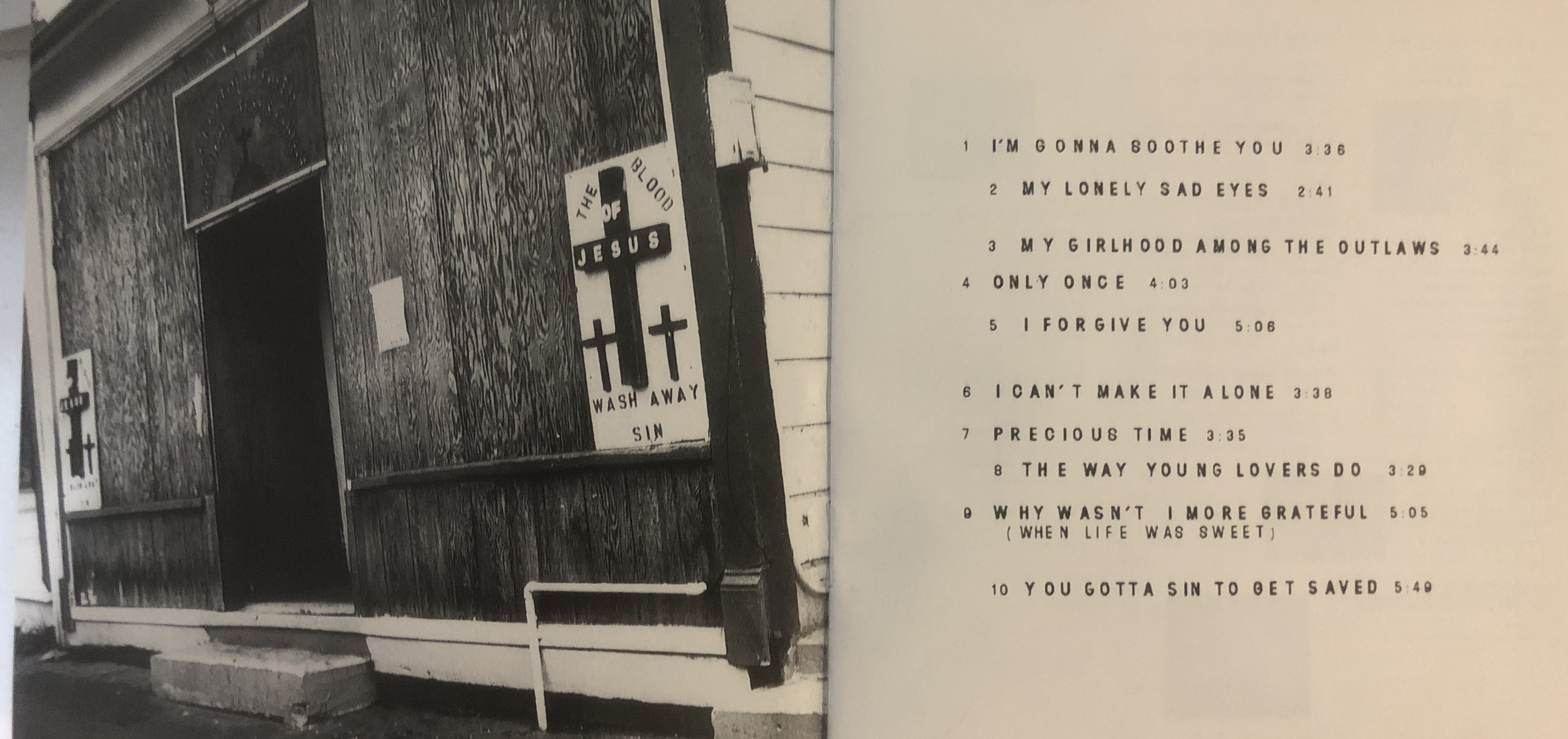
    This album is a bit of departure for me in that it’s all written from the female perspective of love, loss, and the frailties of her relationships.  That’s not to say that I can’t relate but, I generally am not this comfortable singing a song with lyrics like “My girlhood among the outlaws”, but for this album I do it with glee.

    It’s such a personal collection of songs that that I’ve always felt like I was on the other side of the mic as Maria McKee sang the lyrics directly to me.  It’s as thought I was part of the narrative.  Along with the touching lyrics, the cover photo by Dennis Hopper, yes The Dennis Hopper, completed me falling in love with her and this album.

    Here’s the tracklist and my take away from each one.  You may get something different out of it but here’s what 25 years of listening to it have given me.  Click the song title of each one to go to a video or audio link to get a taste of this beautiful album.  I would also suggest buying it and listening to it front to back, the way an album should be listened to.

    “I’m Gonna Soothe you” – Probably the most produced sounding track on the album, it’s a solid, pop, love song.  Great backing harmonies by the Waters sisters, Julia and Maxine, and Edna Wright while Don Was fills in on bass.  I prefer the rest of the albums “lived in” feel to this one but, it’s still a great track.

    “My Lonely Sad Eyes” – Originally written and performed by Van Morrison, McKee takes this tune and smooths it out a little and adds her flair to it.  It’s not a huge departure from the original but, in the case of a Van Morrison song, that’s as big a compliment I can give.  Gary Louris again adds some beautiful country note bends and fuzzy, full strummed chords that help really move it along.

    “My Girlhood Among The Outlaws” – Written by McKee, it’s a look back at the mistakes and eventual path that took her to where she, and we, needed to arrive.  The forth verses lyrics a so cleverly written I can recite them at the drop of a hat.  “So here we are, and I don’t know what to call it. Cause love, love is such a funny promise. Commitment is impossible, forever is a lie. But that still leaves you and I”.  Wrap those words around a  beautifully written melody and she rips your heart out each time you play it.

    “Only Once” – This little beauty is a dash of Gram Parsons wrapped in country flavored song about that one true love.  Backing vocals on this one are done by The Posies co founders John Auer and Ken Stringfellow.  “I will love you till I’m saved, I will love you from my grave. And love like this can happen only once, only once.”

    “I Forgive You”– Another Waters sisters backed song that wouldn’t work without the call and response throughout the gut wrenching lyrics.  Written by Maria McKee and Sam Brown, you can feel the desire and pain of the love they poured into this one.  Coming out of the bridge she sings “I know he hurts me, I hurt him, sometimes I don’t deserve him, but he loves me, and I love him, and this is how we are..” while the Water sisters come in with “It’s all right, I’ll take you back again”. And 25 years later I still get goosebumps from there through the end of the song.

    “I Can’t Make It Alone” – Written by Carole King, this song is beautifully sung by Maria McKee in the spirit that it was written in. Gary’s guitar playing on this one is as distinctive as the backing vocals he contributes.  Between McKee and Louris, their harmonies really punch up this song to a powerhouse.(I’m not 100%, but I think that Mark Olson is in the mix as well)  I would love to see another album collaboration between Maria and Gary & Mark again. (I’d gladly volunteer my rhythm guitar skills so they could focus on songwriting, haha)

    “Precious Time” – This song was originally recorded by The Jayhawks for their album Tomorrow The Green Grass but this version seems to give it new life.  Now I have only heard the demos from The Jayhawks but I doubt it could hear it any other way than with Maria taking the lead role and Mark Olson on harmony.

    “The Way Young Lovers Do” – Another Van Morrison song that Maria takes a hold of a rips through with Van Morrison’s passion and dominance of the vocal runs.  The Memphis Horns, of pretty much all the Stax Records hits, add a huge brass element that come in and out at just the right places.

    “Why Wasn’t I More Grateful (When Life Was Sweet)” – Written with her Lone Justice band mates, Bruce Brody and Marvin Etzioni, it’s a biting lament with an upbeat tempo that, oddly, match perfectly.  While I couldn’t find the exact tracks that he’s on, I feel like Benmont Trench of Tom Petty and the Heartbreakers fame is probably the guy hitting that Organ.

    “You Gotta Sin To Get Saved” – A ruckus tune that reminds me of the vocal feel and energy of The Ronettes 1964, “Be My Baby”.  It has a very live sound complete with hand claps, by Nicole Smith??, and some very enthusiastic back up vocals. It ends the album as a perfect book end and closes out the 10 track journey.

    There are musicians that I didn’t get a chance to mention on here, mostly because I’m not 100% sure of who played what.  Everyone that contributed is felt throughout the album and each piece is perfectly laid.

    IMG_E0811[1]
    Inside cover photo by Wyatt Troll
    Maria McKee’s Website

    Buy it from Amazon

    Buy it from Itunes

    (Side note:  The photos I used are from the CD copy I had Mark Olsen and Gary Louris sign while in town for a show.  More on that in another review.)

  • “The Blues In Black & White”

    “The Blues In Black & White”

    IMG_E0687[1]

    This past weekend’s adventure was a quick, 24hr, trip to the heart of Chicago and the heart of the Blues, Chess Records.  2120 S Michigan Avenue is still the physical building and has been repurposed as the Willie Dixon Blues Heaven Foundation.

    IMG_0713[1]
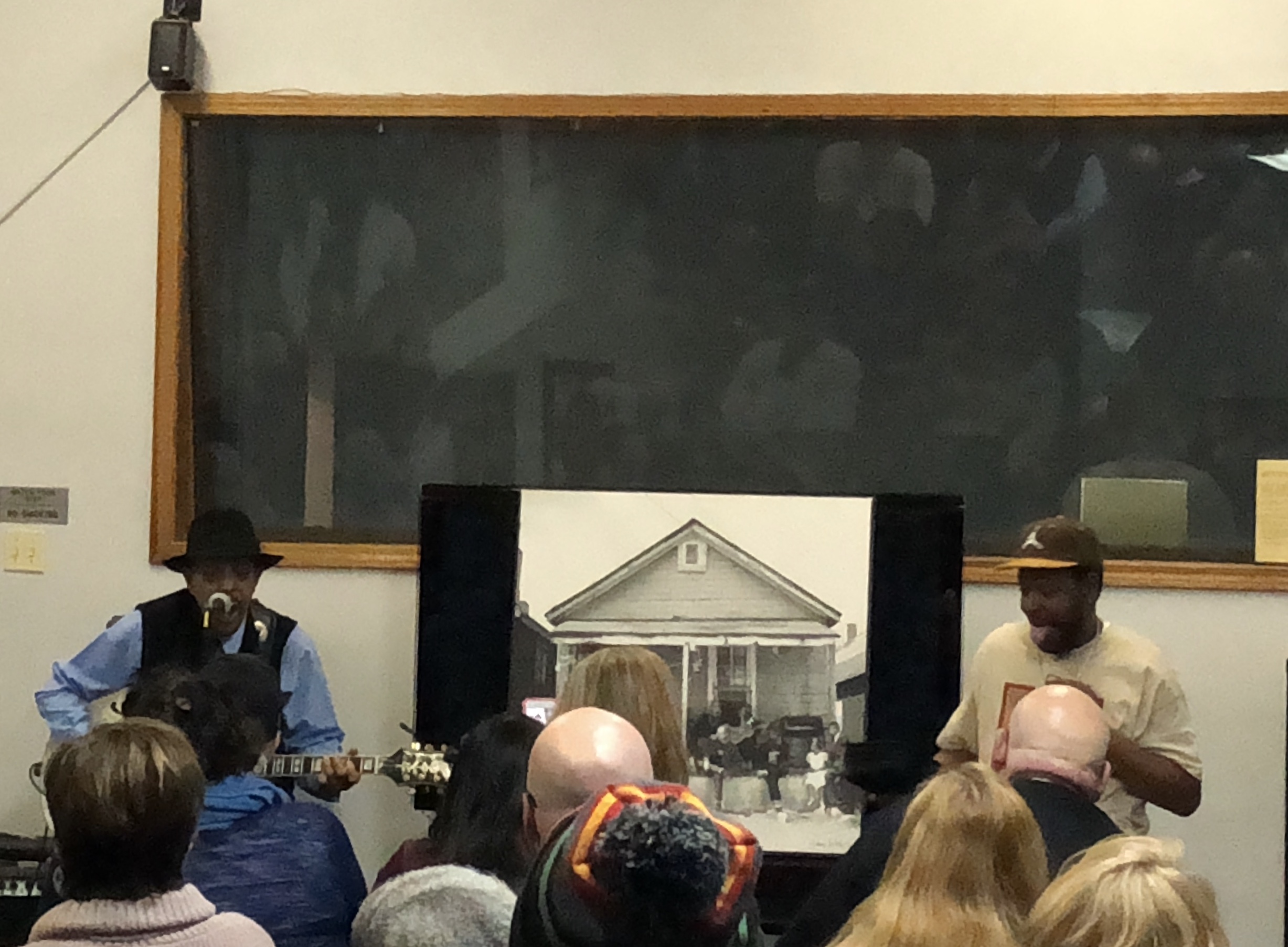
    Kirk signing my book. Photo by Mark Vormittag
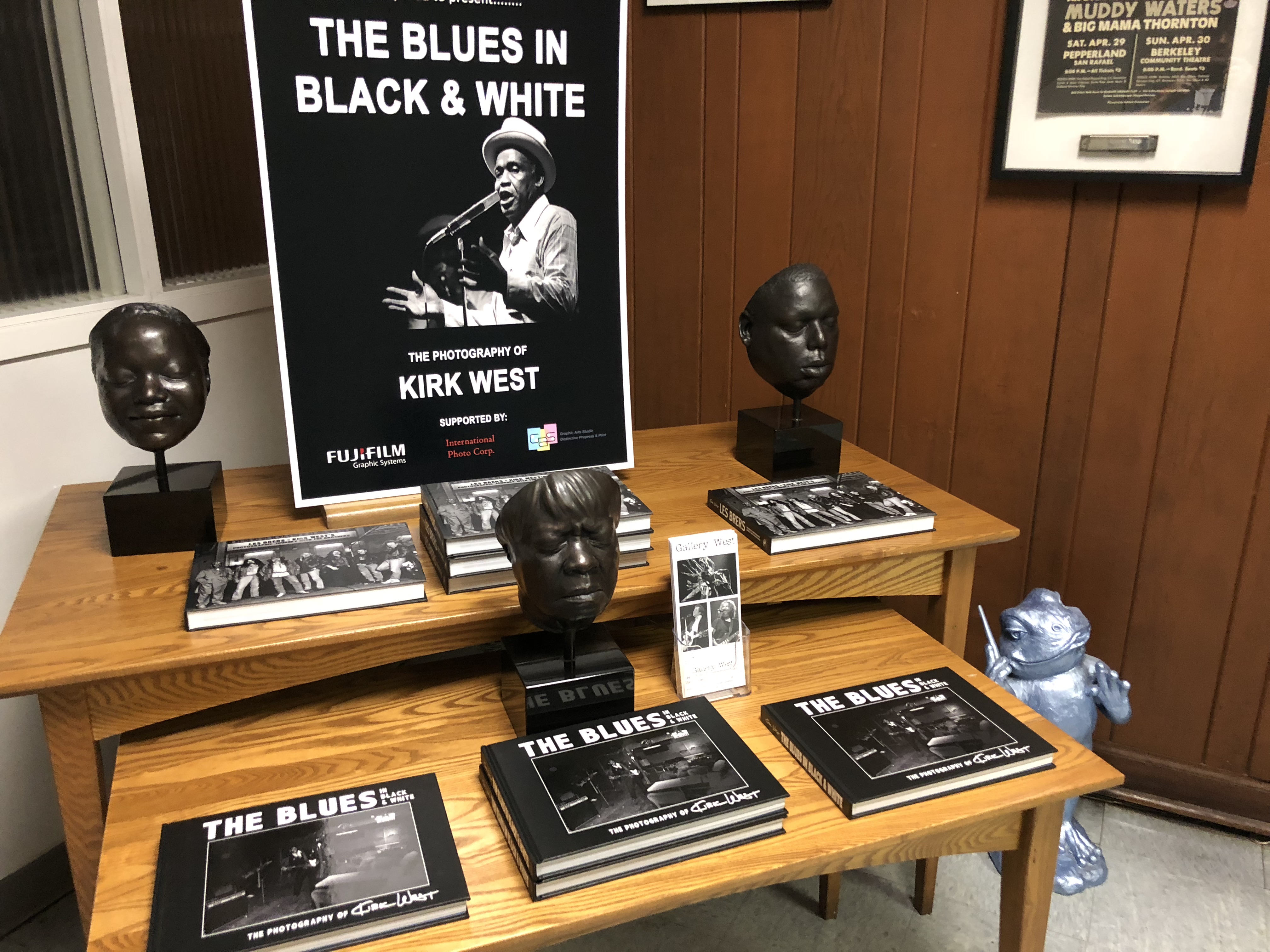
    My reason for going was to support and meet Kirk West and his wife Kirsten.  Kirk is a professional photographer, amoung many other things, and recently published a book through Kickstarter called “The Blues In Black & White”, with photographs of the Chicago blues scene during the 70’s and 80’s.  It’s a fascinating look at the legends of blues through his lens.


    I had recently purchased a print of his and, as is my way, I called to place the order directly with Kirsten.  When it comes to art, or music, or getting something signed, I prefer to do it in person or call versus just an anonymous order online.  Anyway, we had a wonderful chat about their showing in St Louis and how Kirk was a native Iowan, as I am.  She mentioned that they would be headed to Chicago and I told her that I would make plans to make it happen.

    IMG_E0689[1]
    John Primer & Steve Bell
    I arrived a little late and came in while Kirk was giving a wonderful background about the book and photos.

    Once he had finished, Kirk walked the crowd and talked to people while John Primer played guitar and sang and accompanied by harmonica player, Steve Bell.  It was awesome to hear Chicago blues, in Chess records, in it’s simplest and most powerful form…Amazing.

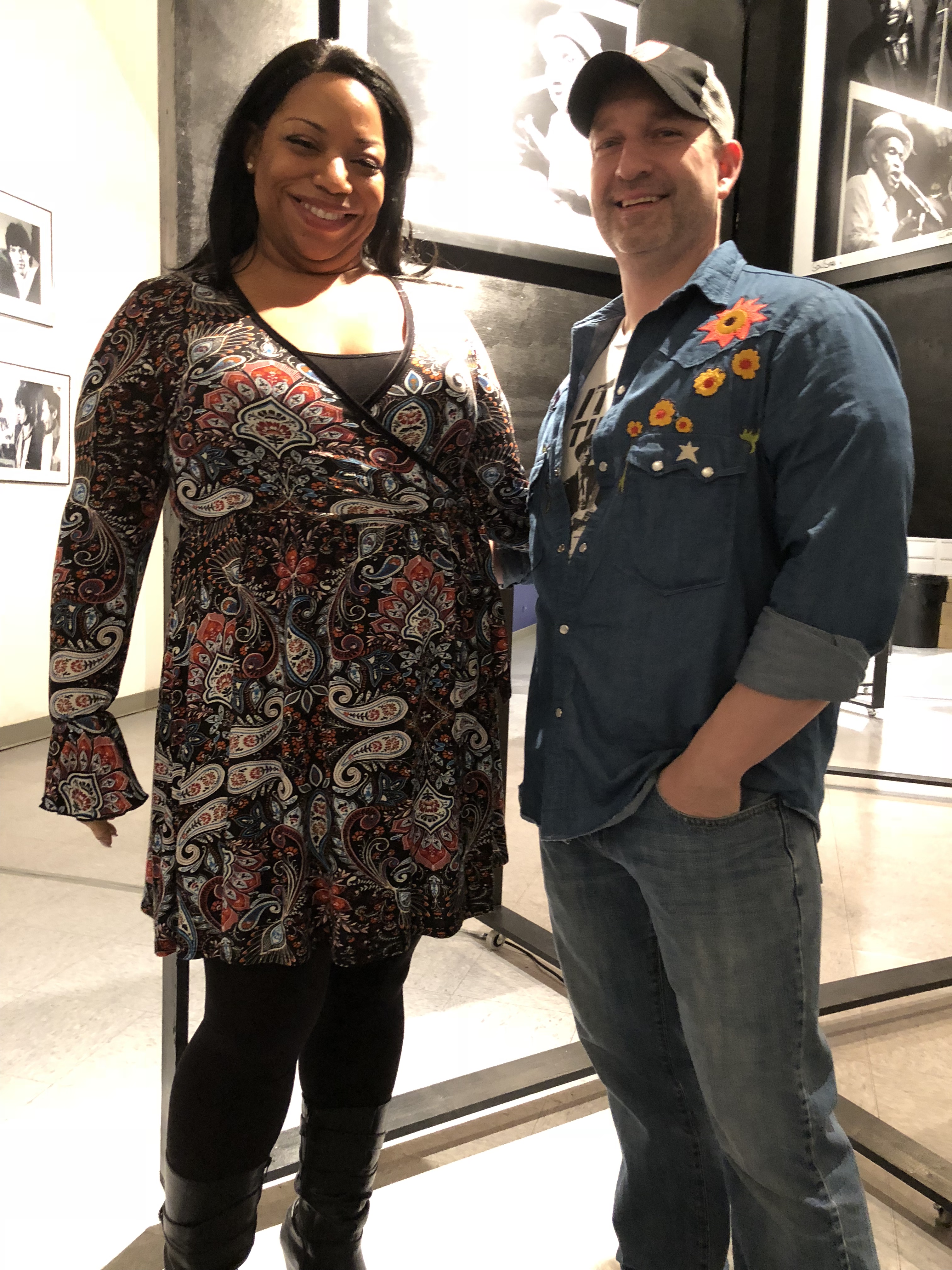
    I wandered through the halls, taking photos along the way, and trying to soak in all the nuances.  I made about 4 trips up and down the stairs before finding Kirk back downstairs.  My friend and local Chicago native, Mark Vormittag, grabbed Kirk and introduced us and Kirk graciously signed the book and took a picture with me and the previously mentioned print.  He was accommodating, and genuine with each person that he interacted with.  It was a real pleasure to meet him and his wife.

    IMG_0717[1]
    Kirk & Jeremy. Photo by Mark Vormittag
    Kirk and Kirsten have a studio in Macon, Ga to showcase Kirks work and are the architechs behind The Big House museum in Macon.

    IMG_0731
    Jacqueline Dixon and Jeremy Glazier Photo by Mark Vormittag

    I was also lucky enough to snag a photo with Jaqueline Dixon, President and CEO of Willie Dixons Blues Heaven and, Willie Dixons daughter.


    I’ve listed links below that you can click on to find more out about, and support all these wonderful endeavours.

    Kirk West Photography

    Willie Dixon Blues Heaven

    The Big House Museum


  • Kunio Kishida,  Japanese musician with a southern rock soul!!

    Kunio Kishida, Japanese musician with a southern rock soul!!

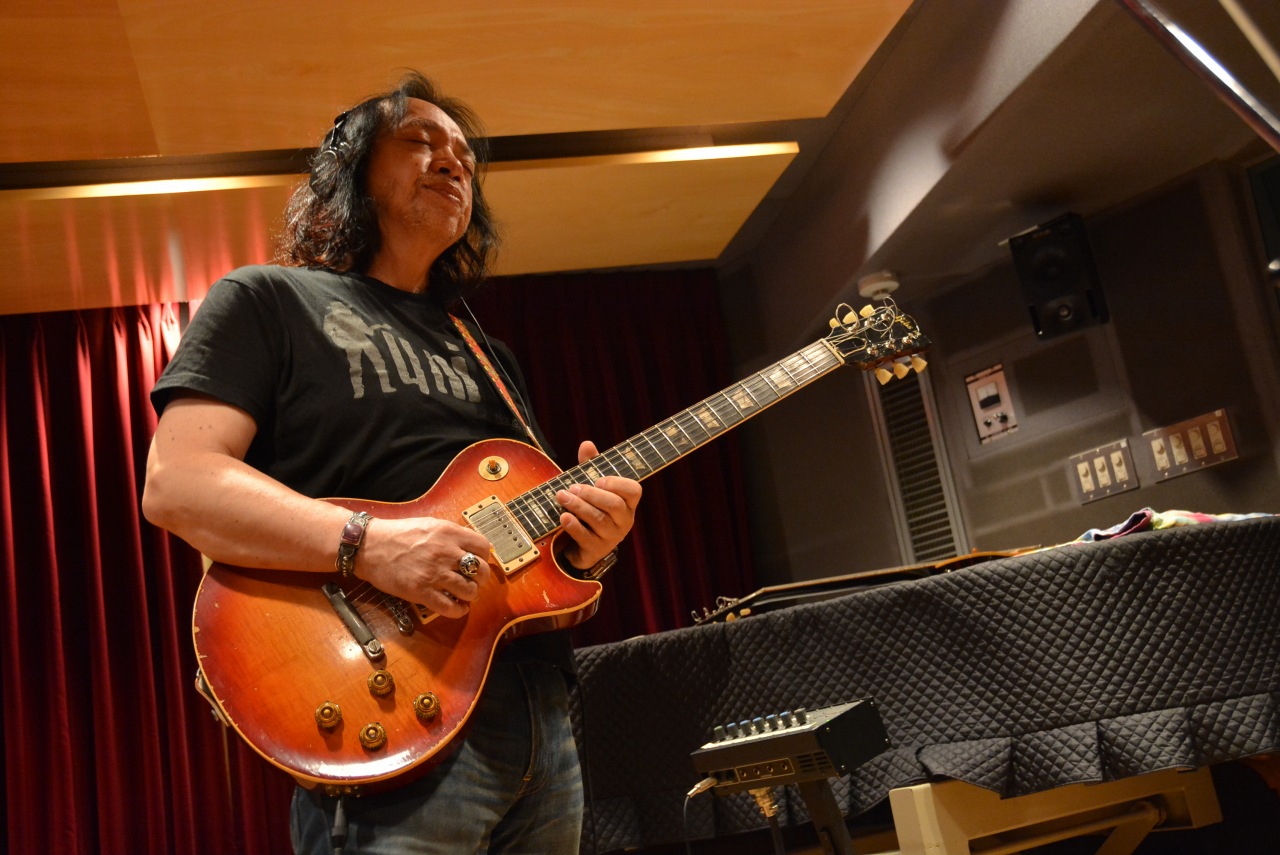
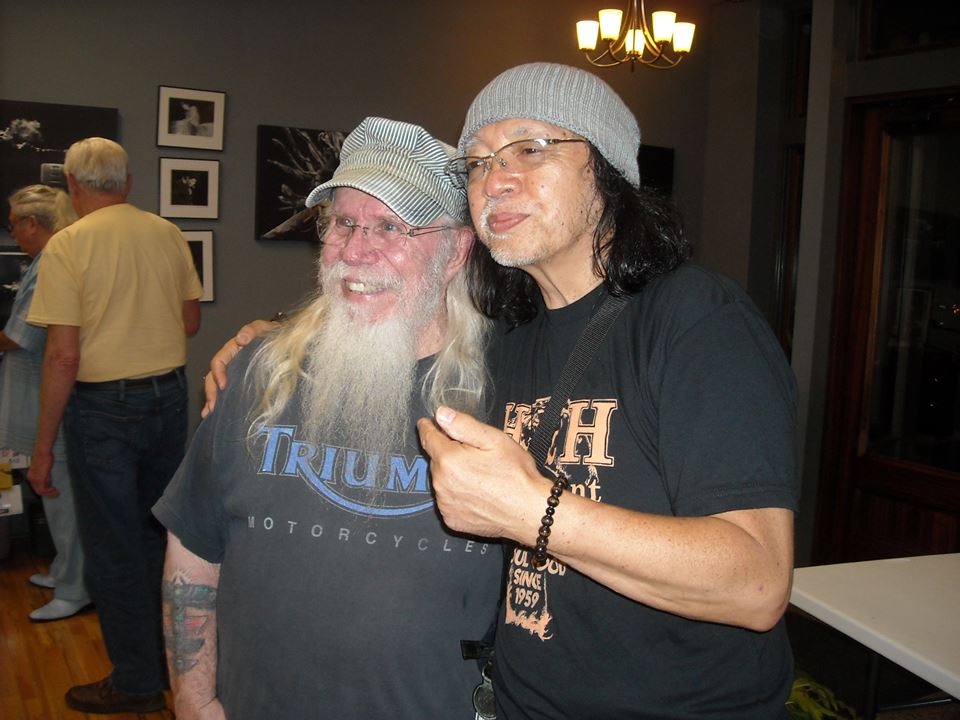
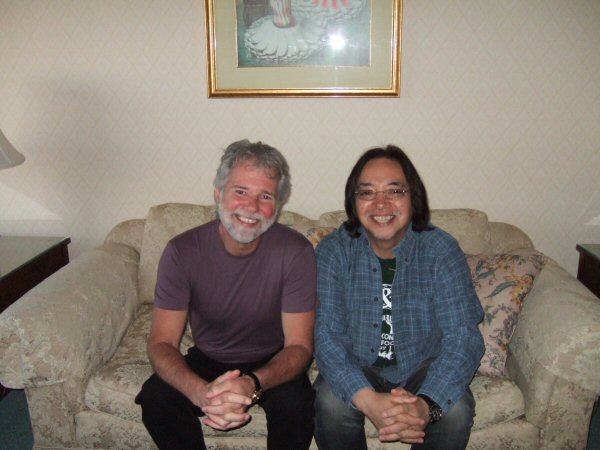
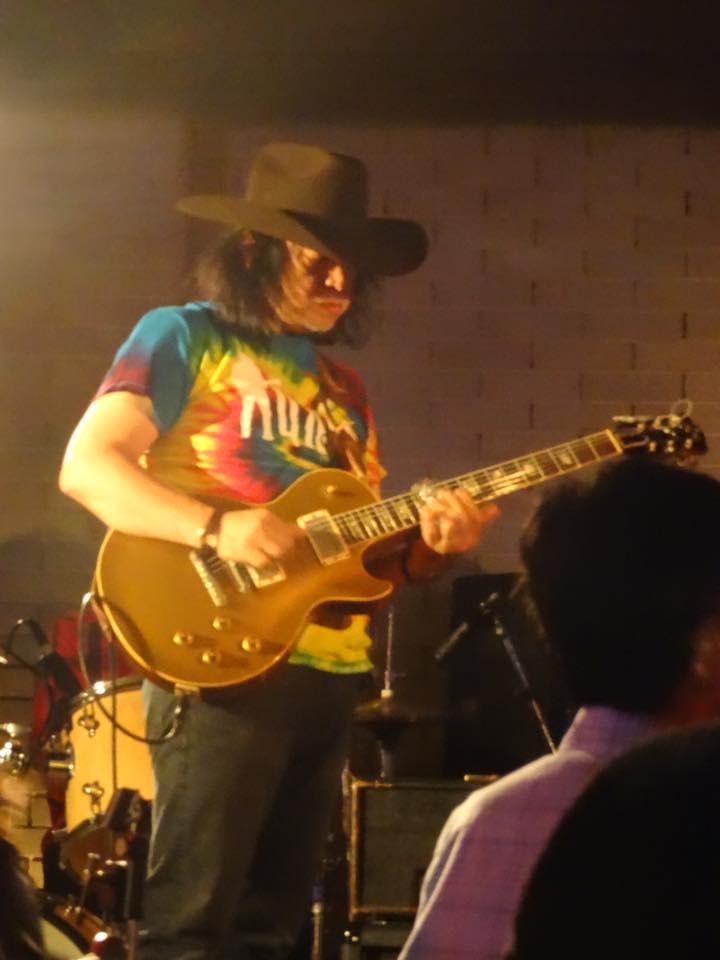
    I wrote this article for a facebook group about a recording artist, guitar shop owner/teacher, and lover of great guitar music .  It’s a Q&A through email about him, his experiences as a guitar player, and while heavily favored on the Allman Brothers Band, Kunio explores wide range of interesting topics.

     I’m also overly inquisitive and when I find someone like our good friend from Japan, Kunio Kishida, I simply am not satisfied with just knowing a little about him but feel that I should dig into who he is and what makes him tick.  He was gracious enough to answer a list of pertinent questions that I sent him about himself and his connection to Duane. Kunio had an American friend assist him in relaying the thoughts he wanted to express, and what follows are his words and sentiments.

    I believe that music can bring people together in a way that not many things can anymore and really good music can change the world.  I also believe that there are certain people and certain places that are like magnets that draw people to them.  Duane Allman/ The Allman Brothers Band and Duane’s grasp on music is one of those people and the ABB is one of those bands.

    J: Let me first begin with where you grew up and when did music first take hold of you?

    K: I was born in Nagoya, Japan in 1952. My parents liked classical music. My brother and I listened to 78 records when I was 10 years old. Then The Beatles appeared in 1964 and so we were really excited by their music.

    J: What was the first guitar or other instrument that you began playing on and what were you listening to that made you want to play?  Do you still have your first guitar?

    K: My older brother and I started playing cheap classical guitars that our dad gave us when I was 11 years old in 1963.

     J: Were you exposed to music from America/England when you were growing up or how did you get hooked on the ABB?  What other musical influences do you have that you consider part of your musical being?

    K: I love the Cream after the Beatles. I learned a lot of guitar techniques from Eric Clapton. I love blues style guitar and Clapton was the big hero of Japanese guitarists during late 60’s before Led Zeppelin came out. Then I started to seek other white blues guitarists and found Michael Bloomfield. I love both of them and I mixed their guitar techniques. It became my guitar style. In late 60’s, I heard the name of Duane Allman. I bought the ABB’s first album. It’s great! I love Gibson guitars but Eric and other guitarists started playing Fenders. I learned Duane’s slide guitar techniques. After Duane passed away, I listened to his Anthology album and I learned his slide techniques from this album too. I also love Dickey Betts’ sweet and melodic guitar. I listened to his Highway Call a lot.  

    J: I’m 42 this year and remember a time when you couldn’t get online and find anything that you wanted and the music we had was the hits from 60/70/80/and 90’s.  I’m curious how Southern Rock/Swamp Music ended up as such a large influence for you?

    K: I remember ABB and Derek & the Dominos became my last heroes. I wasn’t interested in any new music during the 80/90’s including digital music and disco. I was only interested in Larry Carlton. Then I quit playing guitar with bands in the mid 70’s. I worked for a music store but I always kept Swamp and Southern Rock in my heart throughout my life. 

     J:Did you play in any bands growing up and what were the jobs you had early on before playing music and the guitar shop?  (I ask this because music as a career is still my dream and I applaud and greatly respect artists who take that jump and make a living playing music.)

    K: My first band was called The Breakers then Behind the Brain during my high school days. In early 70’s my new band was the Ricefield Blues Band. We played ABB songs and traditional blues. I started playing slide guitar. We won the rock contest in 1974. I did some studio work before quitting my job.

     J:You own the guitar recognized as Duane’s first electric guitar, a 1959 Gibson Les Paul Jr., that he bought by trading motorcycle parts to get the cash, and was re discovered by Delaney Bramlett in the early 70’s.  How did that guitar end up in your hands?

    Richard Brent at The Big House Museum in Macon, Georgia told me when I visited last month that it’s at The Big House Museum now. How long will you keep it there?

    DSC_9731

    K: Yeah! I was lucky. Anybody could have bought it. I found out on the internet that Delaney had decided to sell it. My friend bought it for me from Delaney in 1999 and I’ve had it for 17 years. I brought it to the Big House in 2015 because I felt the need to show it there. I hope many of Duane’s fans will see it.

     J: Did you ever get a chance to meet Delaney and talk with him about his time with Duane? You also recorded with Bonnie Bramlett and I would ask the same question about her time with Duane and if she had any stories?

    K: I wanted to visit Delaney’s house but I couldn’t. Bonnie talked about Duane at the Muscle Shoals recording session.  I can’t quite remember what she said. It was something like “Boy, he’s cute.”  Scott Boyer and Jimmy Johnson also talked to me about Duane.

    J:You also spent some time with Dickey Betts and his son Duane back in 2013 when they were in Japan, and of course on other occasions. Can you tell us how you acquired the Jessica guitar, what kind of conversations you have had with Dickey about playing music and any advice he offered?  Are there any Duane insights that he shared?


    K: I talked about Jessica with Dickey in 1992. He said it came to be in a bad condition so he traded it. I received it during the recording session at Muscle Shoals Sound Studio in 2002. It was a good setting but it was really difficult to play. Unstable tuning and bad neck condition. Our repair man started to repair it after we returned to Japan. It took 2 years. Now, Jessica is a great Les Paul again. I brought it backstage at a Dickey Betts show in 2013. Dickey wasn’t interested but his son Duane was. I think he was tired of talking about Duane so I didn’t ask it.

    J:What other guitars do you own that you keep in regular playing rotation and which ones are kept away for safe keeping?

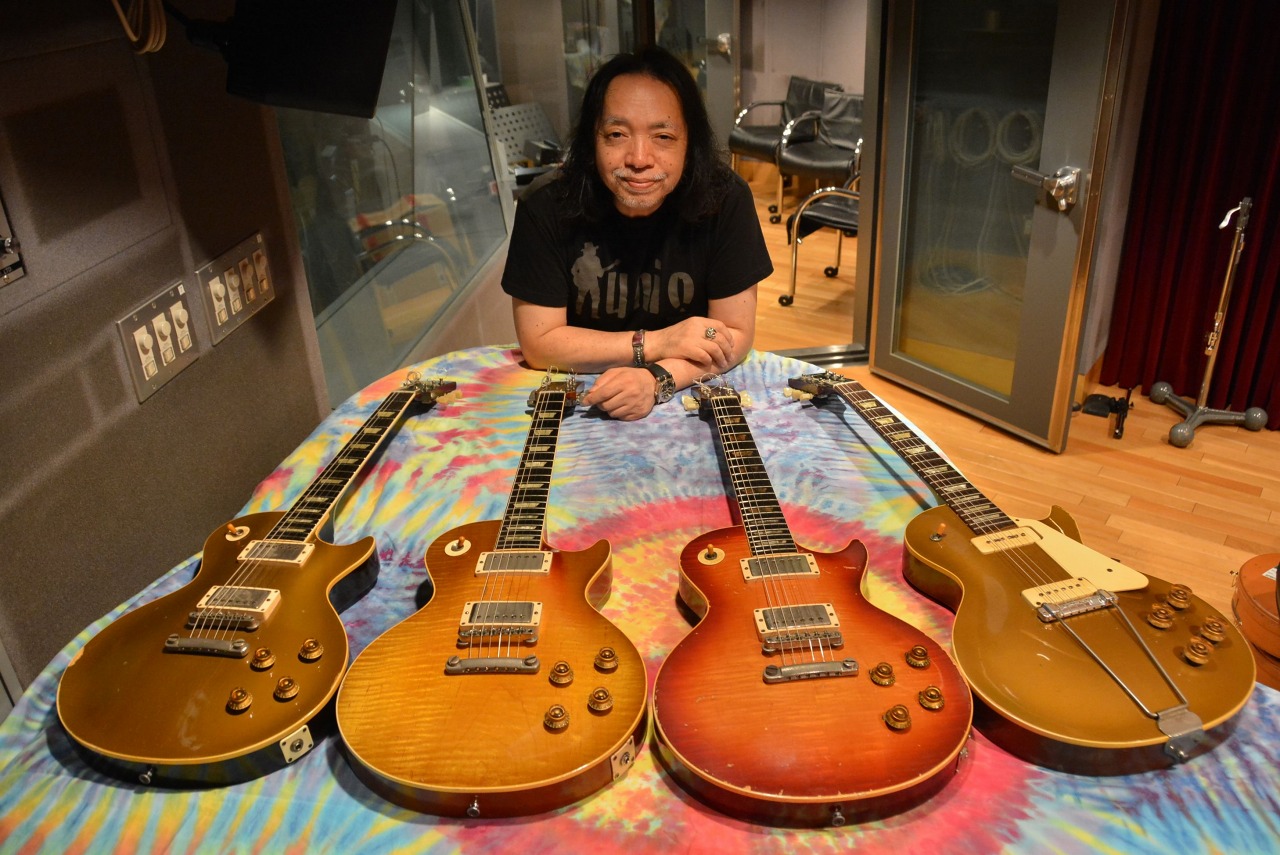
    K: Now I play ’52 and ’58 Les Paul gold top and my Alabama Boy that I ordered from RS Guitar Works in Kentucky.

    DSC_0349

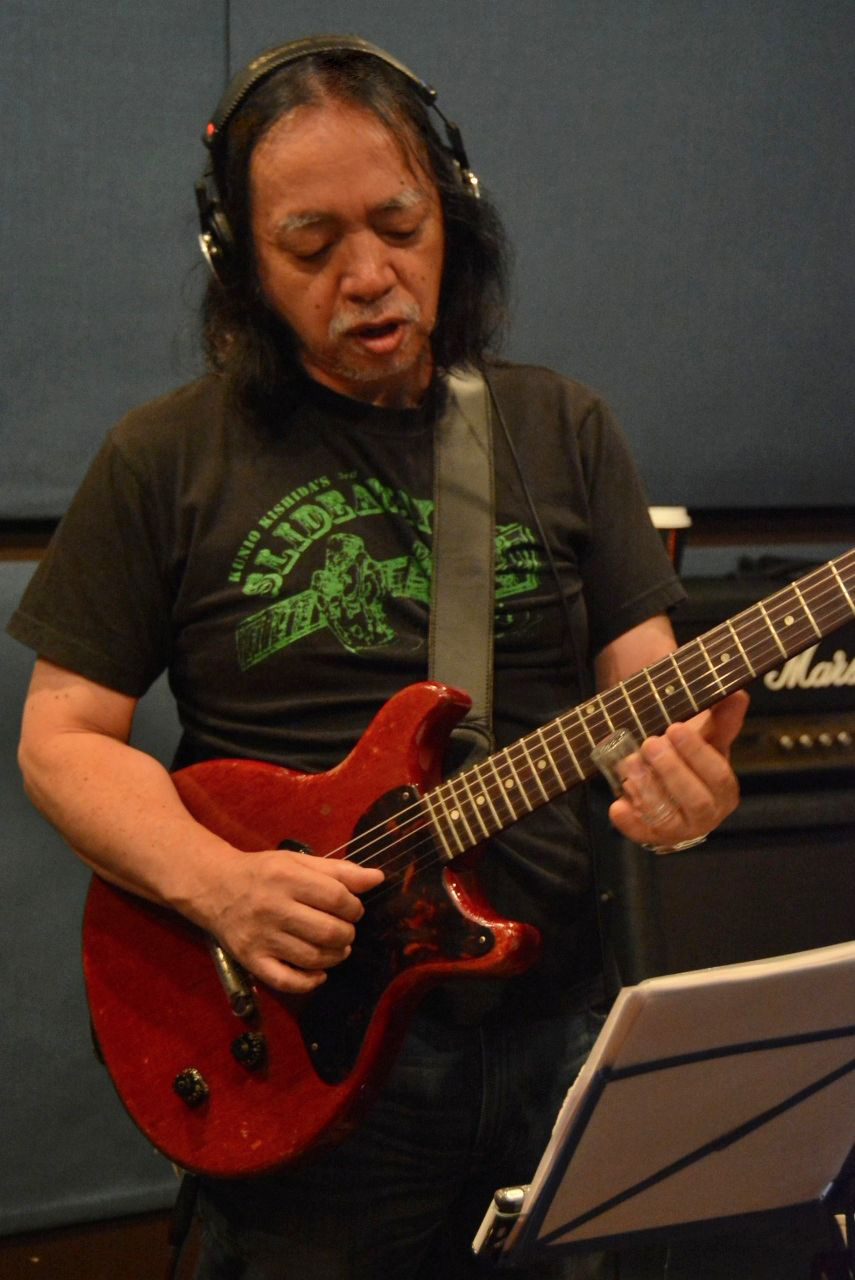
    My main guitar is Nancy (1959 Les Paul burst) that I got in 1989 and have used for many live performances and recording sessions. I brought it to Muscle Shoals for the second recording session in 2004. Most of my albums (3rd, 5th, 6th,7th and 8th) I recorded with Nancy. I don’t play Nancy on stage now. I will only play Nancy and Jessica at recording sessions.

     J:I believe that Richard also told me that you owned Duane’s original Zebo strap.  Are there other items that you have acquired that you would like to share?

    K: Yes. I will bring the Zebo strap to The Big House Museum in the near future. I love my many friends who I met in Macon in 2015 and 2016.

    J:I read in the 2013 interview by Michael Limnios that you were in a car accident in 1983 that took you away from playing for a number of years. How did you get through that experience and how did that shape you when you recovered?

    K: I had bad luck from 1983 to 1998. I got whiplash 5 times in 2 years. I felt dizziness and pain every day. I could not play guitar. My family, my friends and customers took care of me. I was surprised by many things that happened then. Dickey, Gregg and Allen visited me. Clapton’s Explorer, Duane’s Les Paul Junior, Zebo Strap, Jessica and many great guitars came to me. Unbelievable!  It was a miracle I could record at Muscle Shoals with Duane’s friends. I believe Duane always helps me.

     J:You have a very high end vintage guitar shop that you operate, Nancy. When did you open that up and what is the significance of the name?

    Nancy

    K: I opened Vintage guitar shop “Nancy” in my home town Nagoya Japan on 23nd September, 1988. Nancy is my guitar’s name. I decided to use it as the shop name. Then I opened a branch in Tokyo. Tokyo is my second home town as well.

    J:What kind of inventory do you keep on hand for vintage instruments versus newer instruments?

    K: It’s completely different between vintage and new. Quality is different. Price range too. I love new guitars and I want to sell both. Also I’m advising many guitar makers.

    J:What are your favorite instruments that are either for sale or in your personal collection?

    K: No.1 is Les Paul, No.2 is Strat, No.3 is Tele No.4 is ES335. I love traditional style.

     J:Do you have T Shirts for your business for sale?

    DSC_0398

    K: I sell my Kunio T-shirts in Japan. But many people from USA have asked for them so I will sell them in USA soon so I will get a PayPal account. 


    J:I saw a picture on your Facebook page comparing the first time that you visited Rose Hill Cemetery in Macon, Georgia in 1981 to the most recent trip.  There has obviously been a long history of your admiration for Duane Allman and I was curious how that first trip came about and how did Macon compare in 1981 versus this last time you went?

    K: No. It was in 1979. My friend drove from Nashville to Macon with me because I really wanted to visit but I didn’t know how to get there. When I visited Duane and Berry’s graves, I was so sad. I didn’t think to visit again because it was so far from Japan. Next time was in 1988 and the third time was in 2002, the fourth in 2015 and the fifth in 2016. I could feel Duane and Berry’s presence from Japan because I have many friends in Macon now.

    J:I’m a late addition to the Allman Brothers fan club although I grew up listening to their music but not at a fanatical level as now.  We may have already covered this in previous questions but were you aware of Duane when he passed in 1971? How did you get to the point of making a trip to Macon to visit and pay your respects?

    K: I don’t know why I wanted to visit his grave in 1979. I’m just a big fan. After I recorded with Duane’s old friends at Muscle Shoals, I needed to visit his grave and Macon. Since the last traffic accident in 1998, a strange thing happened. It is all about encouragement. I came to think that Duane would surely watch over me. So I decided to donate to the fence around Duane and Berry’s graves and go to Macon where I got a nice experience playing in Macon.

    J:I believe that I also saw a picture of you and Kirk West from either that trip or another one.  How did you meet Kirk and how did that friendship come about?

    Kirk and Kunio

    K: I met Kirk in 1991 and 1992 when the ABB played a concert in Japan. I missed meeting him in Macon in 2002. We later met on Facebook a few years later. I visited and played at his gallery in 2015 and 2016.

    J:As well as owning the guitar shop you are an accomplished recording artist with I believe 11 CD’s available.  From your website I was able to listen to a number of tracks and gather some info about your recording career.  You recorded the first album at Muscle Shoals and have worked with Johnny Sandlin on a couple different albums and recorded or played with a number of people that also played with Duane.

    chuck&kunio032006

    K: It’s actually 8 albums. Yes, an act of God! Everybody was so kind to me. Johnny was our boss. He collected members: Paul Hornsby, Jimmy Johnson, Mickey Buckins and Bonnie Bramlett. Scott Boyer came during the session too. I asked him to help with my recording.  I’m still excited because I could feel Duane. I believed Duane touches me when I play slide guitar. He gave his inspiration to me at the end of song “It’s You.”

     J:What is the feeling you get working with these people and what have you learned about Duane through these experiences?  Are there any stories or pieces of information that have helped you understand the man and his playing that you can share?

    K: Yeah, Paul and Johnny talked about when Duane started to play slide guitar in 1968. They could not listen because Duane had no technique and it was a bad sound. Ahaha! Also, Jimmy Johnson explained Duane loved to use old batteries on his Fuzz Face pedal. He did not like new ones.

     J:I decided a couple of years ago to really dig into slide playing and was immediately drawn to Duane and the Allman Brothers music. It’s a struggle not to sound like cats fighting in an alley and I wondered what is your advice for playing slide?

    0710140203

    K: Which finger do you use to hold the slide? I use my ring finger. In my case, my middle or little finger hold the slide while my index finger touches (damps) the strings. It’s standard form so we can prevent ‘cat noises’. How does this sound to you?

    J:Along those lines, considering all the people with whom you have interacted who knew and played with Duane, have you picked up any technique from them that came from Duane?  (I’m thinking of Dickey when I ask this question.)

    K: When I became aware of Duane and Dickey in late 1969, I already had my guitar style. I only learned Duane’s slide technique and Dickey’s country style. My slide guitar style came only came from Duane and old blues players. I didn’t copy any other slide player (Ry Cooder, Jeff Beck, Derek Trucks…).  I was hugely influenced by Duane’s slide style.

     J:When you play an ABB song and specifically the solos, do you work out the parts note for note or just get the general feel of the songs and keep some of those signature riffs?

    K: No, I don’t. But many of the live audiences have said my playing is very similar to Duane’s. Ahaha. I’m proud!

     J:Every year on the date of Duane’s passing you have a memorial/tribute show.  What is the set list like and who are the musicians that play with you?

    kunio at duane memorial

    K: I’m not a band master. I’m requested to play Duane’s part. As I want to play my own music, I promise to play with them 2 times per year.

    We played original band’s songs: “Statesboro Blues,” “Don’t Keep Me Wondering,” “In Memory of Elizabeth Reed,” “Whipping Post,” “Midnight Rider,” “Black Hearted Woman,” “Don’t Want You No More” and “Stormy Monday.” We also played “Jessica” and “Southbound.”


    J:What kind of turnout do you get and are you converting people into new Allman Brothers fans?

    K: I hope so. There is not big guitar music market in Japan. I need to feel we show great guitar music and guitar sound to young people. It’s my main reason why I play guitar and music again. Amateur bands can’t play ABB. Our tribute band members are all professional musicians. We play great ABB music for the next generation. I’m happy some young musicians start to copy ABB and my music.

     J:You also have a beautiful bracelet that you sell that is a replica of the Zebo strap.  I think it’s a beautiful way to Remember Duane Allman.  Are these made locally in Japan and do you have an online store where people can purchase them?

    bracelet

    K: Originally Mr. Charlie Whitt made it. He gave me one in 2015. It was small for me but I ordered one for my friend. Everybody likes it. I brought some to Macon this year but I only sell them in my stores from now on but soon I will sell them by mail order on my website.

    (UPDATE:These are now sold at the Bighouse in Macon, Ga. contact them through the website below to purchase)


    J:Once you’ve had a chance to reply, I may have some more follow up questions but I really appreciate you taking the time to reply and share your story with us.

    K: My pleasure. I am honored to be able to answer your questions.

     J:I am very happy that someone like yourself has Duane’s and Dickey’s guitars.  I find it a shame when someone collects instruments because they have the money but they sit in a vault and never see the light of day.

    K: I don’t know. But I believe a guitar chooses the owner. I wished to show the guitars to Duane’s mother but I was late by 6 months.

     J:I feel that the Gold Top is in the perfect location and that Richard and owner, Scot Lamar, are doing a great service to Duane’s memory by keeping it in the hands of musicians and in front of the fans.

    K: I agree.

     J:Galadrielle is also an amazing steward of her father’s memory and instruments and I was very excited to see all three guitars together for the last go-round at the Beacon in 2014.

    K: Me too. I hope Galadrielle was happy.

     J:Thank you again Brother Kunio san.

    K: Thank you too.

    kunio1

    Brother Kunio emailed me most of these pictures for use for this article.  I didn’t list any photographers but if your work is displayed here, please let me know and I’ll gladly add your information on the photos.

    Kunio’s websites are below and also the link to the Big House Museum.  The Big House Museum houses the soul and spirit of the Allman Brothers and is a great place to visit and support.

    http://nancy-g.com/

    http://kuniokishida.com/

    Home