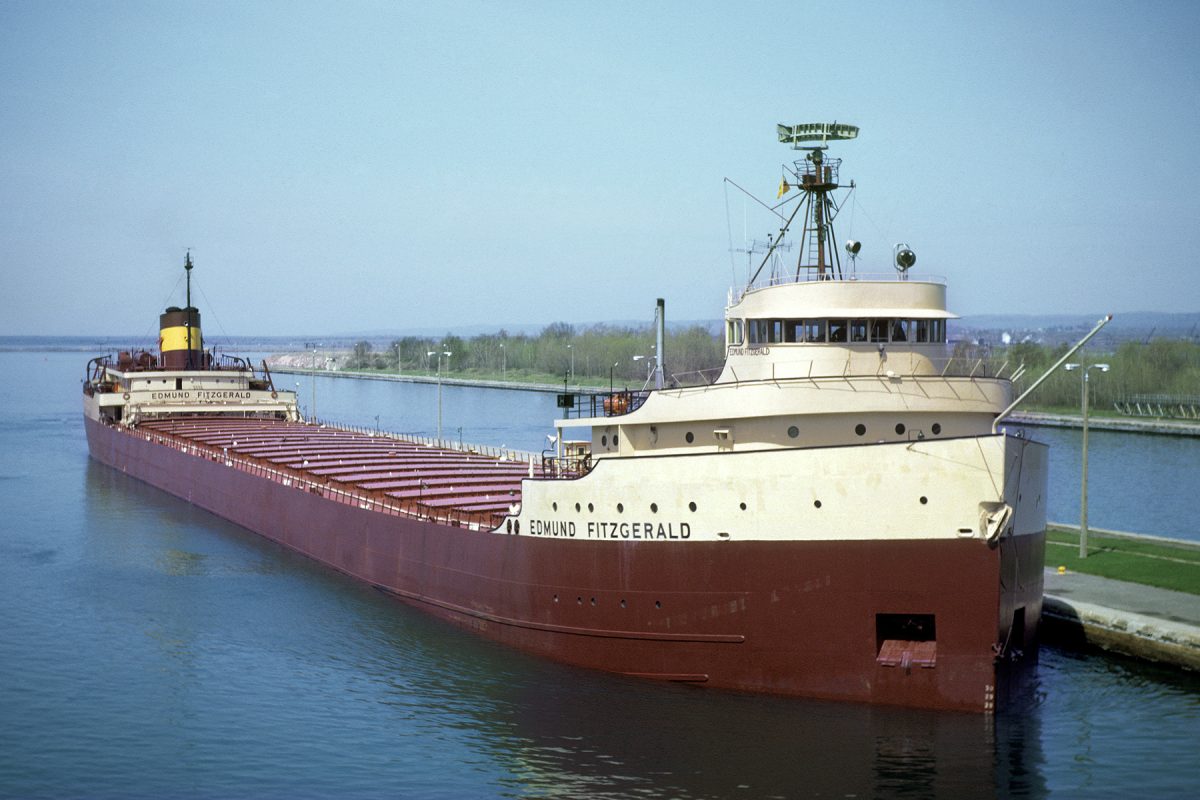
SS Edmund Fitzgerald on the St. Marys River, 1975. Photograph by Bob Campbell. Courtesy of the Great Lakes Shipwreck Historical Society.
November 10, 1975 – November 10, 2026
On a day when many of us are preparing for Veterans Day, and just three days before my son’s birthday, the significance of November 10 is never lost on me.
It was on this date in 1975 that the SS Edmund Fitzgerald sank beneath the waters of Lake Superior, taking with it the lives of all 29 men aboard.
I was just 10 months old at the time, a little more than a month away from my first birthday. Obviously, I have no memory of the tragedy itself. Like so many others, I came to know the story through Gordon Lightfoot’s legendary song, The Wreck of the Edmund Fitzgerald.
But before I get into why that song has meant so much to me personally, I want to share a little about its creation, because I think the story behind the music is almost as remarkable as the song itself.
Lightfoot, who grew up in Orillia, Ontario, was an accomplished sailor and outdoorsman himself. He understood the Great Lakes, their beauty, their power, and the dangers they could present. Combine that experience with his extraordinary talents as a singer-songwriter, and it’s difficult to imagine anyone better suited to tell this particular story.
In the days following the sinking, Lightfoot followed the news reports, including an article in Newsweek. He was troubled by how quickly the story of 29 men losing their lives seemed to disappear from the headlines. He felt their story deserved more. So he began writing.
I’ve never been entirely sure how much I believe in fate or divine intervention, but there is something almost magical about the way this particular song came together.
Lightfoot had been carrying around a haunting melody and chord progression for some time, waiting for the right words and story to accompany it. Suddenly, the tragedy of the Edmund Fitzgerald gave that music a purpose. The rolling rhythm, the haunting guitar, the mournful pedal steel, and the way the music seems to rise and fall like a ship struggling against enormous waves all came together to create something extraordinary.
It is one of those rare songs where the music itself seems to tell the story just as powerfully as the lyrics.
And then there’s the recording itself.
In December 1975, barely a month after the tragedy, Lightfoot and his musicians were working at Eastern Sound Studios in Toronto. His touring band included Terry Clements on guitar, Rick Haynes on bass, Pee Wee Charles on pedal steel, and Barry Keane on drums, with recording engineer Kenny Friesen capturing the sessions.
The remarkable part is that the first time they played through the song together, the musicians had never heard the completed arrangement. Lightfoot essentially trusted them to play what they felt. When drummer Barry Keane asked when he should come into the song, Lightfoot simply told him he would give him a nod.
When they finished, Lightfoot said something about coming back to flesh it out when Friesen asked if they wanted to hear the playback. They couldn’t believe that he had recorded it, but luckily for all of us, he did.
They would spend additional time attempting to improve upon that recording, but the magic of that initial performance couldn’t be duplicated. That first take became the recording we still hear today. Six and a half minutes of music, created by musicians who instinctively understood the emotion of the story they were telling.
There’s something incredibly powerful about that.
To me, the recording is a portal back to December 1975. It somehow captures the cold, the darkness, the immense power of Lake Superior, and the desperation of those final hours. You can almost smell the cold waters of Lake Superior, feel the wind cutting across the deck, and imagine the enormous ship fighting desperately to stay afloat.
And more than half a century later, it still gives me goosebumps.
I can’t remember the first time I heard The Wreck of the Edmund Fitzgerald. In many ways, it feels like the song has always been a part of my life.
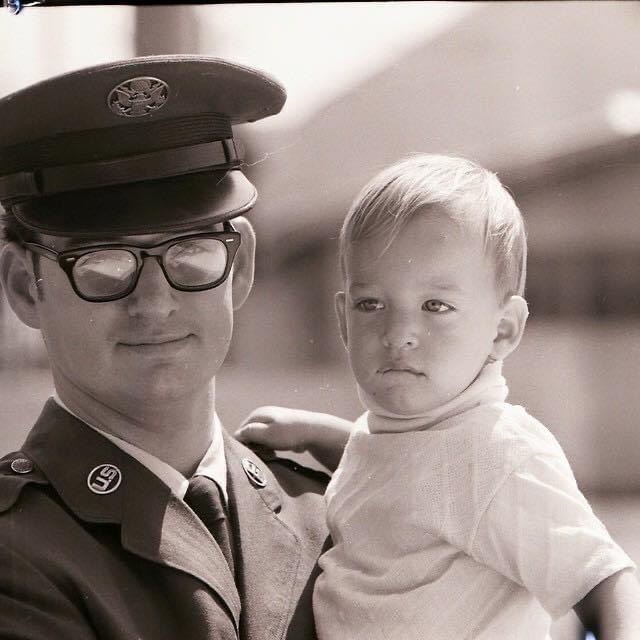
My dad, who is responsible for so much of my music appreciation, played it often. And whenever it came on, he would talk about the song, the ship, and the tragedy behind it.
Eventually, hearing it became as familiar to me as waking up in the morning. But as I’ve grown older, I’ve come to appreciate that the song represents something much larger than just a remarkable piece of music.
For the families of those 29 men, and for the communities that experienced their loss, the song is a lasting memorial to fathers, husbands, brothers, sons, and friends who never came home.
For the rest of us, the connection is different, but it can still be deeply personal. Sometimes music connects us to places we’ve never visited, events we never witnessed, and people we’ve never met. It creates a sentimental attachment to a time we may not even remember, yet somehow feel connected to.
And sometimes, without realizing it, those songs become part of our own personal histories.
My dad passed away in March of 2024. So today, as I remember the 29 men who lost their lives aboard the Edmund Fitzgerald, and the incomparable Gordon Lightfoot, who left us in May of 2023, I also find myself thinking about my dad.
I think about all those times we listened to that song together, the conversations it inspired, and the appreciation he gave me for history, music, and stories that were so much larger than ourselves.
I don’t know that he ever realized how much those little moments would eventually mean to me.
But they do.
And now, every time I hear those familiar opening chords, I don’t just think about a ship that disappeared beneath the waters of Lake Superior 51 years ago. I think about 29 men who never made it home. I think about a songwriter who made certain their story would never be forgotten. And I think about my dad.
That’s the incredible thing about music. Sometimes the songs that preserve the memories of strangers eventually become the songs that preserve our own.
Today, 51 years after the Edmund Fitzgerald disappeared beneath Lake Superior, we remember the 29 men who never came home. We remember Gordon Lightfoot, whose remarkable gift ensured their story would continue to be told.
And for me, I remember my dad, who helped me appreciate both.
I’m grateful that their stories, and the music that connects us to them, continue to live on.
Great Lakes Shipwreck Historical Society