Tag: Allman Brothers

  • The Conversation with John Cuniberti.

    The Conversation with John Cuniberti.

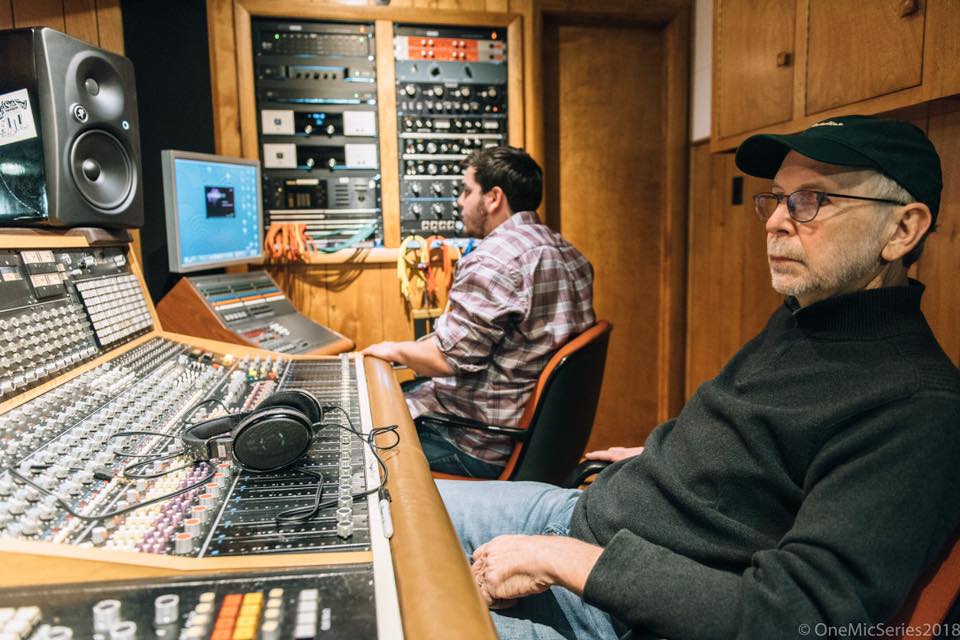
    That word, “conversation”, and it’s importance, came up a lot during my August 10th phone call with producer, recording engineer, and creator of the One Mic Series, Mr. John Cuniberti.  How the unspoken conversation affects the performers, how that translates to a recording, and the process that John uses is as simplistic as a single microphone, but as complex as any multi-track recording technique.  The musical conversation and where it leads truly is a wonder, once you grasp it’s significance.

    boo ray
    Boo Ray

    When I spoke to Nashville recording artist Boo Ray  about his One Mic Series sessions, his descriptions of the recordings and respect for John Cuniberti’s work piqued my interest.  With everyone using multiple microphones, Digital Audio Workspaces, and multi track recordings, I was completely in awe that he initially sets up the instruments with a tape measure and runs everything through a single stereo ribbon microphone, the AEA R88. There are no multi tracks, no retakes, and no dub overs.  Just one mic, a room, and some seriously talented artists.

    What follows is a master class in the art of  recording and touches on a number of subjects that are as important as the music and the artist them selves. His understanding of the process and evolution of recording is what makes him so good at what he does.

    First, I wanted Mr. Cuniberti’s explanation of how his process of recording may be similar to how the origins of recorded music were done decades ago with just one mic.

    onemic-web-pic-300x240“Originally when recordings were first being made, yeah in fact, it was usually just 1 microphone and the performers would stand around the mic and get a balance in the room.  You know before the art of recording people were playing live performances and there was no world of audio recording, just the world of live performances.  Performers were accustomed to and skilled at balancing them selves in a room performing and singing.  Instruments were developed and designed just for that purpose…even when you get into the 30’s and big bands started performing together with horns and drums, you know one of the problems were that the acoustic guitars weren’t loud enough.

    “The fact that what happened was that when the art of recording began, they took that same scenario, they put up one mic the band would set up with the balances they normally would and would be recorded direct to some kind of recording device, vinyl or some kind of acetate.  But, when we got into multi track recording more mics would be used and we got into that world of 2 tracks, then 4 tracks, then 8 tracks, and what are we up to now?

    “So the idea that a band would come into the studio and balance them selves in a room. Not unlike at a rehearsal or a night club, that whole way of recording ended with multi track recording. I mean a band would walk in they throw mics on every thing, they would often times, and still do, isolate everyone, so they can have control over all the elements of the recording.

    shook twins
    Shook Twins

    “And what happened was that we gave something up, and what we gave up was the conversation that the musicians have among them selves in the room when they are listening to each other and responding to each other.

    “When you get into the art of recording, were making records, and that’s a very different occupation and result than a live performance…you can do both, but there is a safety net that is in place that if an individual in the band spoils a section or misses a beat it can be repaired right there on the spot. We can do that with analog recordings, multi track analog, you can punch in a section… this has been going on for a long time.  The digital age has just sort of made it easier.  Not only to get a lot of tracks recorded simultaneously but also gave us all the tools to repair and fix pretty much anything, but it came with a compromise.

    “The compromise is that now you have bands that it may be their first recording, they may have very little recording experience, they come into a room and immediately the engineers are isolating everything and putting microphones on everything and assuring the band if they make mistakes or they cant get through it, we can fix it later.  So It produces a psychological effect in the room where, are people really at their best, are people really bringing their a game, are people really well rehearsed before they show up to the studio?   I would argue that in many cases, they are not.

    “They are so accustomed to having their mediocre performances repaired that, or handed over to someone else to make them sound like they are competent. it’s just become an  entire way of making records.  There’s a whole generation of people that are in studios that have never been in a room with their band mates trying to balance them selves and listen to each other in this conversation.  And I use this word conversation because if you have 2 people talking to each other, if both people are talking and no one is listening its not going to be a very good conversation.  when people  willing to listen and react, then you have a creative result.

    This slideshow requires JavaScript.

    “If you’re a guitar player and going in on Saturday to do all your guitar parts on a previously recorded track no one on that track will be hearing you and reacting to it.  It’s your job now to listen to everybody else and react to them. And that produces a very different result than a band in a room balancing them selves and being forced to listen to each other and react to each other.

    “The one mic process that I’m developing, in the modern world, is a way to get back to the thing that we gave up.  That’s a very long and convoluted answer to your question so I apologize.”

    I laugh off the notion that the mind blowing knowledge he just dropped was in any way convoluted and mention how refreshing it was to hear him explain what it was about that kind of music that I liked.  Live albums like The Allman Brothets At Filmore East or B.B. Kings Live at the Regal just feel like they are jumping out of the speakers because of that conversation between the artists and are, in my opinion, prime examples of John’s philosophy.

    Getting into the nuts and bolts of his process I ask about mastering once the track is recorder and the complete set up of what we see on Nathaniel Kohfield’s beautiful 4k video’s, which John will also expand on shortly.

    “I’m using one stereo ribbon mucrophone, AEA R88 and that goes to the microphone preamplifier…a melinia hv3c…and is captures on high resolution digital..(Nathaniel Kohfields’s amazing cinematography).  Now that recording is a stereo mix of the event in the room, that stereo recording is not unlike any stereo mix that one would end up with in a multi-track stereo mix down recording, it is subject to mastering just like you would any stereo mix.”

    When I mention the measuring tape set up that Boo Ray had mentioned, John expands on the process.  “The reason why I use a measuring tape is for panning mostly because the panning has to be done, if I want a guitar on the right and on the left, they have to be equal distances from the microphone, and that’s assuming they are set up at the exact same volume.  You know if I want them both those guitars at the same level, on a mixer I just move the faders up and down…if i want them to sound the same or similar, then I would go out and adjust the amplifier to get that sound, I can’t do it any other way I can’t do it in post production.  So I have come up with a formula of where guitar amplifiers, and drums, and bass and vocals need to be around this one microphone so I start off the sessions laying it out with a tape measure but ultimately I have to adjust the volumes of everything.”

    george cole trio
    George Cole Trio

    “The rooms that these recordings that this has been done in play a huge roll in the effect, you know in a multi track environment the microphones are put pretty damn close to the amplifiers and the singers and the drums.  So you’re eliminating the effect of the room in the recording, depending on the room  you will have some effect but it’s very minimal. and that comes back to the 70 style recording… you just close mic everything and add delays and reverb later to try and make it sound like their all in the same room again.  In my scenario I don’t get to or have to do that because the sound of the room is playing such a huge roll in in.

    “A real dead room, that is absorbing a lot of high frequencies is not particularly friendly to an acoustic guitar that is 5-6 feet away.  A room that’s really uneven in the sense that one room is really bassy and the other part is really bright and noisy, that is not going to give you a balances drum sound when the mic is 8′ away. So I learned early on in developing this process that the rooms I do this in are critical and will determine if how successful or successful at all is the recording.  There are huge compromises. that I’m making in order to get the conversation, to record this band in one take with everyone at their best because they don’t get to fix everything.”

    I ask if the famous rooms are better or more difficult for his process versus new studios.

    the dozens 2
    The Dozens

    “Yes and no. At muscle shoals, it’s a very dead late 60’s-70’s sounding room.  In other words it was designed to kill all ambience, essentially,  close mic everything, and then add reverb and delay later to make it sound like everyone is in the same room.  I mean yes, some of the overhead mics like the drums are picking up some of the ambience of the drum booth, but that’s not what those records were about.  They were about the individual performers, the style of music, and the incredible singing and song writing that was being done in those rooms.  The room was basically, it allowed them to have complete control with the recordings after the fact. For me it was fairly straight forward because the room didn’t produce any nasty effects I couldn’t fix.

    eskimo brothers
    Eskimo Brothers

    “Now sun studios in Memphis was the complete opposite of that, that room is very live, it has a tile floor, it has acoustic tile that is less than 1/8” thick on the walls and is a very live room. So the recordings that I did at Sun sound completely different than the ones I did at Muscle Shoals.  Now, I was ok with that because the records that came out of Sun studio were recorded with 1, 2, 3, maybe 4 microphones at the most and most of them were ribbon microphones that are bi directional and really flooded those microphones with the sound of the room and the musicians in that room. I knew that going in and I was ok with that because I really wanted the sound of the room…that’s why I chose acts that I thought could preform in those rooms that would be, that would work.

    “There are certain genres of music I wouldn’t want that over abundance of ambience in the recording.  With a band like Boo Ray , which has an old school retro sound, and certainly with the Eskimo Brothers that are rockabilly band, or Cedric Burnside that plays an acoustic guitar and sings the blues.

    “You know that was where muddy waters made some of his historic records, just like that.  They did it with a ribbon microphone mono to a tape recorder.  I did it with a stereo ribbon microphone and recorded it to digital, I did a modern recording but I used the same approach.”

    Since he brought up the performers, I asked how he decided on the artists that he chose.

    jackie greene session
    Jackie Greene

    “Well the criteria that I used is I’m looking for incredible songwriters and singers.  They have to be able to delivery a really wonderful timeless song to me so songwriting is probably #1.  You know I’m a child of the 60’s and grew up listening to the greatest singers and songwriters of our time, so I’m very strict about that criteria.  They have to be able to preform live, everyone that I considered or vetted I had to see some kind of live video of them on stage preforming. I needed to know that they could get through an entire song well, and needed to see what they are like on camera.  How people come off and how they look is important in a video medium.

    “The one mic recording are 50% the audio and the other 50% is video and they go hand in hand, I’ve never separated the two.  I know a lot of people like to listen to the audio…but I’ve always thought of it as bringing people into a room to witness this performance, this intimate performance of these artists  in this room together having this conversation.  That’s why I wanted one camera, because I want the perspective of one person in the room walking around a little bit during the performance having this conversation in the room.  I didn’t want a multi camera, quick edit fancy Hollywood style production because it takes you away from that.

    “Because I’ve grown up for the last 40 years in recording studios I’ve had the humbling privilege of being in the room while these beautiful pieces of art are created and its’ a very intimate and special experience that only producers and recording engineers get.  I wanted to bring people into the studio and actually witness what I witness over and over again.  There’s been so many times I made recordings where I said I wish I could have video taped that because it’s magic and I wanted to share that with the world.

    “When I would go and ask established recording artists,  who are on record labels, if they want to do this, they were frightened off by the process.  They are used to having this control over everything after the fact, turning it over to their producers and mastering engineer and mix engineers and you know indulging in minutia for 6 months before they release the record.  So most of these weren’t interested.

    “It was the young kids that had nothing to lose who believe in them selves who have maybe have made multi-track digital recordings and after 6 months couldn’t recognize them and hated them and don’t want to listen to them any more because the essence that got them in the room with these other people to make this music had been taken away from them. They go in the studio and it gets recorded on multi-track and some engineer comes in and manipulated the crap out of it and produces their own vision of what this band is supposed to sound like and basically stealing the essence of who the artist is in the process.  It’s heart breaking and it’s frustrating for the artist.

    boo ray (2)
    Boo Ray

    “So when I go to them and go you get to control everything you get to balance yourself, we get to actually see and hear what it is that you do and why you do it. And that’s an incredible gift to give them, but  You know it all sounds great on paper and, In my mind it’s a gift a beautiful gift to give to somebody but the fact is that it doesn’t matter what I think, if I make those recording and the artist hate them and I just think they are really cool then it’s at the end of the day for not.  he fact is that every artist that I’ve done this with has come back to me and told me that they loved the results. and that is what has kept me doing this and trying to refine the process.”

    IMG_E0687[1]
    Photo by Jeremy Glazier
    I mentioned that on a recent trip to Chicago, I had stopped off at the famous Chess Records and spoke with Jacqueline Dixon, Willie Dixon’s daughter, who now runs the Blues Heaven Foundation.  She’s working to re equip the studio and make it functional again.  I wanted to know if John had other locations mapped out to continue with the One Mic Series.

    “Oh certainly there are the iconic studios, and there are a handful of them in Los Angeles, there is of course Abby road, there is Avatar in NY, there are a whole list of recording studios I would like to do this in partly, because it really does showcase the room doesn’t it?  I mean, you’re really going to hear the room and the videos show the room. So I’m killing a couple of birds with one stone.

    “I mean in a way a lot of people might want to watch the videos because they get to go into these rooms and see these rooms in action.  There a lot of videos that are pouring out of Abbey road we’ve seen them all, and they all highly produced they are all multi camera, but you never really get the feel in the sense of what it was like when the Beatles were recording.

    “They have all the production value you know theater lighting and fancy camera work going on but trust me you’ve seen the pictures of The Beatles in those rooms and it looks like a warehouse space, there’s just shit everywhere and that’s what it’s like when you’re making these records. So they go into these rooms and they turn them into theaters and I’ve always kind of thought that was weird.”

    I mention the camera work that he employs in his videos and how that worked out with his recording.  It was extremely well done and as a musician my self, the videographer always seemed in the right spot and capturing what I look for when I watch a performance such as this.

    “Well that’s another thing that was very difficult to accomplish because, the videographer, the cinematographer has to have skill at lighting, camera work, and has to be a musician.  He has to be at the right  place during the arrangements of the songs, I mean he has to be able to move with the music, and quite honestly is was difficult to find somebody who really new how to operate a camera on a steady cam. light a room. and have intimate knowledge of the music.  So Nathaniel Kohfield who is the cinematographer in all my videos is skilled in all three things and that is a very, very, very unique qualification.”

    As we moved on to the finished product as a whole and  I humbly and respectfully petitioned/requested/planted a seed about the series being put on Vinyl or some kind of Vinyl/Blue Ray package.  Would John be interested in working with a company and put this out in a physical format?

    “If a record label came to me and wanted to issue a vinyl record of these recordings, I would be interested and co-operative.  If someone wanted to produce blu-ray or dvd’s of the entire or selected handful of these videos, I would be interested in licencing that. 

    “You know, my feeling is that the more people are exposed to it the more it may inspire other people to do it.”   I think that there could be a market for it, and the fact that all the songs, you know there are 40 of them now, 40  videos, and there is a fairly wide swath of genre of music involved here. So in other words there is something for everyone.  If somebody wanted to cherry pick the more profound in the audio sense, and I know what they are, I could produce a 10 song audio file disc that I think would be quite compelling to listen to.” (I implore anyone with record label/blu-ray distribution connections to spread the word on this little piece of information)

    As I neared the end of my list of questions I referenced a Facebook post that he’d put up and I asked if he thought that music would eventually get to the point that artists wouldn’t need the big labels and would financially gain more of the profits off of their hard work and the music that they create.

    “The good news is that anyone can be a record company, anyone can have world wide distribution. A bunch of guys can get together a garage band and within a week can have world wide distribution.  Someone in Finland and someone in Australia could be sitting down and listening to this bands music.  That’s a pretty incredible statement.  That’s the good news.

    “The bad news is that the high tech industry just followed the patters on the old label industry.  You know where they devalued the product to a point that they became in control of the cash flow, and that is continuing now.  If you ask who is making the money, and were talking billions of dollars here, so where are all of these billions of dollars going?  It’s going to the middle man.  Even a shitty record deals in the 1980’s is 100 times better than what people are receiving now for the same amount of popularity, and I don’t want to get into the weeds with the numbers but what has to happen is that the distributors will have to cut deals with the artists with directly, who are the creators, and get rid of the middle man.

    “Right now record companies are taking as much from their artists and they did back in the day when they had to produce vinyl albums, give them tour support, and handle 100 % of the publicity which probably included a million dollar video.  Now they are taking the same amount of money and what are they doing?  What does Pandora actually do?  What does Spotify actually do?  They are distributors, how are they helping you?

    “Ok so you got some people high up who know people who can persuade someone at Spotify to push your song in their playlist, well, back in the day it was called payola, now it’s called something else but, its the same thing.  Major labels have influence over the Spotify playlist and if you’re on that playlist, you’re making hundreds of thousands a month, and if your not on that play list you’re not.  People are listening to your music and you’re not received a dime for it, or literally receiving a dime for it.  And the whole thing is f’d up and corrupted and its because the high tech industry followed the old model of the record label.

    “Eventually the recording artists are going to get very savvy and start saying, I don’t need Universal records anymore and are going to go right to Spotify and cut a recording contract with them and when Spotify and the other distributors start doing that, it’s going to be a lot better for the recording artists.

    “What I was mentioning on Facebook was that the artists that are popular are the ones getting screwed.  The ones that do have millions of people listening to their music are getting nothing for it, that’s a huge problem and it’s basically thievery and it’s incredibly unfair and it doesn’t help produce more art, it doesn’t encourage more art. If people can’t pay their bills how can they develop their art. Some people are so incredibly talented that they can make it happen, and it’s just the way that money is distributed right now is inequitable and that needs to change.”

    I closed this interview out by stating that as an album reviewer for Ink19.com, I receive a digital download from the artist to review.  In my own small way, I try and help out the artist by first, giving the best review I can, and secondly by purchasing the album from their website.  I feel like the product they create is deeply personal and my duty is to reciprocate by financially supporting them to carry on their musical creativity.

    “Sure I mean if you enjoy someones art and there is an opportunity for you to support them in any small way I think really you are kind of obligated to do that.  I get invited to see artists and they put me on the guest list and you know, no, I’ll pay the 10 bucks to get in.”

    Speaking to Mr. John Cuniberti was truly a highlight of my interviewing projects thus far.  Our conversation really opened up my understanding of why I love so much of the music that I do and, the importance of keeping that conversation open and continually evolving.  I hope you, the reader, will spend some time with the One Mic Series and go out and support all the artists that took part in the project.

    John Cuniberti Website

    One Mic Series Youtube

    Nathaniel Kohfield’s Website


    Photo disclaimer

    (I pulled a number of photographs from various artists pages and from the One Mic Series Facebook page.  I believe these photographs to be stills, or photos, by Nathaniel Kohfields but, cannot verify that as of yet. They are not labeled with a photographer but if the photographers of the photos I used contact me with their info, I will happily add their names to their photographs.)
  • Magnolia Boulevard, taking the music scene by storm.

    Magnolia Boulevard, taking the music scene by storm.

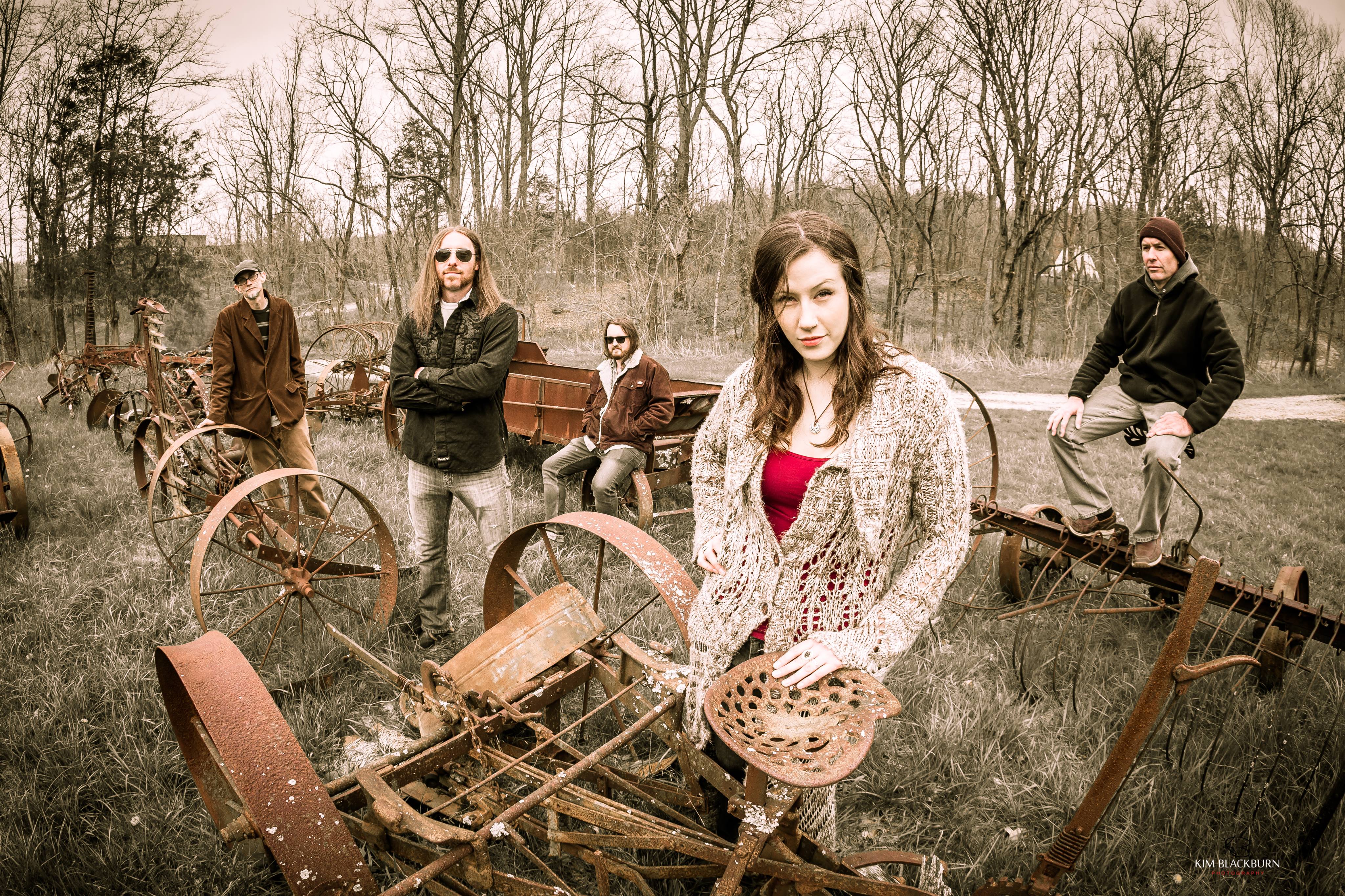
    Always on the hunt for new music and interesting people with amazing talent, I stumbled across a Kentucky based band called Magnolia Boulevard.  The 5 piece is made up of Ryan Allen on keys, Todd Copeland on drums, Gregg Erwin on guitar, Maggie Noelle on guitar and vocals, and John Roberts on bass.

    IMG_0412 Photo by Kim Blackburn

    I caught wind of Magnolia Boulevard through their guitar player, Gregg Erwin.  Gregg and I connected on Face Book and  share a passion for a good number of things including guitar players, slide guitar, southern flavored music, and expressing your self through your instrument.

    I emailed off a bunch of questions to Magnolia Boulevard and then called Greg on the road to see just who Magnolia Boulevard is and how they came to be a powerhouse of Soul, Rock and Roll, Bluegrass, and a dash of Funk.

    “The band is made up mainly of working musicians that live in Lexington. Most of us had other projects when the band formed. Maggie met Gregg years ago at an open mic at Al’s bar. Todd met Gregg years ago at a fill in gig at Cosmic Charlie’s. Gregg met Ryan at a fill in gig at Willie’s Locally Known. Todd knew John from a previous project years before. I think the idea to start the band was mainly Todd and Maggie’s. Maggie was in a bluegrass band at the time and they talked one night and agreed they needed to put something together. Plus, Todd had always wanted to start a band that was more suited for her voice. She asked him if he’d ever heard of Gregg, he had of course, so phone calls were made and we wound up setting a date for our first rehearsal.”

    Dave Parrish Photo by Dave Parrish

    “I’m not really sure what we expected. Our first rehearsal was the first time that a few of us had  met in person. I think we all knew pretty instantly how special it could be, though. We jammed on a couple songs that we knew, (some Tedeschi-Trucks covers, Angel From Montgomery) and felt really good about them. We actually recorded those first tunes through a mixing board that was in the session room and released them on BandCamp. After seeing the response from people online, we were kind of reassured that we might be on to something good.”

    “We all come from different backgrounds musically. I think that’s one of the main reasons we all can get along so well. We’re all able to just get in whatever sonic space needs to be filled without stepping on each other’s toes.”

    Not surprisingly, they seem to be planting their band flag firmly in the ground and making inroads everywhere they go.

    IMG_0375 Photo by Kim Blackburn

    “We actually won the Lexington Music Award for Best Rock Band in our first year. Our first show was 2/26/17 and the award winners were announced in January of 2018. It’s not the reason we play, we just want to make good music that connects with people. I guess winning that award was kind of reassurance that we’re doing that. It’s been nice to have that, though. It helps with booking. We also just found out that we won the FloydFest “On the Rise” competition this year. That’s supposed to be helpful too. I guess we’ll see.”

    Their sound is built on various inspirations ranging from Tedeschi Trucks Band and The Allman Brothers, to Bonnie Raitt.    Each influence has made it’s mark on them while not limiting their style and overall vibe. They are eclectic, while pushing new boundaries in the music they write.

    “We’re absolutely not ashamed to be compared to our influences and won’t deny they’ve had a great inspiration on us. We’re also not interested in doing something that’s already been done. We definitely want to make our own lane.”  And that the do with graceful style.

    Tessa Colley Photo by Tessa Colley

    For anyone looking to get a taste of Magnolia Boulevard, what’s out and available for someone to pick up?

    “We actually have a self-titled EP already released that we recorded at Shangri La Studios with Duane Lundy. You can find it on all the online streaming services (Spotify, Apple Music, Pandora, etc.) and also buy physical copies at our shows and on our website.

    “We’re currently working on our full length album with Paul Reed Smith up in Annapolis at PRS Studios. We’re not sure how much we’re allowed to say about that yet, but we’re very excited to have some of the best in the business help produce it.”

    I asked Gregg about the Paul Reed Smith connection and it seems it was both a stroke of luck and having the guts to believe in yourself enough to make something happen.

    Maggie Noelle Magnolia Boulevard with Paul Reed Smith.  Photo by Maggie Noelle

    Gregg tells me about a fortuitious gig at Willcutt Guitars 50th Anniversary event in Lexington. “We got the schedule and right after us was Brent Mason and Paul Reed Smith who were doing a guitar clinic..and it started out as a joke and I was like I’m gonna ask him, Brent Mason, if he wants to sit in and, it was just a joke, but I really got to think about it and I thought, what have ya got to lose, so I sent a message and literally  5 or 6 minutes later he replied back and said sure.”

    Warren Cobb
    Photo by Warren Cobb

    Brent Mason on stage with Magnolia Boulevard.  Photo by Warren Cobb

    “After that we were tearing down and befriended Paul and I was lucky enough, he was talking abut my pickups and I ended up sending them my guitar and got a bunch of work done on it, and then we got invited out to the PRS experience, they flew us out.  Then a couple months after that we drove out and cut a couple tracks at his studio.  Were probably gonna do 2 more sessions to get the album done.  Probably the first of next year we’ll have an album released.”

    “Paul has been very encouraging to us since we met him. He’s introduced us to several heroes who have also offered their words of encouragement. While we appreciate the situation we’re in, we also know it’s not a golden ticket and we plan on getting out there and earning it every step of the way. We’re looking to really fill up the calendar with some new places at the beginning of next year and would love your help with Iowa. Isn’t that where they shoot the Daytrotter stuff? (It is, and Tim Neilsen from Drivin N Cryin alluded to stopping by there as well.)  Right now, we’re booked pretty solid until November but it’s mainly in Kentucky and the surrounding states. We’re really looking forward to getting out on the road and expanding our fan base.”

    Brandon Bowlds

    Photo by Brandon Bowlds

    With the shows and festivals that Magnolia Boulevard has been tackling this last year, they shouldn’t have any issues expanding the fan base.  Once more people get a chance to experience what they are about, the music they make, and the sincerity with which they play, it wont be long before tickets will be hard to come by.

    Before I closed out, I had to indulge in my guitar nerd questions and ask about Gregg’s set up.  I’m always fascinated in the tools that a craftsman uses to get what he needs and Gregg has a pretty interesting set up.

    “Well my #1 is a PRS S2 standard… when I sent the guitar in to PRS I ended up getting 2 custom pickups based off of 1958 PAF pickups.  My amp, I rely solely on my amp for tone. I’m not a pedal guy man, I have a pedal tuner and an OCD, which I basically use for a volume booster for solos.  I’ve just never been a big pedal guy.  90% of the time I use a VVT model…and I use a Jack Pearson Model…the amp that I use and own is actually the one he uses in the video reviews.  So you know Jack is one of my heroes and that made it even more sentimental.”

    If you live in, or near Kentucky, get out to see them live  Also check the websiteFacebook, or Instagram to see where they will be headed next.

    While I may not get to see them in person until next year, I’ll be following along and anxiously awaiting that album next year.  I expect big things from this band and I have a feeling that I’m not the only one.

    My deepest thanks to  Ryan Allen, Todd Copeland, Gregg Erwin, Maggie Noelle, and John Roberts for answering my questions and sharing some of their magic.

    And because it sometimes doesn’t show up, the Featured Photograph is also by Kim Blackburn.

  • Photographer Kathy Hurley and her journey to reclaim her photographs.

    Photographer Kathy Hurley and her journey to reclaim her photographs.

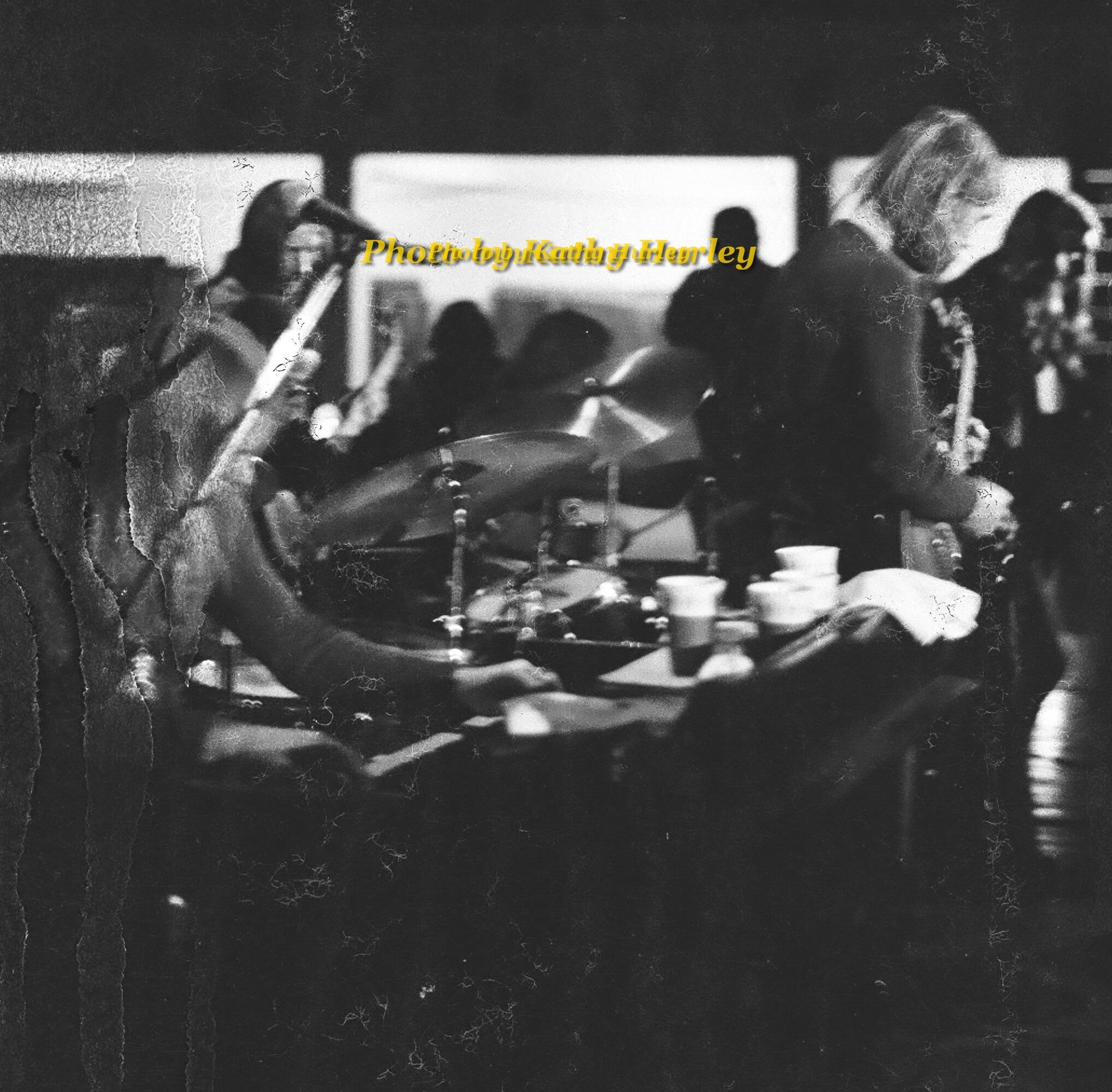
    Not long ago on the Skydog Facebook page, run by Mark Vormittag, it was brought to light that a number of previously uncredited photographs were the work of one of the members, Kathy Hurley.  She has an amazing link to the Allman Brothers Band and has taken a number of fantastic shots that I’m very happy she is finally getting credit for.
    I emailed her to see how she was able to get those great shots and to see if she would tell her story and connection to the Allman Brothers Band.
    J: Let me start with where you grew up and how did you end up getting
    into photography?  What kind of equipment were you shooting with and
    do you still have any of it?
    K: This I find particularly hilarious and here’s why – I was born in Nagoya, Japan in 1950 and grew up in the Philadelphia area.  I always had a passion for art and my brother sent me Asahi Pentax’s from Japan when he was there in the Navy. 
    I used those cameras until one was stolen backstage at a concert at Carnegie Hall and another backstage at the closing of the Fillmore East.  Both were at Allman Brother’s gigs.  I have a older Bell & Howell – now Canon and multiple lenses.  I’ve dug it out of storage and need to get it cleaned and ready to go again.  I have multiple lenses and now mainly do landscape and wildlife photos.

    IMG_5578

    J: When did you get in touch with the ABB and do you recall how many of
    their shows you may have covered?
    1527462026819blobK: I first met ABB when they did a concert at Bucks County Community College in Newtown, PA.  That was October 25, 1970.  Spirit was a no show as a band member got sick, so it was just ABB.  
    The concert rocked and the band had a 3 day layover in New Hope, PA.  I got to meet the band as I was on the committee for the concert and we all just hung out for the 3 days.  My friend hooked up with Gregg – I’m not telling about me, but we had a blast taking them around the area and having a great time. 
    After the concert in October of 1970 at Bucks Co. Community College, the band hung out for 3 days in the area.  The next night, we were all together at the hotel having dinner – about 25 of us including band, roadies, assorted musicians and admirers.  It got pretty raucous and later on, Duane decided he was going to do the magicians’ pull the tablecloth off the table and leave all the dinnerware in place trick.  You can probably guess how that turned out.
    It cemented some great friendships and the opportunity to continue to be invited to shows up until abound 1997 or so.  Went to a LOT of shows between that first concert and the end of 1971. 
    My friend and I moved to Atlanta for a couple months, but I ended up moving back as my father got sick.  Multiple trips to Macon to “hang out”.  Crazy times.
    J: The cameras you had  stolen at the closing of the Fillmore and Carnegie Hall are obviously gone but did you get any photos from those shows from the cameras that you still had?
    K:I only have a couple shots left.  Only a couple that I can “prove”, anyway.
    IMG_5573
    Possibly Carnegie Hall
    J: You mentioned to me that the negatives have been gone through over the
    years by the band and roadies and I wondered how much do you still
    have and what condition are they in?
    K: I still have a few.  About 175 have been digitized and shared with the Big House Museum, Mark Vormittag, and Sabrina Cristler for them to use to validate ownership and share.  There are several “contact sheets” that I can use to digitize some more.
    J: What kind of restorative process are you going through with them now
    and are you planning on anything further with them? (I can tell you
    that the ABB fan base would love to see you do something with them for
    sure.)

    This slideshow requires JavaScript.

    K: Well, I will blame you, but I need to find a good “restorer” to work with what I still have.  I’m sure the quality can be improved and they will look much better.

    J: I should probably also ask, how did everything come about with your
    photographs and you finally being credited for your work?  I mean that
    the Skidmore photo has been out for a while and used for the Song of
    the South dvd cover and is pretty famous photograph.  I’m sure you know this from being in the group but getting the info right is so important and I’m glad that you were credited publically for your work.

    This slideshow requires JavaScript.

    K: That’s a good question.  Those photos are 47 years old.  I often thought the Skidmore photo was mine and finally found it on my contact sheets to prove it.  All these years, nobody knew.  So, I am working on getting some advice about all that.  Who knew????  The photo of Duane at the Atlantic City gig is a pretty well used image too.  I’m very happy to be recognized.

    Fringe Jacket Worn by Duane Allman
    Jacket worn by Duane Allman, owned by Kathy Hurley. Photo Courtesy of Kathy Hurley.

    J: It was mentioned on the site that Duane traded you a couple shirts for a Jacket that he really liked and that Dixie gave it back to you after the wake. You must have been close with the group for her to give it back after he passed.  Did you spend much time with them after Duane passed and then after Berry?

    K: Yes, Duane was hilarious and probably one of the nicest people I’ve ever met.  I was at the Skidmore gig and woke up to Duane and Gregg in my room (still have no idea how they got in) playing Little Martha on acoustic guitars.  Duane saw my jacket and really, really wanted it.  Ran off to grab a couple Indian shirts and a t-shirt to trade.  Sadly I have never seen a picture of him in it.  Stayed at his and Dixie’s house during his funeral and she gave it back to me.  I’m sending it to the Big House Museum to display.

    J: Of course I have to ask if you still have those shirts as well?  haha
    K: Sadly, no.  I wore them until they fell apart.
    IMG_5574
    Previously unseen Painters Mill concert photo, 10-17-1971 Photo by Kathy Hurley

    J: Did you attend the Painters Mill show and then stay in town during that time Duane passed?

    K: The Painter’s Mill show was Oct 17 in Baltimore, MD.  Hung out with the band that night and was home outside Philly the next evening.
    J: Did you attend the wake or just stay at the house during that time to help Dixie?  People don’t like to talk about Duane’s passing, and understandably so, but I was curious if it hit the entire community of Macon and or if they didn’t realize the weight of Duane’s and the ABB’s contributions.
    K: I heard about Duane’s accident on Oct 29/30th and left for Macon on 10/31.  Went to the Big House first and it was a zoo.  Obviously everyone was horribly upset and “medicating” to take away the feeling of unbelievable loss.  People were coming in from all over and trying to help each other with the pain.  I stayed at Dixie’s with her on Oct 31 and Nov 1…. Duane’s wake was Nov 1.  I headed back home on Nov 2nd.  
    The next show where I saw the band was at CW Post College on Long Island on Nov 22nd.  I think it was their first gig since the funeral and everyone was still shocked, but making music – especially the music they played with Duane – which helped.  Right after on Nov 25th was a Carnegie Hall (NYC) concert and Nov 26th at the Ritz Theatre on Staten Island. By then, everyone seemed to be accepting the fact that they would go on without him, but feeling his energy as they were on stage.  He was gone…..but not gone.  He was the angel in the wings.
    J: I’m looking back at this 47 years later and I realize that they hadn’t quite taken off until Filmore East came out and after Duane was already gone.  Obviously Greggs passing was different in that, while we didn’t all fully understand the gravity of his health, his health issues hinted that something serious could be wrong.  With Duane it was so sudden and tragic while with Gregg, he’d built 50+ years of legacy that drew people from all over the world to Macon to pay their respects and say good bye.
     
    K: Yes, it was the suddenness of Duane’s (and then, Berry’s) passing that hit so hard, just as they were reaching the pinnacle.  I’m not sure if anyone ever fully recovered, but just carried on.  It was like a light that went out in the music world.  Besides, Duane and Berry were two of the nicest guys I’ve ever met.  A little crazy, but never hurtful, never aloof, just regular guys.  I totally treasure my experiences with them all.

    This slideshow requires JavaScript.

    The subject of any friend passing is a tough one to broach and especially one that affected so many with his gift of music.  I greatly appreciate Kathy’s willingness to share her story and photographs with me.  I will continue to check in with her to see how the restoration process is going and if she’s able to share any other new photos that the fans may have yet to see.
  • Boo Ray ain’t no good time…he’s a blast!!

    Boo Ray ain’t no good time…he’s a blast!!

    June 16, 2018 Boo Ray interview

    Cowtownchad
    Photo by Chad Cochran

    Lately, I’ve been touting the music, and fashion sense, of country music singer/songwriter and recording artist, Boo Ray. His brand of redneck rock and roll music reflects blue collar, hardworking values that lean heavily on his varied experiences. From making his way out of the mountains of North Carolina, to the Sea of Lights in Los Angeles, Boo Ray’s real life experiences, and his nose to the grindstone attitude are what drew me to his music and why I wanted to talk to, and write about him.

    Aside from being the embodiment of a blue collar singer songwriter in the tradition of Jerry Reed or Merle Haggard,  he’s a traveling troubadour in every sense of the word. His tour schedule is wherever he can get to with a 5 piece band with steel guitar, and a few tanks of gas.  He’s covered everywhere from Athens, Ga, Texas, Louisiana, and California. He’s been grinding out a career gig by gig and, in my opinion, with his BooCoo amigos singles, a new album, the One Mic Series, and a team of hardcore ladies scheduling and managing his next steps, Boo Ray is about to pop up on a lot of peoples radar.

    I caught up with him on a Saturday afternoon in the middle of getting a PR mailing out of 300, 7” singles and eating a sandwich for lunch. I let him know that I really appreciated him signing the album that I bought the week before, Sea of Lights, and got right into some questions.

    First up was about a series of duets that Boo Ray affectionately calls the BooCoo amigos series. I was familiar with the Boo Ray and Lilly Winwood cover of the 1983 “Islands in the Stream”.  It’s a fresh take on the Dolly Parton and Kenny Rogers classic, and also a reminder of what amazing harmonies come out of country duets. I wanted to know more about what he’s doing now with those and what’s next.

    “The first thing, digitally, was Lilly Winwood “Islands in the Stream” cover came out when the Kenny Rodgers tribute came out in Nashville. Then last Christmas I put out “All Strung out Like Christmas Lights”, a Christmas single with Elizabeth Cook. And the next one, I’m sitting here in the middle of a PR mailing, is with celebrity chef Sean Brock…he’s the guy that took Anthony Bourdain to Waffle House here in Nashville. And so  we discovered each other really through a hashtag of a tattoo artist we both have in common, an old school Athens Georgia tattoo artist that we both have in common. It turns out that we both did stints in Georgia so we kind of like old school Athens Georgia townies together. So anyway the tattooist is Mitchell Atkinson and was one of these wild rebel characters, he was all the time driving a dune buggy or a monster truck or some kind of crazy ride and you kind of always knew in the back of your mind that he’d die in some kind of hot rod crash, and he did…in a hot rod maverick.”

    “Anyway once we got to talking about Mitchell, the tattoo artists, we said well hell, we ought to write a song about that sun of a gun, and so we did. We wrote this song “Saint Misbehavin” and it’s just about tattoos and sort of a running thread of old Athens folk lore and gossip and rumor. That’s the A side single and that came out so we said Hell we need to write the obligatory food song and make a damn package out of it right. So we wrote “Soul Food Cookin’” and its got twin guitar solos…Shawn’s a cool guitar player and so it’s got a bunch of Jerry reed and Allman brother’s kind of twin guitar stuff and stuff.”

    I asked about a video I’d just seen on YouTube for the One Mic Series at Sun Studios in Memphis by Recording Engineer John Cuniberti. I wanted to know what they were like and how much he recorded there.

    IMG_4441
    Photo courtesy of Boo Ray

    “..It’s a series called the One Mic Series, that guy (John Cuniberti) literally records drums, bass, guitars everything, and vocals, everything with one microphone. He mixes with a damn measuring tape. He’s going and capturing these beautiful studios, these legendary studios, and he’s recording indie artists, and that was a real special experience. I get a kick out of it because he’s the guy that recorded all those fuckin Joe Satriani albums.” He says through a genuine laugh of joy. “Yeah, yeah, which I just think is wonderful cause I grew up on those records man. So it was just amazing. We decided to record 2 songs off a brand new record that’s not out yet. So we recorded 2 songs off of that record and there’s another one of those one mic series that will come out in a month or so.” (Since I spoke with him on the 16th,  “Honky Tonk Dream” joined “Don’t Look Back” as the second release from that session.)

    I asked Boo Ray if my information was correct that they had tracked Sea of Lights in just a few days. That lead into a somewhat related but different story that was as interesting as the original question, which I love and enjoy when it happens.

    “Yeah we tracked in in two days.  My buddy and Producer Noah Shain he called me and said I’ve got this old tape machine from Quonset Hut Studio in Nashville, and yeah we tracked that entire album in a couple days.”


    “He (Noah Shain) produced 2 tracks that were on my 2010 record Bad News Travels Fast.  He produced “Constantina” and “Allez Allez”, which is like a broken French, cajun chorus. “Constantina” is like a Eagles kind of LA, R&B, country, Jackson Brown, uh country esque, even Eddie Rabbit kind of shit.”

    bntf

    “So, In 2010 I got kind of stranded and waylaid in Athens, Ga. At the time I needed a new album real bad you know a $10 item to sell at gigs, so I just compiled all the sessions that I had done over the past 2 or 3 years from LA and Texas and Louisiana and I finished the thing in Atlanta with a hip hop producer just cause I had zero budget. I was livin in a halfway house in Athens Ga, literally, literally 1 block behinds New West Records, not even a full block, across the damn street kitty corner. I released that record, Bad News Travels Fast record out of that halfway house on the halfway house computer and phone line. I’m still rerecording songs off of that record.”

    Price Harrison (2)
    Photo by Price Harrison

    “I’ve released the 2012 record, 6 Weeks in a Motel, that the title track was off of that 2012 record Bad News Travels Fast and of course I rerecorded Bad News Travels Fast for the new record Sea of Lights. I don’t have a song recorded off of that record for the new record but I’ve already got sights on one of the songs I’m gonna record for the next new record off of the Bad News Travels Fast record. Bad News Travels Fast was my first Americana record, it charted on the AMA chart on the Americana Music Association music chart and I released it out of a damn halfway house right behind New West Records.”

    When I interview someone like Boo Ray, I kind of felt the need to explain my taste in music and who I consider “country”. There is a great divide between the country music fan listening to today’s “radio hits” and a guy like me that counts Hank Williams, Gram Parsons, and Dough Sahm in the same category as Sturgill Simpson, Blackberry Smoke, and of course Boo Ray.

    IMG_4443
    Photo provided by Boo Ray

    When I asked him about guys that he’s listening to he says “I’m like you, I listen to Sturgill, Stapleton, and feel like were fighting the same fight, like kindred, like were different sides of the same coin of those guys you know. And Black Berry Smoke too you know, I’d like to play bills with all those guys.”

    I mentioned the Hinterland Festival in Charles City Iowa in August where top names like Stugill Simpson, Blackberry Smoke, Margo Price, and Nathaniel Rattliff and The Night Sweats will be performing. It a weird musical situation that newer artists are making more traditional, throwback, music, that are similar to the hits I heard on the radio growing up, but now can’t get any air play.

    Of that Boo Ray says “You know that the outlets that carry that music, the Americana radio world and then really one of the biggest purveyors of our style of music is Serious XM Outlaw Country.  That’s sort of what I consider my home base they have been playing my record since 2010.”

    Price Harrison
    Photo by Price Harrison

    As a fellow guitar player, I have to ask the obligatory guitar gear questions.  When I ask about the guitar he uses with the grafitti tag on it he says that it’a an old Gibson flat top that he hasn’t played in the clubs for about 5 years. “…and the reason being, I kind of gave up playing acoustic instruments in clubs because you just don’t have enough control of the sound. Your basically 100% at the sound man’s mercy. So my rig right now is a 70’s style telecaster with a pair of humbuckers in and I play a resonator, a Washburn resonator. It’s a signature model Richie Owens signature model; he and Washburn gave me that guitar. It’s got electric guitar pickups in it so I can plug it in the same line I plug my telecaster in and I don’t have to change my settings or anything, it just plugs right in. It totally transformed my live show. Cause otherwise if you play an old national you have to have a whole separate guitar rig”

    On the subject of the ever fashionable home studio Boo Ray says;
    “Yeah, I’m not an engineer-producer, I’m an old-school, I like to work with an engineer.  I’ve got a few different engineers that I like and work with around Nashville, and Los Angeles, and Athens Georgia, so no. I track songwriter demos at home but when I’m fixin to record anything beyond a songwriter demo then I, the go to studios I use are Gold Cassette Studio in Nashville and also Welcome to 1979 studio in Nashville, that’s where we recorded the new full length record. That will come out this fall.”

    “I can’t say much about it but we just signed a record deal. The new Sean Brock single and the new record are going to come out with a little more horse power, hopefully, behind the release than what were used to you know, so hopefully were going to actually were going to become a little bit visible for a minute.

    “I think this new record is, it’s the furthest out I’ve gone. Like, I mean it opens with a damn 6 minute song with a 1 minute fade out. The records pretty out there and its singer songwriter, it’s the most singer songwriter record that I’ve done yet.”

    I also wanted to know what the tour schedule is for the rest of the year and if I would be able to catch him locally in Iowa.

    Todd Sapre
    Photo by Todd Sapre

    “I just got a scattering of dates across the South East right now. I’ve been doing Thursday-Sunday, satelliting within a 5 hour radius or so out of Nashville, 5-7 hours, you know I’ll do Tallahassee and South Georgia but um, I’m just now starting to get into the Midwestern region. I’ve been working Paducah Kentucky a little bit and Bowling Green and I’m gonna get out and do Paint ballroom and I’m going to get out and I’d love to get out your way and, you know cowtownchad’s in Ohio, and (over to) Iowa too.”

    “…we’ve just got this new booking agent, we’ve just signed this new record deal so you know hopefully things are gonna take on a new process, it’s all still in the works. The new record company was pretty hot on getting behind the new record and Sean Brock single so I think there’s going to be an announcement made next week.”

    “But uh, I’ve never released anything with a full team I’ve had publicists and radio promoters but I’ve never had a booking agent that was working in conjunction with a publicist and a label to hit the markets where were lighting the meter up.”

    “I mean we’ve been scrapping man; we’ve been scrapping hard for fuckin 5 years. I’ve played such low quality, shit hole, honky tonks that I’ve had good band members, that I’m paying well, you know were making money, but these places are rough man I mean it’s knife cutting, shooting, kinda bad scenes. I’ve got guys that won’t go down and play those place regardless of what they are paying.”

    “That’s been a bit of a wake up call for me in that I was like, you know what, my band mates are right, I shouldn’t have to do this, and my booking agent’s not doing me any favors by doing this to me. So that helped me transform and roll up my sleeves and go to work on my own team, it’s so complex. I’m constantly overwhelmed at the degree of difficulty with the business side of this thing.”

    Carving out your place in the music industry while trying to write, play, and juggle the business end as well has to be a daunting task.  I expressed that hopefully the new team would help out and alleviate some of those issues.

    “Well, our publicist has been with us for over a year and is a wonderful woman.  In fact, my whole team, the entire team, the record label, the booking agent, my manager, my publicist is all bad ass women, the whole team, it’s a trip right.”

    The damn trip is Boo Ray himself.  He’s as real as they come and our conversation was more like friends chatting over some PB&J’s on his porch instead of an “interview”.  He finished our conversation by thanking me for writing the article about Ellie Monster and helping get her a little more coverage.

    I thanked him for his time and implored him to keep pushing hard and writing his brand of music.  It not often that I get to converse with a true country music troubadour so, if I can lend my support by spreading the written word and grab him a few more fans, it will all be worth it to see him keep on putting out new music.

    Boo Ray

    Feature Image photo by Victoria Huff.


  • Angelo Santelli

    Angelo Santelli

    I have been following Angelo Santelli’s career for a while and while he may not be on your radar yet, he should be.  In the simplest terms possible,  you can put his slide talent snugly between  Duane Allman and Derek Trucks.  It would be a gross understatement to box him into that category but, it gives you a hint of his ability.

    Photo by Ian Sarasfinksi
    Marc Dixon, Angelo Santelli, Adam Wakefield, (Caitlin Koch not pictured) (Click the photo to go to the Youtube video)   Photo by Ian Sarasfinksi

    He’s played with many of the second generation of Allman’s and when you step on stage with names like Oakley, Allman, and Betts, you had better be ready to play.

    He’s also had the distinct pleasure of once backing up CoCo Carmel and Bobby Whitlock.  Mr. Whitlock has been a member of and contributed to albums by  Delaney & Bonnie, Eric Clapton, George Harrison, and Derek and the Dominos, just to name a few.

    Angelo and I cover his bands, gear, and future plans.

    J: Hey Angelo, let’s get right to it.  I have a feeling that you picked up guitar for the the same reason I did, because your dad plays.  What made you want to pick it up and keep playing after you started?

    Photo by Marygrace Pue
    Photo by Marygrace Pue

    A: I definitely picked it up because of my dad. I always had music around me through him and had toy or jr sized guitars, spoons, but when I was 12 I started getting into classic rock like Pink Floyd, the Doors and from my dad, the Allman Brothers. I heard my dad do a rendition of Little Martha and it really captivated me. He tells people the story and says “it set my soul on fire”. I was really captivated by the melody of Little Martha and had him show me it, and eventually I learned how to finger pick when refining my own rendition. It’s quite an advanced piece to begin playing, but learning it so early definitely gave me a boost when I started playing!

    J: It’s a beautiful melody to start learning from.  What  music were you listening to when you first started really playing and what kind of sound were you trying to get to?

    A: When I decided to really dedicate myself to playing at 12 the main two bands were Pink Floyd and the Allman Brothers. My stepdad had a bunch of Pink Floyd CDs and my dad had a bunch of Allman Brothers Band. I played a lot of acoustic at first, trying to learn acoustic parts to songs like “Dogs” and “Pigs on the Wing” from Pink Floyds Animals.

    J: You’ve obviously excelled at the “Southern Rock/Slide” genre but what influences and what bands got you there?

    Photo by Rob Williams
    Marble Garden opening for Lonnie Baker Brooks 2009  Photo by Rob Williams

    A: The only “southern rock” band I listen(ed) to heavily was the ABB, and for the first few years (until I was about 15) I only tried to mimic Duane Allman and Dickey Betts, for slide. I didn’t even attempt any Derek Trucks style stuff until about 15, but I had first heard him at about age 14. I like some Lynyrd Skynyrd stuff but they didn’t really influence me at all. I had a very narrow slide focus for a while and just listened to lots of other stuff for enjoyment, like Miles Davis (In a Silent Way, Bitches Brew, Live Evil and Jack Johnson) Mahavishnu Orchestra (especially Inner Mounting Flame and The Lost Trident Sessions) and early Weather Report (first album, Live in Tokyo/I Sing the Body Electric, Sweetnighter)

    J: Ok, let’s get nerdy for a minute. What gear are you using now and how does that vary depending on where you play?

    Photo by Dan
    Hoosier Bar 2017  Photo by Daniel Sanda

    A: My current electric gigging rig is a 2005 Gibson SG ’61 Reissue with WCR Fillmore pick up set (I don’t have an endorsement with him they were just the first Duane-style overwound pickups I found 10 years ago).  I use a real Coricidin bottle without the safety cap lip that my dad found for me recently and a certain short thick walled model of Silica Sound Slides (which I do endorse, along with Apex strings, a new brand made by the guy who held several patents with Dean Markley). I also have a Coricidin bottle copy with the safety cap from the guy who had bought the Coricidin bottle molds and marketed his reproductions as “The Duane Allman Slide” until Gibson made him stop. The gigging acoustics I use are either a German Martin copy or some cheapy “Brownsville New York” acoustic electric. I play round neck dobro and 12 string guitar but I don’t do any gigs right now with them.

    J: People always want to know about the guitars but what about amps. Do you have any favorites that bring out that tone you’re looking for?

    A: My current gigging amp is a Marshall Haze 40 with all the on board effects out of the circuit. In storage at my friends studio in Michigan is my 1976 Bassman 10 (The Santelli Special) that has a completely original circuit with added transformers and other stuff built by a guy I believe by the name of Vic Watkins in Kalamazoo, MI sometime in the 90s. It had been floating around W. Michigan for a while until I picked it up over 10 years ago. It has a mix of some Webber speakers in it and is supposed to sound like a hot rodded plexi, which isn’t too far off the Marshall Haze tone. One of best my friends and old bandmates, organ and guitar maestro Tom Eldred cloned it and dubbed it “The Santelli Special”. I also gig occasionally with 2006 Blues Jr that is currently not working. It has a speaker from a Hammond A100 organ.

    J: Any effects pedals at all and what’s your stance on them?

    A: Yes I love effects. My effects are a 1974 Echoplex EP-3, a Fulltone Mini Deja Vibe (cream colored one with no treadle) and a Crybaby with the adjustable resonance. I sometimes use other weird effects based on analog synthesizer circuits like a sample-and-hold filter like the effect Zappa used on “Ship Ahoy”. I also sometimes use a Hendrix Octavia clone. I definitely did not adopt the typical ABB guitarist stance of little-to-no effects. Hendrix’ biggest influence on me was his choice of effects (why I use the Univibe, wah-wah and occasionally an Octavia). Tommy Bolin and Sonny Sharrock are why I got an Echoplex.

    J: You have played and continue to keep company with some fantastic musicians. Can you explain how the Bobby Whitlock & Coco gig came up? That’s like a dream come true.

    Photo by Michael E Irelan
    Photo by Michael E Irelan

    A: In 2015 someone told me about how Bobby was doing a tour and was looking for a couple different guitarists. I got in touch with him, he saw some videos of me shredding on Dobro and asked me to do a couple gigs.  We played in Cleveland, OH and were booked in Ferndale, MI (Detroit ‘burb) but the MI gig was cancelled. Bobby and his wife CoCo are awesome. He has some wild stories that were really entertaining. It was definitely special be able to not just cover Duane and Clapton’s parts on the Layla material, but to be encouraged to add my own style. I definitely hope to be able to do it again if he tours again!

    Photo by Angelo Santelli
    CoCo Carmel, Angelo Santelli, and Bobby Whitlock in the greenroom at The Beachland Ballroom and Tavern. Photo by Angelo Santelli

    J: You’ve also shared a stage at various times with Michael Allman, Berry Duane Oakley, and Duane Betts. What is that experience like for you as a fan of the music, and as a player.

    august-2013-garrett-in-michael-allman-with-angelo-santelli-and-marble-garden.jpeg
    Photo by Hobbes Taylor

    A: I gigged around the south and Midwest with Michael from 2011-2012 and gigged with him on and off over the years since then. There were some memorable times but it was definitely much more of a party than serious touring. I first sat in with Berry at the Siesta Key Oyster Bar more than 10 years ago. The first real gig I did with him was at the 2009 premiere of the film “Please Call Home” in Sarasota, FL.  I play with him a few times a year and it’s always a lot of fun.

    I first heard Duane Betts in 2006 when Dickey’s band played the Common Ground festival in Lansing, MI and have gigged with him a few times in Sarasota, usually as gigs that Berry put together. It’s definitely fun being able to trade off with him since I took a lot of Duane Allman’s style (on lead and slide) and he learned firsthand from his dad his style, and us playing together with our own derivative styles. Pedro Arevalo is another one and someone I really enjoy listening to as a “fan” because he has such a unique slide guitar style. Hearing him when I was 15-16 really opened my mind up about some stuff you could do with bottleneck slide outside of the Duane/Dickey/Derek vocabulary, like using a wah pedal and creative uses of harmonics.

    Photo by Zak Frederick
    Angelo Santelli, Mike Fender (BO’s Indigenous Suspects) Pedro Arevalo, Berry Oakley, Richard “Doc” Burton, Mike Kach (Dickey Betts & GS)Photo by Zak Frederick


    J: I’m glad that you mentioned Pedro Arevalo. I just watched Myakka Alembic Band from 2017 Venice Blues Festival on YouTube and what a great jam. You, Berry Oakley, and Pedro Arevalo have a really cool 3 way slide jam about 8 minutes in that impressed the hell out of me. Everyone was listening and playing off of each other and I really loved that give and take. Do you have any thoughts about that show that you want to go into more detail?

    A: That Myakka Alembic was our original band name but people had trouble pronouncing it and just didn’t think it was as cool as I thought it was (lol) so we changed it to Santelli Oakley or Santelli McKenzie Oakley but that’s a bit too long…that was a really fun gig though. We do lots of jams like that at the Hoosier Bar in Osprey, FL (Sarasota, also the town Dickey lives in) where Berry holds his “Sunday Blues Service” which has been going on for the better part of nearly 4 years. That gig was one of the first times I sang in public which I really don’t like to do but you have to sing if you’re going to make any money unfortunately. Playing with Berry and Pedro is always fun because they’re such top tier talents that it’s easy to really “jam” with interaction. Everyone in this Sarasota music circle is familiar with the ABB style of jamming and everyone brings their own flair to it.

    Photo by John Fetters
    Photo by John Fetters

    J: We ran into each other in Nashville back in 2016 at Soulshine. How did you like that Music scene there and why did you take off for NY and then Florida?

    A: I was honestly pretty disappointed with the Nashville scene. People had been telling me for years to go there, and I moved there in 2015 (after the Bobby Whitlock gig) already having known guys like Jack Pearson and Kenny Olson from when Michael and I played the Dan Toler Benefit there in 2011. I met some more great people there but there just wasn’t a lot for me to do there. There’s lots of areas in Florida where you can make a decent living as a solo, duo or bands and despite being “music city” I thought the actual jobs for musicians were really lacking.

    NYC was a small attempt to see what I could do there after I started dating a girl from Manhattan that I met while doing a residency gig with Biscuit Miller in Key West last year. I found it pretty similar work-wise to Nashville, except Manhattan has so much more going on. I really think it’s the greatest place in the world. I was born in FL and have lived here at different times in my life so after Nashville and also an attempt in Detroit as well it made the most sense to come back to Sarasota where there is a small but thriving music scene with some of the best talent around.

    J: You have a couple CD’s out I believe, where can they be purchased if people want to catch up with your work.

    image1-3.jpeg
    Photo by Karen VandenBos. Painting by Nate VandenBos that Angelo used for 2014 album titled Angelo Santelli.

    A: I have 2 full length CDs 2009’s “Marble Garden” and 2014’s “Angelo Santelli” as well as the Leo Kottke-style EP from 2016 called “The Slide Guitar That Destroyed the World”. All are on digital outlets like iTunes. Google play, Amazon MP3. The self-titled CD can be ordered from Bandcamp. (I just realized I didn’t have it and placed my order now!!!)

    J: You continue to also play with Shaun Oakley and Travis McKenzie in the Santelli Oakley Band. Do you guys have a regular schedule in Florida and are you doing much traveling?

    A: Last summer I put this band together with Shaun and Travis. It has been a slow start but with lots of great feedback. We are trying to find a good agent to help us get touring because it’s pretty difficult to book all the stuff grassroots as a new band. We missed out on the big blues and jam-band festival season for this spring and summer which is rather disappointing. We have rooms we want to play in Manhattan, Chicago, Nashville, Atlanta, Macon and all over Michigan and Florida but it’s just about getting the gigs booked and having the itinerary scheduled right.

    Photo by Tommy Santelli
    Angelo Santelli, Travis McKenzie, and Shaun Oakley Photo by Tommy Santelli

    J: What’s the next step for you and or your band?

    A: We’re trying to get an album together, we have an album worth of originals but just haven’t been able to record it. We’re thinking of trying to do a Snarky Puppy-style “live I the studio” album but we just haven’t been able to get it going. I also am wanting to do a new studio album of some other material I have (all relatively in the same genre, just different band formats). We’re trying to get our first national tour underway but as I had mentioned it’s really hard doing it grassroots. Definitely by the end of the year we should have completed at least one national tour with dates on the east coast, Midwest and around FL.

    I want to thank Angelo for taking the time to talk with me and share what he’s working on.

    There are many amazing musicians paying their way, gig by gig, day in and out because they love music.  Angelo keeps digging in his foothold and when that break comes, I’ll be in line to get my ticket and buy the album.

    Here’s where you can catch up with Angelo and his projects.

    Angelo Santelli Music FaceBook

    Santelli Oakley FaceBook Page

    Angelo Santelli Twitter

    Angelo Santelli Instagram