Category: Stories & Commentary

Personal stories, commentary, profiles, and observations from Jeremy Glazier exploring music, photography, culture, creative work, and the people and experiences encountered along the way.

  • Growing Up in the Shadow of Vietnam: A Gen X Childhood After the War

    Growing Up in the Shadow of Vietnam: A Gen X Childhood After the War

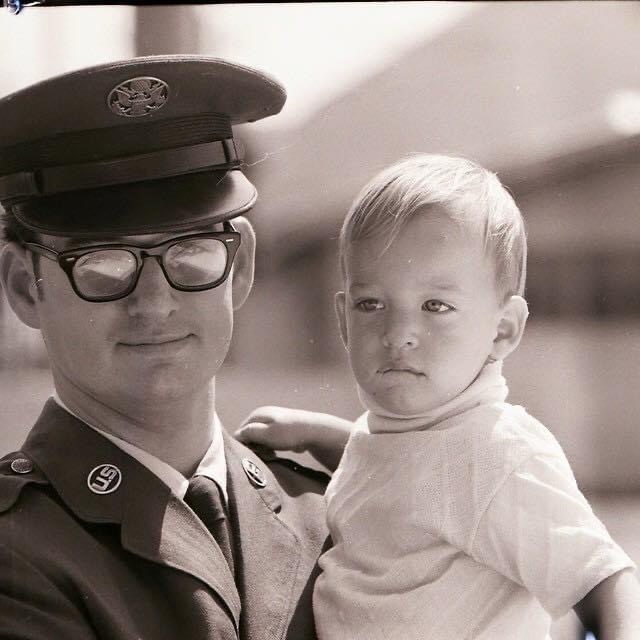
    One of my earliest memories of feeling proud of my father’s military service happened on a Sunday afternoon at the Five Seasons Center in Cedar Rapids, Iowa. The Home Builders Show was in town, Gary Lewis and the Playboys were performing, and sometime around four in the afternoon the announcer asked the military veterans in the audience to stand. I always loved when that happened because it meant my dad got to stand.

    My father, John Glazier, served eight years in the United States Air Force. We weren’t what I would describe as an overly military family, but we respected the men and women who wore the uniform, and I respected the hell out of what my dad had done. As a kid, I didn’t completely understand what military service during the Vietnam era meant, but I knew that my father had been part of something much bigger than me, and when someone asked the veterans in a room to stand, he was one of them.

    The Vietnam War My Generation Inherited

    I grew up in Cedar Rapids in the early 1980s, part of the generation that came immediately after Vietnam. The war had ended, but culturally it didn’t seem very far away. World War II had already become the subject of countless movies, television shows, and heroic stories, while Vietnam seemed different, more complicated, and somehow still unsettled.

    Maybe that was part of what fascinated me. The Vietnam veterans I saw represented in movies and television seemed different from the soldiers in the old World War II films. Their stories included bravery and sacrifice, but there was also anger, confusion, loss, and distrust.

    Then there was the music. The soundtrack of the Vietnam era became some of the same music that eventually inspired me to pick up a guitar: Jimi Hendrix, Eric Clapton, Creedence Clearwater Revival, The Doors, and so many others. That music became inseparable in my mind from the images of the era—helicopters, jungles, protesters, soldiers, hippies, tunnel rats, draft cards and young men carrying rifles thousands of miles from home.

    As a kid, of course, I was absorbing a mixture of history and Hollywood. I didn’t completely understand where one ended and the other began. I just knew there was something about that period of American history that fascinated me.

    From M*A*S*H to Tour of Duty

    Television was a big part of that education. I remember watching M*A*S*H with my parents, and while the show was set during the Korean War, it introduced my generation to a different kind of war story. It could be funny one minute and devastating the next, and underneath the uniforms were frightened, exhausted, and often very young people trying to make sense of what was happening around them.

    Then my generation moved into shows of our own. I watched Magnum, P.I., where Thomas Magnum’s service in Vietnam was part of who he was, and The A-Team, whose characters were Vietnam veterans. I remember Quantum Leap touching on Vietnam and its aftermath, and later there was China Beach and Tour of Duty, shows that dealt with Vietnam much more directly.

    I absolutely remember watching Tour of Duty. By then, television wasn’t simply referencing Vietnam anymore; the war itself was the setting, and the characters were dealing with the fear, friendships, loss, and confusion that went with it. In some ways, television was growing up alongside my generation as we moved from watching our parents’ war stories to programs dealing directly with the war that had shaped so much of the world we were born into.

    Looking back, I think a lot of Generation X absorbed a strange contradiction from the generation before us. We learned that you could respect the person who served while still questioning the institutions that sent them. There was a rebellious streak in the culture we inherited, but it wasn’t necessarily disrespect for the men and women in uniform; sometimes it was exactly the opposite.

    That same Gen X independence shows up in the way a lot of us carried friendships into adulthood. I wrote about that side of it in Three from the Class of ’93: Still Picking Up Where We Left Off.

    Vietnam on the Movie Screen

    Movies had an even greater impact on me. There were the classics that came before I was old enough to fully appreciate them, like The Deer Hunter and Apocalypse Now, and then as I got older a wave of Vietnam movies seemed to arrive almost on top of one another. Platoon, Full Metal Jacket, Hamburger Hill, and Good Morning, Vietnam were intense, violent, and unforgettable.

    One of the lessons my father gave me, though, was that movies were still movies. I remember him taking me to see Platoon, one of only a couple of movies I specifically remember going to with him, and on the ride before we arrived we talked about what moght be on the screen. My father wanted me to understand that movies like that were sensationalized versions of war and weren’t something to idolize; there were lessons in those stories, but war itself wasn’t entertainment.

    That conversation stayed with me, and in some ways I had already received a version of that lesson several years earlier from a movie most people remember for an entirely different reason.

    What I Remember About First Blood

    When people hear the name Rambo today, they often picture the later films—the machine guns, explosions, and an almost indestructible action hero. But that isn’t the Rambo movie that stayed with me. The first film, First Blood, ends very differently.

    John Rambo isn’t celebrating a victory at the end of that movie. He’s breaking down, trying to explain what happened to him and his friends, struggling with the fact that the skills that kept him alive during the war don’t seem to have a place in the life he returned to. He’s trying to understand why people he loved are gone and why the country he served doesn’t seem to understand what he sacrificed.

    As a kid, I certainly didn’t have the vocabulary to understand PTSD, trauma, or the difficulties veterans could experience when returning to civilian life. But I understood that scene. This guy was hurting, and the war wasn’t over for him simply because he had come home.

    That idea stayed with me far longer than the explosions did.

    Respecting Service Without Romanticizing War

    As I got older, the distinction between respecting service and romanticizing war became increasingly important to me. There is a difference between honoring the people who served and glorifying the circumstances that put them there. Those aren’t the same thing.

    Vietnam was politically and socially complicated, and the people who served came from different backgrounds and had very different experiences. Some volunteered, and some were drafted; some served in combat while others performed essential jobs thousands of miles from the fighting or at bases throughout the United States and around the world. My father was one of those Vietnam-era veterans, serving as an Air Force Avionics Instrument Specialist in Japan as part of a much larger military structure that extended far beyond the borders of Vietnam itself.

    That distinction became especially important to me later because when we talk about the Vietnam generation, the conversation often gets reduced to one image: the combat soldier moving through the jungle. Those stories absolutely need to be preserved, but they aren’t the only stories. There were pilots and mechanics, medics and communications personnel, intelligence specialists, support crews, nurses, sailors, airmen, and countless others whose lives were shaped by serving during that era.

    Their stories are part of the history too.

    Fifty Years Later

    More than fifty years have now passed since the end of the Vietnam War, and something bothers me. We regularly celebrate the remaining members of the World War II generation, and rightfully so. When another World War II veteran reaches a remarkable birthday or passes away, the story often receives attention, but I don’t think Vietnam-era veterans consistently receive that same level of recognition.

    Their generation is aging too. Every year there are fewer opportunities to sit down with them, ask questions, and let them tell their stories in their own words. Yet rarely do I see a Vietnam-era veteran highlighted, celebrated, or simply given the space to talk about what his or her service meant.

    For younger generations, the distance is becoming enormous. Most people who have grown up during the last 25 or 30 years have little frame of reference for what military service during the Vietnam era looked like, not only for those fighting in Vietnam but for the men and women stationed stateside and at bases around the world. For many, Vietnam now exists primarily in textbooks, old photographs, documentaries, and movies.

    That doesn’t mean younger generations don’t care. It means someone has to preserve these stories so there is something for them to discover.

    Why I Made From Iowa and Back

    That is ultimately why making From Iowa and Back: The Vietnam Era became so important to me. It began with my father, John Glazier, and his service during that period, but as the project grew, I realized it couldn’t simply be a story about my father’s generation viewed through my own childhood memories. I needed to listen to the men and women who actually lived through that period and let them explain it themselves.

    Not the Hollywood version, not the television version, and not the mythology my generation inherited. I wanted the people themselves. That meant talking with combat veterans, but it also meant talking with Vietnam-era veterans whose service took them somewhere else, because service during that period was not one experience and there wasn’t one Vietnam story.

    There were thousands upon thousands of stories. Some were dramatic, some were painful, and some were funny; some involved combat while others involved long hours doing jobs that would never make it into a movie. Some veterans came home carrying memories they rarely discussed, while others simply went back to work, raised families, and continued with their lives.

    All of those experiences matter.

    The Generation That Changed How America Treats Its Veterans

    There is another reason I think this generation deserves our attention. Today, Americans routinely thank veterans for their service, communities recognize veterans at sporting events, concerts and public gatherings, and people organize honor flights, veteran benefits, mental-health programs and homecoming celebrations. None of those systems is perfect, and veterans still face very real challenges, but the public conversation surrounding military service is profoundly different from the one many Vietnam veterans encountered when they came home.

    I think part of that change exists because America learned something from the Vietnam generation. Whatever someone thinks about a war, the person wearing the uniform is still a human being. They have parents, spouses, children, and friends waiting for them, and when they come home, they bring their experiences with them.

    My generation grew up watching America slowly learn that lesson. Maybe that’s why I still get something out of seeing veterans asked to stand in a crowded room. It takes me back to the Five Seasons Center, to that Sunday afternoon and to being a kid waiting for the announcer to say those words because I knew what would happen next.

    My dad would stand, and for a few seconds everyone in the room would see something in him that I already knew was there. He had served, and I was proud of him. More than four decades later, I’m still trying to make sure men and women from his generation get their opportunity to stand.

    Only now, instead of waiting for an announcer to recognize them, I have a camera—and I can ask them to tell us their story.

  • Hinterland :: Ink 19

    Hinterland :: Ink 19

    Jeremy Glazier brings the family to Day One of Hinterland, where Katseye steals his children’s hearts.
    — Read on ink19.com/2026/08/magazine/event-reviews/hqpzg9-katseye

  • Marc Ford back on the Road

    I’ve had the pleasure to meet Marc Ford twice in person, and recently interviewed him for Americana Highways. He’s always been the guitar player that inspired me, awed me, and made me listen to the notes he chose, as well as the spaces he left unplayed. He continues to be that inspiration for me and I hope you go check out the article I did with him.

    INTERVIEW: Marc Ford: Back on the Road Solo and with West Coast Reunion

  • Denny Gable

    Denny Gable

    I began this article around 2010/2011 and struggled to get enough information to be able to present the whole story.  Bits of information here and there from the internet, many Ebay purchases of old Muscle Builder/Power Magazine, talking to family and friends, and I’m still filling in gaps.  At some point you just have to run with what you have in order to get the story out.  Here’s a piece of the story of an Iowa gymnast that left the cornfields for the muscle beaches of California and for a while, made some of his dreams come true.

    Denny Gable was a naturally gifted athlete and excelled in gymnastics.  A Gazette article about Denny from 1985 states “Denny Gable was the 1969 Iowa high school state gymnastics all around champion and led Cedar Rapids Jefferson to a second place finish.  Gable won the high bar, parallel bars, and ring events in addition to the all-around. In his junior season, he captured his first state title in the high bar.”

    He graduated from Jefferson High School and attended UNI in order to continue his gymnastics but, bodybuilding took hold and set him on a different path.  That same Gazette article says that “In the summer of 1973, Gable and friend Paul Gaeta of Iowa City, drove non stop from Iowa to California, arriving at the legendary Golds Gym at 6 a.m.”    They signed up for 3 months and from here things really heat up for Denny and the dream started to materialize.

    He became a fixture at Golds Gym Venice and while I haven’t been able to decipher what he did for work, rumors from Cedar Rapids locals who knew Denny say that he slept at the gym until he got himself on his feet. Being the early 70’s and the fact that the original Golds Gym at 1006 Pacific Ave was Arnold Schwarzenegger’s home gym, I can imagine Denny not wanting to get too far away from that wonderful building.  Arnold was, after all, the reason Denny took that leap and went to California in the first place and the precipice for everything that followed.

    This slideshow requires JavaScript.

    September 1975’s Muscle Builder/Power Magazine was Denny’s one cover shot and includes a detailed interview with legendary writer and bodybuilder, Armand Tanny.  In the article Armand writes “Arnold is merciless.  He doesn’t spare others because he doesn’t spare himself.  He has burned out 25 training partners in the past 5 years…At first, thundering along on Arnold’s schedule, he was understandably shaky.  Arnold is dispassionate, doesn’t deviate from his routine, doesn’t become sadistic with new-comers.  Denny asked if he could train along with him, and it happened at the time that Arnold had run out of partners.  He rode through one pain barrier after another.  The “Oak” anticipated a breakdown, and  when Denny failed to sink under the load, Arnold Embraced him with renewed interest.”

    This slideshow requires JavaScript.

    Around the same time Denny was becoming entrenched in the lifestyle,  2 ambitious gentlemen decided to write a book about this incredible subculture of bodybuilding, and in essence, change the world.  The book, a true Bible for bodybuilders, power lifters, and meatheads the world over, is the 1974 Charles Gaines and George Butlers authored, Pumping Iron, The Art and Sport of Bodybuilding.  It was not only the jumping off point for Arnold as he prepared for the 1973 Mr. Olympia contest in NY, but planted the seeds for the subsequent 1976 film, Pumping Iron.

    PI1
    Photo by George Butler

    Denny Gable and Arnold Schwarzenneger
    Photo by George Butler Denny Gable and Arnold Schwarzenegger

    PI4
    Photo by George Butler  Denny Gable at Gold’s Gym

    Bill Grant & Denny Gable
    Photo by George Butler Bill Grant & Denny Gable


    That September 1975’s Muscle Builder Magazine stated that for Denny’s first show, the 1974 Mr. America, he won the best poser award over guys like Ed Giuliani and Bill Howard.  His second show, the April 1975 Mr. Western America, Denny won the overall.  Hours in the gym training with Arnold had jumped him from 190 to 210lbs and added 1-1/2″ in the first 3 month, and those gains and progress continued.

    July 19th 1975 Mr. American Denny placed 3rd under Dave DuPre and Steve Davis.  Gene Mozee says that “Denny had beaten DuPre in April when he won the Mr. Western America title, but Dave was much improved for the show. Also Denny lost his edge when he spent 8 days in Alabama on the Stay Hungry film.  (The photos from that show featured in January 1976 Muscle Builder/Power are below. One interesting note is the magazine shows a film crew back stage and I located one still from that video.  Where is all this footage of these shows?)

    This slideshow requires JavaScript.


    Thursday September 25th 1975 A.A.B.A USA Bodybuilding Championships took place in New York where Denny won the Mr. USA and took 1st place over Joe Nazzario, Len Archambault, Dave DuPre, and Bary Blenis.  He also was awarded the best poser and Most Muscular.  Gene Mozee writes in the Muscle Builder Vol 17 from Feb 1976, “The spectators applauded Denny’s every move and there was a large contingent in the audience that thought he should have had the overall win instead of (Danny)Padilla.”  Incredibly I have the April 1976 Muscle Builder & Power with several of the photographs by Jimmy Caruso, which are shown below.


    1
    Photos by Jimmy Caruso

    5678910111213141516

    Besides Arnold’s life long friend Franco Columbu, Denny was the longest lasting, consistent partner that Arnold ever had. He began training in 1973 and according to  Robby Robinson’s book, The Black Prince, My Life in Bodybuilding: Muscle vs Hustle, Robby states that Denny was still training with Arnold when he came on the scene in 1975. That’s 2 solid years and 2 Mr. Olympia contests that Denny worked with the best in the game at the time.

    By the time filming begins for Pumping Iron, Denny has been a Weider athlete for a couple years and he and Robby Robinson are now training partners.  They show up at the 6:00 minute mark in the opening scenes of Pumping Iron as well as a few other small spots through out the film.  During this time Denny and Robby are also featured in a four magazine article series in Muscle Builder about their training regiments.

    This slideshow requires JavaScript.

    This slideshow requires JavaScript.

    After Pumping Iron, Denny went the way of many Bodybuilders during that time and did some acting in a variety of movies including appearances in Stay Hungry, Streets of San Francisco, Sextette, and Mistress of the Apes.  (I couldn’t find much out about his time after about 1977 and more digging may be updated later.)

    According to Robby’s book “Hustle vs Muscle, this is around the time that things went south for himself and Gable. Robby says that everything started to go bad for the duo when they walked out on a pre-Pumping Iron movie meeting over money that several bodybuilders were promised and never paid.  In the previously mentioned 1985 article written in the Cedar Rapids Gazette, Denny says the same thing and stated that he quit because of contract disputes and people were not getting paid.  Denny returned to Iowa in the Winter of 1984.

    What I consider the best age of bodybuilding was over and Denny returned to Iowa and worked as a trainer at a few different gyms.  He also taught in the Cedar Rapids school system before passing away on July 22, 2000.   Denny died of a pulmonary embolism and is buried with his parents in Cedar Memorial in Cedar Rapids, Iowa.

    In 2011 I messaged/emailed a number of individuals including Roger Callard who said he and Denny would often relax after training sessions at his apartment, listening to Carlos Santana and that he was gone he would never be forgotten. Joe Nazario, who competed against Denny, and legendary bodybuilding photographer Bill Dobbins both said he was a great bodybuilder and very well liked in the sport.

    2012 I needed some momentum and took a shot at the moon and emailed Mr. George Butler of the Pumping Iron book and subsequent documentary.  I was looking for permission to use some photos from Denny’s copy of the Pumping Iron book that Denny’s sister and brother in law, Karen and Gary Lorenzen, graciously allowed me to borrow.

    He replied back granting the use of the photos from the book and that he always liked Denny and was sorry that he was gone.  The photos I chose are marked as such, in addition to one other photo that Mr Butler must have given to Denny, as it was among the piles of photographs lent to me by Karen and Gary.

    This slideshow requires JavaScript.

    2012 I went to the Arnold classic with the intention to find as many old school bodybuilders as I could and ask about Denny.  Mr. Frank Zane agreed to answer some questions but his best recollection was that he trained in the same gym sometimes.  I had better success with Mr. Ed Corney whose eyes lit up and said he (Denny) was a beautiful man, had a great physique, and always did well with the ladies.  He laughed and wished me good luck before asking if I wanted to take a picture with him, which I gratefully accepted.

    This slideshow requires JavaScript.

    Bud Pearson, who was Denny’s closest friend through out his time in California and after he returned back to Iowa said Denny was the sweetest guy in the world, until you pissed him off.  To this day he laments Denny’s passing and, had his storage locker not be raided, there would have been more photos and memories of their friendship.  I’m due to get a hold of Bud and may have some more info to share once that happens.

    I’ve taken every step possible to document the people I talked to and credit the photographers and sources where I can.  If I missed one, let me know and I’ll be happy to give credit where credit is due.

  • The Strike of Inspiration.

    The Strike of Inspiration.

    For the past year, I have been going at my writing pretty hard.  I’ve always loved writing and the process but until this last year, I just didn’t pursue it like I should.  So for those asking, why now, here’s how it started.

    Early October 2017, I was in New Jersey for work and meet up with a friend, wordsmith, and force of nature, Greg Santarsiero.  He’s a father, business man, inspiration to the masses, and a stand up dude in any other aspect of life not previously mentioned.  While the intention was to simply meet up, hit the gym, and acquire some wares from his new company, G Code Nutrition, the result was more lasting than I had anticipated.

    My first encounters with Greg were an online forum, and then in person at the Arnold Classic Sports Festival as early back as 2008.  Most of my interaction with him, and his ideals, were online and through his written work.  His writing stands as a continuing motivational guide through the pitfalls of what the general populous considers normal.  His outlook on most things is truly revolutionary and while I disregard 99% of other peoples opinions, I scrutinize his thoughts and actions and glean from them what I can apply to my own goals.


    308190_1956420244806_809716870_n
    Hanging out at Brigantine Fitness.

    As the story continues, I had visited Atlantic City, NJ every year for the past 10 years for a trade show and almost every year, I contacted him to see if he could hook me up with his hometown gym in Brigantine, NJ.  Last year I doubled down on my luck and asked if he’d be free to meet up at said gym and fortuitously, he was.  We set a time and he offered a round trip ride and a muffin for breakfast.


    While I hadn’t seen him in a couple years, our shared interests put us on common ground and we picked up where we left off.  The 10 minute ride from the hotel over the bridge to Brigantine briefly covered family, life, and as has been my experience with Greg, a funny piece of conversation that finished with “that may make me sound like a communist, but I don’t think I’m off base…”. haha To be fair, our conversation on conditions of the common man were on point and very valid!!

    The ensuing conversation inside Brigantine Fitness continued around those same topics, but in depth, and with conviction.  A question came up about my go to Hendrix song…to which I stumbled mentally.  A simple question at any other time by any other person and I would have phoned it in but, the topics of this day and his question gave me pause. But why?

    Looking back now, I see that my interest in absorbing music had fallen off and I wasn’t consuming my inspirations as I should have.  My writing had faded to non existent, I hadn’t dedicated much time to improving on the guitar, and while I played music daily, I hadn’t pursued it or anything with any determination.  My passions had nestled down for a long winters nap.  Luckily for me, this trip was like the vernal equinox of spring and I awoke, refreshed, and ready to pursue them again.

    Greg, in my 10 years of experiences with him, has always lead by example and recently followed his heart and passion.  With a family depending on him, the every day pressures, and his own self imposed stresses to succeed, he bet it all on himself and took that leap and left his steady paycheck to start his own company.

    Hearing the conviction and determination to reach his goals push past the fear of failing was exactly the strike of inspiration that I needed to start writing again.  And not just writing, but finding and absorbing every piece of music and inspiration that I could keep up with.   It’s pushed me to get better at the things that I love and find new ways to express my passions.

    This slideshow requires JavaScript.

    So, now I write, all the time.  With a renewed sense of purpose and ambition that has me about 10 articles behind.  I write album reviews for a website, ink19.com to stay in the loop with music, and my blog for everything else that I find of interest.  Some is personal and a lot of it is about music, which along with writing, I can’t live without.

    If you’re interested in Greg’s company and how his products can work for you and your fitness goals, get him at any of the websites below.

    G Code Website

    G Code Facebook


  • My friend Michael James DuCett

    My friend Michael James DuCett

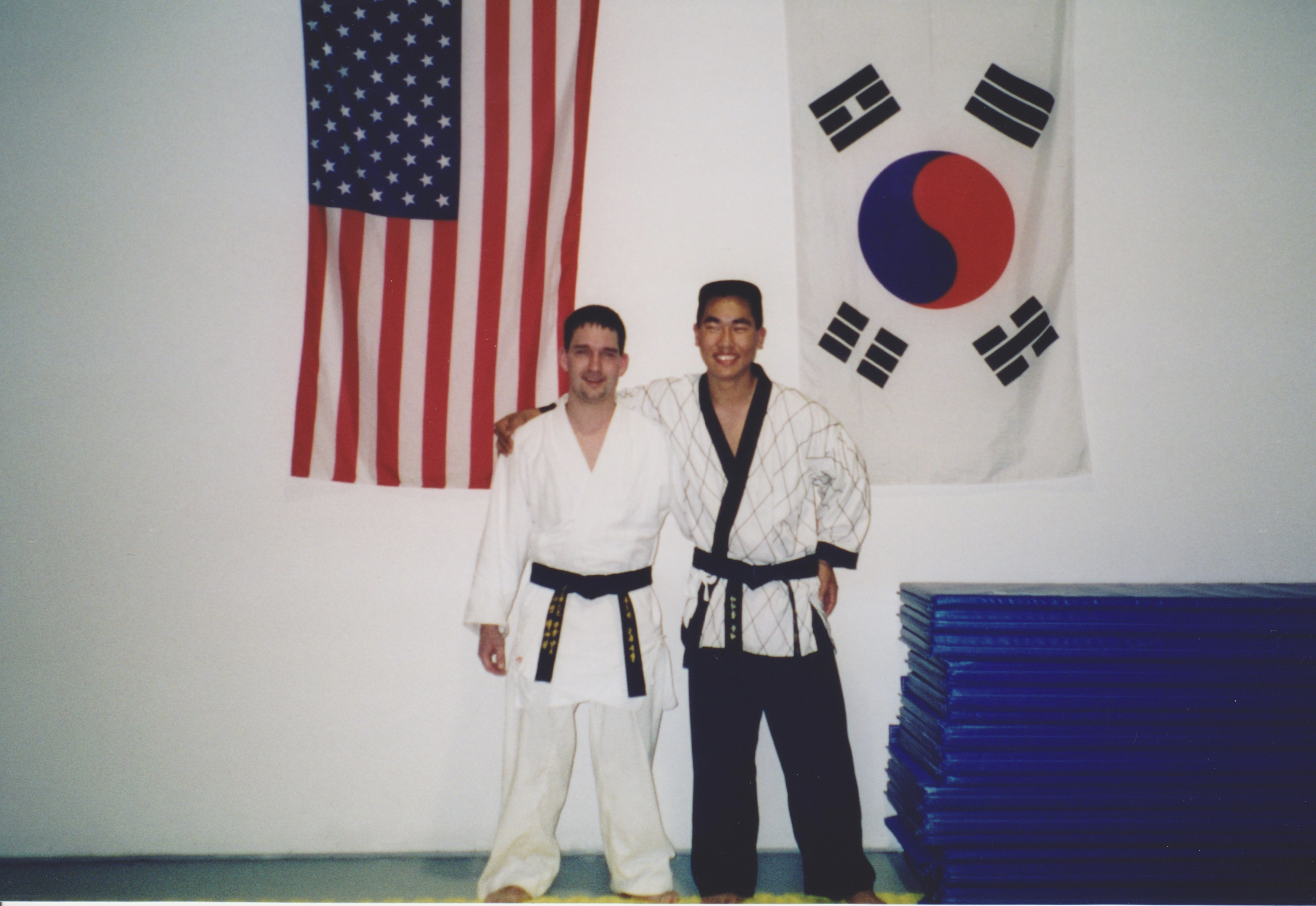
    Around the summer of 94/95 I decided to jump into some martial arts classes and ended up meeting and became as close as brothers to my friend, Michael James DuCett.  He was born in South Korea and adopted by an American family at 6 years old and without knowing what was going on, flown over to start a new life in the United States.  His birthday is today, December 28th and if he were still physically here, he would have been 38 this year.

    image1 (1)
    Michael on the close end and Natalie next to me at the far end.

    He and his sister Natalie were both Korean born and adopted by Steven and Linda DuCett.  Steve was a military man and also a Minister and from the outside, always seemed strict but, you could tell that they had a great relationship and he was very proud of his children.  Linda was always jovial and a very supportive mother.  She home schooled both Michael and Natalie and was always equally proud of them both.  You could see it daily as she would dropped them off to class and most days, spend 2-3 hours there waiting for them to finish.

    This slideshow requires JavaScript.

    Michael was already a Black belt in Tae Kwon Do when I meet him and was a great athlete.  While I was 6 years older than Michael, we hit it of pretty quick and Michael generally acted much older than his physical age.  What he lacked in corresponding age to me, he clearly made up for in his athletic ability and proved to be the mark that I physically would measure my self against.

    He was dedicated to perfecting his martial arts skills and his techniques were razor sharp. His uniform would snap as he would preform his movements but when we would spar or were throwing each other around during Hapkido, he was as fluid as the ocean.  (Side note, first time I saw the ocean was with Michael.) From the beginning of white belt through my eventual black belts, he was always the guy on the other side staring back at me and making sure I was doing was my best.

    This slideshow requires JavaScript.

    The amazing thing was that he did all of this with compassion and love for his fellow practitioners.  He taught the kids with lighthearted discipline and wasn’t afraid to hug one of the kids should someone get hurt.  He had hopes of eventually opening his own martial arts school and I know that he would have continued to change peoples lives and give the best of himself.

    This slideshow requires JavaScript.

    For the better part of 7+ years, I spent 3 hours a day, 3-5 days a week training with him.    During those hours we trained, learned, bleed, and pushed ourselves to that next level.  During  tournaments we would watch each other fight and shout encouragement and advice from the sidelines.  It’s worth mentioning that I rarely lost because no one I faced was ever as formidable as Michael.

    Towards the end of the 90’s, I had a lot on my plate and eventually quit going to the classes and wrapped myself in work and life outside martial arts.  I lost touch with everyone that I trained with, including Michael and his family.  Then one evening in October of 2001 I received a phone call from Cindy, one of my former instructors, and with as much clarity as this moment that I am writing, she let me know that Michael had died in a car accident in Jasper, Indiana.

    In the Memorial service pamphlet that I still read from time to time, Michael’s father wrote, “On his last day with us, Michael got up at 5:00 am, for private Bible study and prayer. At breakfast he led Linda and Natalie in a devotion and prayer since Steve was out of town.  The three of them went out for exercise at the county fairground.”

    image5At the service that the DuCett family held in Cedar Rapids, Michael’s mom Linda had told me that Michael would often be watching a martial arts movie and during the fight scenes Michael would say to her, that reminds me of  Jeremy and I back in Cedar Rapids. I felt the pangs of guilt and sadness that I hadn’t continued that friendship and that we had lost contact.  My only consolation was that he had fond memories of our friendship and what more can I ask of a friend.

    I’m grateful for having known Michael and besides some aches that I still carry from training with him, I carry the memory of a truly beautiful soul.  The G Shock I wear is a continual reminder of him, as he constantly wore one, and naming my son James is also a small nod to his middle name.

    I sometimes forget Michael passed on but then a watch, a movie, or any number of things will recall him back  to my memory and he is again as present as ever.  One of my favorite poems about Death is by Henry Scott-Holland and is called Death is Nothing at All, and I’ve put a piece of it below.  It’s how I choose to manage the loss of those that have moved on and how I choose to carry on without them here.

    Death is nothing at all. 
    It does not count. 
    I have only slipped away into the next room. 
    Nothing has happened. 

    Everything remains exactly as it was. 
    I am I, and you are you, 
    and the old life that we lived so fondly together is untouched, unchanged. 
    Whatever we were to each other, that we are still.

    Happy Birthday my friend.  You are gone but never forgotten.

  • Ian Noe and Colter Wall.

    Ian Noe and Colter Wall.

    In October, I attended another show at Codfish Hollow and was stunned by the music created by these two gentleman and their accompanying band mates.

    They are simultaneously the roots of where their individual brand of music came from and, the direction that great music should be going. They each blend personal life experience with a mix of wonderful characters that result in rich lyric content and match that up with very accomplished music.

    Below is my article I posted on Ink19 and the direct link will be listed below as well.

    IMG_6997

    Maquoketa, Iowa 10/27/2018

    Codfish Hollow in Maquoketa, Iowa, is a venue that needs to be experienced to understand it’s genuine appeal. Situated down a dirt road, you park free of charge in the cow pasture. Walk carefully to avoid the cow-pies as you head back up to the road where Marv, his tractor, and the hay rack style wagon will take you about about a half mile down the road to the actual barn where the events take place.

    After a check in for my ticket at the first of several fire pits situated through out the property, I walked up the hill to the barn to find my spot near the stage.

    DSC01687
    Photo by Jeremy Glazier

    Complete with built-in merchandise area at the entrance of the barn, drinks on the side, and food, arts and crafts under the barn, Codfish Hollow offers and delivers a complete concert experience.

    Now, to the evening’s entertainment. I will go on record as saying that when we look back 10 years from now, this duo of artists will be listed among names like Isbell, Childers, Simpson, and Nelson as the precipice of when music changed for the better. When the artists writing, singing, and living the truth of their music started chipping away and gaining more attention than your nationally, pre-programmed hitmakers.

    Ian Noe and Colter Wall lace their lyrics with hard looks at everything from the opioid epidemic to wonderfully thought out stories and characters that actually shake you emotionally and mentally as you listen. Each song and strum of their respective guitars relay the extent of the talent that we desperately need in music today.

    The opener this night was Ian Noe, a Kentucky native with influences that touch on the highest of folk and country royalty. DSC01596a1His storytelling is at times whimsical like Arlo Guthrie or John Prine but as poignant as Bob Dylan. His almost permanent scowl while singing conveys the depth and intensity of his lyrics but completely subsides while addressing the audience.


    He mentions before singing “Dead on the River” that it was written after finishing the first season of True Detective. While he laughed with the audience at the notion that binge watching Netflix could produce any kind of inspiration, it speaks to his artistic vision and an inside glint of what Ian is capable of.

    This slideshow requires JavaScript.

    He ran through a wide range of songs including the 4 songs on his EP that include “Irene”, “Off This Mountaintop”, “A Young Felon Dates an Old Woman”, and “Methhead”. As this was my first time hearing him preform, I wasn’t familiar with the other songs in the line up but a quick YouTube search resulted a number of the tunes I look forward to hearing on a full length record sometime around April of 2019. Joining Ian on stage were Andrew Sovine on guitar, Adam Beard on bass, and Erin Nelson on drums.


    DSC01625aJuxtaposed to Ian’s attention to the crowd, Colter Wall casually took the stage alone and treated the fans to a step back in time when a true cowboy/plainsman might sit next to a fire and serenade those around him. His Speedy Creek, Saskatchewan roots are proudly embedded in each song as much as his influences from guys like Marty Robbins or Willis Alan Ramsey.

    Colter carries about 4-5 songs on his own before the rest of his talented band joins him mid song and add some extra weight to the storytelling. They are a tight combination of Jason Simpson on bass, Jordan Solly Levine on drums, Jake Groves on harmonica, and Patrick Lyons on lap steel.

    This slideshow requires JavaScript.

    During songs like “Kate McCannon” and “Sleeping on the Blacktop”, they will slow and/or stop playing completely to give Colter, his booming voice, and the guitar the focus

    his storytelling deserves.

    Colter sings a crowd favorite “Me and Big Dave” from his self titled album as well as “Thirteen Silver Dollars” and also, as he works through the set, the up-beat tune “Motorcycle”. He mentions, with a noticeably measure of pride, that that his friend and fellow country artist Blake Berglund wrote an additional verse to his song and proceeded to sing it with the extra verse. I can’t recall ever hearing of artists doing this but it’s a great addition to an already amazing song and again, speaks to the artistry of a new breed of country musicians pushing back against the spoon fed hits on modern country radio.

    A few more from the new album Songs Of The Plains included “Saskatchewan in 1881”, “Calgary Round Up”, and “John Beyers (Camaro Song)”. Why the Camaro song? We’ll, Colter jovially explains before the song that he drew the story line from a couple of real life brothers that decided the best way to resolve their differences was to shoot each others vehicles with their .22 rifles. The song and the origin story aren’t an exact match but it’s another great glimpse into where he draws his varied inspirations.

    This slideshow requires JavaScript.

    While Colter is only 23 years young, he has the demeanor and stage presence of a soul triple his years . He often sings with his head down so only a sliver of his face is visible under his black cowboy hat. And when you do catch a look at his face, it’s often holding a strained expressions as though he’s reliving the sorrows and pains of the stories he’s written. Colter’s honesty and familiarity with the music he creates sits on him as perfectly as the Stetson that crowns his head.

    I cannot heap enough laurels onto both Ian Noe and Colter Wall. My hope is that the tour and subsequent word of mouth will place them on the radar of enough people to make successive albums, and tours a must. If you can catch them out on the road, do so before the tour ends or, help support their music by visiting their respective websites for a cd or vinyl album.

    Ink19 Article link

    Colter Wall

    Ian Noe

    Young Mary Records

  • Shooter Jennings and the way music should be made.

    My ink19.com review is out for the new self titled Shooter album by Shooter Jennings.

    It’s really an amazing re centering for him and if you dig that late 70’s early 80’s country music that guys like Hank Williams jr. and of course his father, Waylon Jennings were doing, then do your self a favor and get it now.

    Shooter Jennings

  • Sons of Bill nail their new album, Oh God Ma’am.

    Check out this amazing new album by Sons of Bill. They put it all out there in this album and it’s a surprise at each musical and lyrical turn. 5319DBDB-A5C0-417B-A847-73AEC9FCD4CC

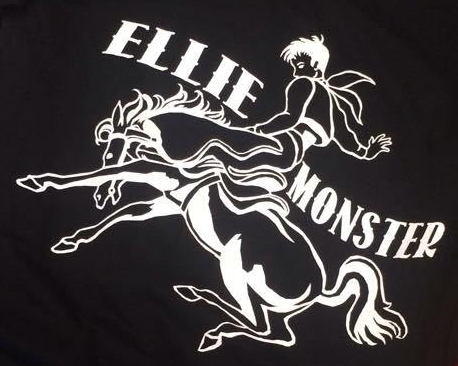
  • Ellie Monster – A cut above the rest.

    Ellie Monster – A cut above the rest.

    I don’t mean to brag but, this article content is awesome and will possibly have more damn pictures than words.  Every time I think I have the coolest photos of Ellie Lahey’s work in here,  I find, or she posts more that I switch out.

    A couple years back I was obsessed with a particular shirt that I saw Duane Allman wearing in a photo taken by John Gellman. It appeared one time, at one show, and then disappeared into history.

    Photograph by John Gellman Photograph by John Gellman

    I searched for months for someone that may be able to recreate it when I ran across a post by singer and songwriter, Boo Ray.  He was wearing a very cool, handmade Troubadour suit by Ellie Lahey and I started looking around for this mysterious, Ellie Monster.

    IMG_E3224[1] BadAss BooRay wearing Ellie Monster. Photo by Michael Weintrob

    Now I also have to mention that I’m a huge fan of Gram Parsons Nudie Cohn suit, his music as well of course, and think it’s one of the coolest R&R/country outfits in the history of music.  Ellie’s work is a stark reminder of that amazing skill and, attention to detail.  I knew that I was on the right track.

    Jeremy, JD Simo Band, and Ellie Monster.
    Jeremy, JD Simo Band, and Ellie Monster.

    I sent a few messages and within 6 months I had a near perfect recreation of that shirt.  It was incredible seeing it in person because she brought out things that I hadn’t even seen in the photographs,  It’s truly my pleasure to shine some light on her amazing talent and bring some attention to her business, Ellie Monster.

    J: Ellie, I’ve watched a few different videos and looked around your Instagram and Facebook and what you do is just amazing.  How did this journey start and what led you into making these kinds of shirts/suits?

    E: A childhood spent in starched wranglers with a country radio station playing in the background 24/7 is partly to blame, the punk obsessions of my teenage years definitely played a part too.

    Ellie Lahey Photo by Sharky Crowley

    As far as the more direct route goes- I made a shirt for myself and other people liked it enough to ask me to make more of them. It was a hobby for a while, until I had the (mis)fortune of having a supervisor who made my life pretty miserable. The day I quit that job, in 2009, my friend offered me retail space in the French Quarter, I said yes, and I’ve been doing this thing ever since.

    J: How was the move from New Orleans to Nashville?  Do you find that there is a bigger market in Nashville?

    E: Oh man. It was rough, it was real hard to get things going in Nashville. I knew Nashville would be different, but I greatly underestimated just how different it is. It was basically starting over completely, and it took me a couple years to get anywhere near the sales figures I had in NOLA.

    The market in Nashville is bigger, but it’s harder to get folks through your door here, and it took a long time for me to get that figured out.  I don’t regret it though, Nashville is good to me these days.

    Photo by Ellie Lahey Photo by Ellie Lahey

    J: It’s crazy but, you are basically making custom clothes in a very old school way for a very modern market.  The video I watched was incredible because you cut every piece of the shirt and stitched it all together from scratch.  What kind of time frame do you need to get a shirt or a suit of custom clothes done for a customer?

    E: Time from order to completion really depends on how many folks are already waiting on me to make them things. Usually it’s somewhere between a couple weeks and a month.

    IMG_E3221[1] Photo by Ellie Lahey

    The actual time it takes to sew something- I can make a simple kids shirt in about an hour, and I’ve spent weeks on some of the suits I’ve done. Embroidery adds a lot of time, especially when I’m making new designs. My embroidery machine and software communicate via 3.5″ floppy disk, so yeah, nothing moves very fast with them.

    Chad Cochran Booray wering Ellie Monster shirt. Photo by Chad Cochran.

    J: When I was having my shirt made, I came across your page through a Boo Ray’s Instagram post.    Who else out there is wearing your clothes that we may know or should keep an eye out for?

    E: This question is the one that’s kept me from having this thing done for so long.

    I do get excited when I see bad ass people wearing things I’ve made/sold, but man, dropping  names always feels so dang awkward to me.

    That being said..

    My customers include Margo Price, Kacey Musgraves, Kacey Musgraves’ dog Bambi, Jimmy Carter, and Hank 3.

    The lesser known but excellent musician customer list is.. I can’t even get started on that right now.

    J: You have a unique range of clothing, including a very cool Iron Maiden shirt that popped up on the Facebook page, how are you selecting what to make for stock? (Of course I couldn’t find that Maiden shirt so enjoy these in lieu of that one.)

    Collage of awesome. Collage of Awesome. Photos by Ellie Lahey.

    E: That Iron Maiden shirt is good one. That customer brought in the tee he lived in through high school, that didn’t fit him anymore, and I chopped and sewed it into something that did. I’ve done a ton of tee shirt ones, started with that because I ran out of closet space and wanted to do something with all the tees I didn’t wear much. I ran through mine years ago, but my friends hook me up when they clean out their closets, and I find good ones in thrift stores occasionally too.

    Generally speaking though, I just make what I like, what I think will look interesting.

    Since I find all of what she makes interesting, I also wanted to find out about a couple of shows that I saw her participating in this year.   She let me know that the most recent one was at the Nashville Boogie Vintage Weekender.  Te fashion show side of it, The Western Round Up,   is put on by Riley Reed.

    Here’s a couple close up shots of the Ellie Monster Space Suit owned by Tony Perdue.

    Ellie relayed that Jason Galaz, head honcho of the Boogie, described it this year as: “The epicenter of the Western Fashion industry is right here at the Nashville Boogie.  Industry leaders and tailors to the stars all show their wares.”

    IMG_E3297[1] Photo by Ellie Lahey

    E: And that’s a pretty good description. This was the fourth year for it, I’ve been there from the start. There are a bunch of other amazing designers who’ve taken part in it too (older and newer) but that could be a pretty long road to go down.

    I was in a fashion show over in Memphis in February at the Ameripolitan Awards too. It’s been a good year for showing off.

    J: For anyone that is looking for a unique piece of Nashville authentic clothing, how should they get a hold of you and what do you need from them?

    E: They can come by and see me in person at the shoppes on Fatherland in east Nashville, or find me on all the normal places.  Generally speaking, I just need an idea, some measurements, and a little $.

    Facebook

    Instagram

    Etsy

    Email ellie@elliemonster.com

    Phone: (615) 295-6248 (not the best way, my shop flip phone is about as outdated as my sewing machine is, I drop calls all day long)

    I encourage you to scroll through her various pages and look at the variety of clothing that Ellie has created.  I’m always impressed, surprised, and fascinated by her creations and greatly appreciate her taking the time to talk to me.